THREAD YOUR NEEDLE WITH LIFE’S ROPE
By
Bill Cottringer
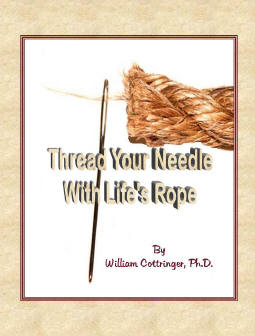
Almost everything we do in life from getting our dream job or house to finding our perfect life partner involves trying to thread our needle with life’s rope. You have to find the single thread surrounded by all the rest and then guide it carefully through the eye of your needle. The most important thread of life’s rope is the one that brings authentic happiness, genuine success and real peace—all of which give us a needed sense of meaning and wholeness we crave. This is the Big Kahuna we are all searching after: The pot of gold at the end of the rainbow…the one thing that can truly fill the nagging void of quiet desperation inside.
Why is finding this single thread so difficult? I believe it is because we have unthinkingly allowed a fracture to occur between religion, spirituality and psychology in our ongoing attempt to understand the meaning of life and why we are here. Our mental and emotional healing has to involve a reconciliation of these aspects of our self, or our main tool for grasping reality—our self-awareness—will not evolve any further.
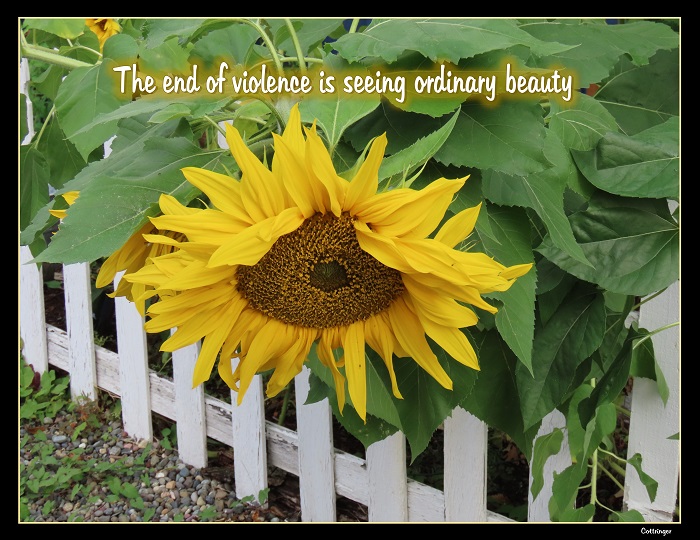
Fortunately there is an invisible resource to do the job. Thomas Moore, in Care of the Soul, called it vernacular spiritualism. I have interpreted this to be the simple solution of gradually awakening to the holiness and reverence of two areas of life: (1) the ordinary, mundane, and everyday things around us, and (2) the ugly, painful experiences we try to avoid or forget. Too few us fail to accomplish understanding and appreciating the first and even fewer the second. No wonder so many of us live quiet lives of desperation on the inside despite what façade we present. Book stores are overstocked with partial answers that just aren’t satisfying enough. That’s because the single thread is lost from the rest of the rope, just like the needle is lost in the haystack. Then all the alluring distractions and detours take over the quest.
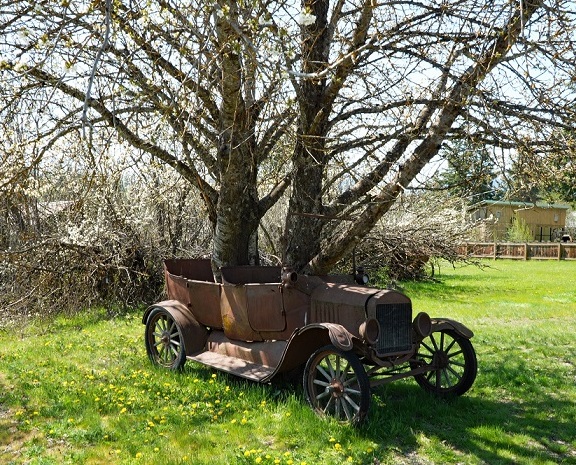
The first challenge is to slow down and take the time and make the effort to focus on simple, ordinary things right around you like enjoying the playfulness of pets, seeing the remarkable beauty in an old dilapidated country barn during a spontaneous jaunt top nowhere, giving confidence to another in the job they are learning, or taking in the stimulating ideas of another person during conversation. It is easy to recognize the beauty of the universe in spectacular sunsets, gracefully rolling ocean waves, ominous storm lightening, and vibrantly colorful flowers; but finding the single thread to go through the eye of our needle, involves more patience to go further and deeper in understanding, accepting and sensing the holiness of the ordinary. This is the vernacular spirituality that translates to our true meaning and aliveness.
The second, more difficult challenge can only be met after you start thriving with the ordinary enjoyments. Although it is very difficult to feel the comfort of divine holiness in extremely tragic and painful events, these are the dark times when this single thread of life’s rope often becomes most visible and prominant. It seems as though a milestone of spiritual development occurs when we begin to see something positive in the most negative situations. Yes it is difficult and painful, but the payoff is worth it. This is where the broken bones, bleeding and bruises become a symphony of the soul.
Take the horrendous 9-11 tragedy as our most vivid current example. In my psychology class back in Illinois, on the day of this atrocity, I asked the class if they could think of any positive outcomes of such a horrific event. Of course there was total deafening silence. The following week I asked the same question and this time a few thoughtful students volunteered some positive outcomes. A month later, our list was up to a dozen. Just a few of these were the creation of extraordinary heroes out of ordinary people, overwhelmingly tearful compassion on a mega scale, critical reaffirmation of our basic values, and honest and open critique of our world politics.
I read somewhere that you cannot really know good until you understand evil. I have only had too encounters with evil that I never really understood at the time. One was with a person who told me I was going to Hell because I confessed my sins to a Priest in my chosen religion. I was sickened and outraged at the same time. The other was coming face to face with a serial killer and rapist of young boys, who was incarcerated at the Nebraska State Penitentiary. This time I was shaking in my boots from the dense coldness of the air around me.
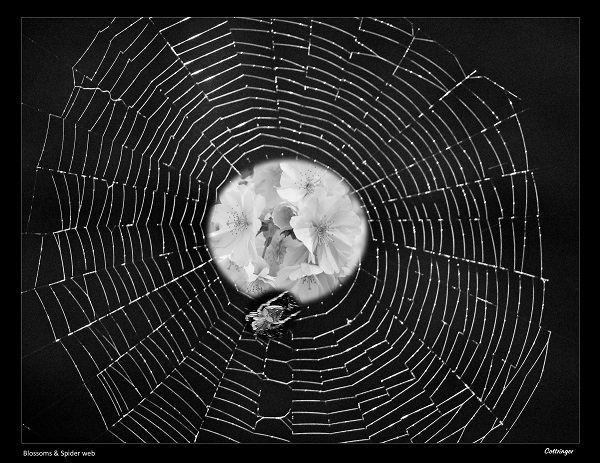
In spending a great amount of time and energy in attempting to understand the worst evil of our time—the Holocaust—I think I do finally understand evil, at least from a philosophical, theological and psychological perspective. The psychological mistake we can easily make when confronted by such evil is to ascribe it as an inherent part of the person. However, compelling research tells us that given the right circumstances and conditions, we are all quite capable of doing the most heinous of acts. So maybe the good purpose of such evilness is to reaffirm what is right and good, and to inspire us to work harder on improving the conditions and circumstances that incubate such evil. This is where vernacular spirituality comes in.
If we are really serious about being successful with personal and spiritual development, it is high time we all stop finding fault with this or that aspect of religion, spirituality and psychology and finally wake up to seeing how these things are just trying to help us find the single fiber so we can all thread our needles with life’s rope and get on with seeing what we can make with it.
Here are two tips to find the thread you are looking for:
1. Look at what is right in front of you right now. Then look past the thing to see its worthy, reverent holiness inside.
2. The next time a negative, painful experience occurs think less of the external negativity and pain in your thoughts about the event, so you might begin to see the potential internal positivism and comfort.
But whatever you do, don’t think you have to accept everything. Such growth in awareness will clearly show you the few things that do in fact bring tears to God’s eyes, which team humans should be trying to do something about. And with such awareness, the best way to do this will become more apparent.
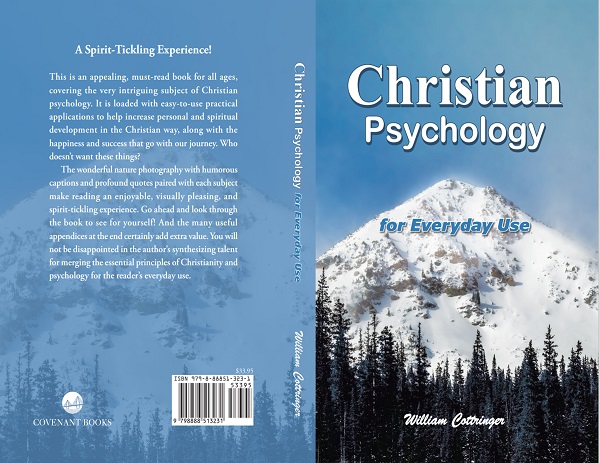
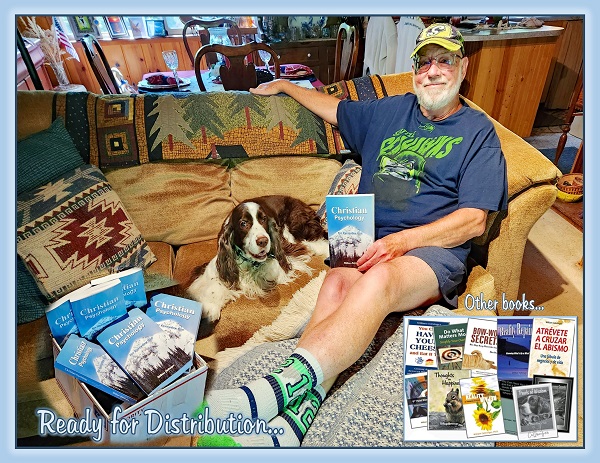
William Cottringer, Ph.D. is President of Puget Sound Security in Bellevue, WA. He is author of You Can Have Your Cheese & Eat It Too and The Bow-Wow Secrets. His latest book is Threading Your Needle With Lifers’ Rope. He can be reached at (425) 454-5011 or bcottringer.pssp.net





















Love Tinka