HAVING A RELATIONSHIP IN LATER YEARS
By
Bill Cottringer
Having an intimate relationship with another human being is the ultimate test of character—prompting you to come face to face with your best and worse self and forcing you to apply all the good things you have learned to help influence a positive outcome, sometimes against seemingly insurmountable obstacles and stress.
When “being in love” is involved, the situation becomes much more intense and confusing. This is because of a conflict between the raw emotions—the positive, enjoyable joy and euphoria of bliss vs. the negative, uncomfortable fear of hurt, disappointment, rejection, vulnerability and failure. And of course there is always a great difficulty in communicating about these things. Naturally, the intensity of the love, the personal and spiritual development of the people involved, and the stresses that are present, all have a lot to do with the success or failure of the relationship.
Having a relationship in later years is even more of a test of a character—this time with one that is already shaped, to help force it to un-shape a little for the next level of improvements. This is a milestone test of our spiritual development in our journey through life as a human being.
Here are just a few typical obstacles to relationships in later years:
· Two people coming into this type of relationship are pretty much set in their ways—having firm communication styles, values, goals, interests, likes and dislikes, habits and expectations.
· There is bound to be some heavy-duty baggage either from failed past relationships or the absence of relationship experiences.
· The people may have a more mature, rational perception of and reaction to love, which might not always be a good thing, as much as seeing love innocently and being in awe of it, trusting it to take you to a good place.
· By this time, people have planted their feet on the side of the equation they feel is right for them; and nowadays the line representing a sharp division of the core differences between people is becoming very clear through intuition, which is always hard to understand and express.
· Because these people’s real biological clock is ticking away, there may not be as much patience as is needed to get to know a person from outside-in, especially when they have already skipped the normal “dating” routine and are already inside touching each other’s souls.
· No matter how mature in life we become, we are not always in touch with what we really want, or at least clear enough to ask for it.
· Human nature at any age involves two very fundamentally exclusive drives—(a) to approach, give, join and belong to something bigger, and (b) to retreat, take, separate and exercise freedom and uniqueness. These divergent drives can cause much conflict for an older person trying to have a relationship, given all these other obstacles.
So what “rules” should two people in their later years adopt and agree to, that will help assure success in their relationship? Practical research reveals these tips:
1. What starts out right has the best chance of ending right. This means people are better off accepting the way the best relationships start and progress. Good relationships start and progress with openness and honesty and good communication. If you want true love as the foundation for the relationship than that is what you have to go after and have the patience to find; if you want a comfortable, easy-going, compatible partner for a casual relationship, then that is another thing altogether.
2. Some “pre-selection” time is an advantage that on-line dating services offer. It is probably a good idea to screen out compatibility differences in religious beliefs, education, physical attraction, personalities, personal habits, life goals, core values, basic expectations, past history and other incompatibilities that will only get in the way sooner or later. This is just another way to start out right.
3. There are a few necessary ingredients to “bake the cake.” These are:
· Unconditional acceptance of the other person as he or she is with all the faults, foibles and differences that go with the whole package, communicated clearly. You simply cannot change another person no matter how it is justified or tried. Violation of this rule is the cause of most relationship failures.
· Good communication is the foundation of a good relationship. There has to be a total commitment to do this in order to build the trust and security that you will be there waiting on the other side, even when you get into difficult, sticky emotional conflicts that can interfere and tempt you to give up prematurely or react angrily.
· Large doses of tolerance and patience are necessary to open up some breathing room to understand the other person who may think, feel and act in different ways that may be unfamiliar, annoying and even uncomfortable. Differences are inevitable, but with a foundation of good communication, flavored with tolerance and patience of understanding, most miscommunication and misunderstanding can be straightened out.
· Perhaps the most important ingredient is the willingness for each person to be unselfish and giving first, without waiting for the other person to do that. This should be easier for a mature person who has already learned the valuable life lesson that when you give you get more than if you try to get before you give. Unfortunately though, love and relating can often bring out your selfish ego, pride and control needs that can flip-flop the right order of these things.
· The most difficult obstacle to good relationships is in trying to avoid the natural tendency to want to control a situation that is not to your liking. The only known anecdote to this human flaw is understanding—understanding the positive purpose of an uncomfortable event and understanding the motivations and behavior of another human being, mainly by understanding the conditions that shaped the person.
4. If there is one termite that needs to be eliminated to help all relationships develop, it is the habit of having expectations. And of course, our expectancies often become ingrained the older we get. But we all learn that by having certain expectations in anything, we are setting ourselves up for disappointment. The iron is that sometimes by not having expectations, we get much more than what we expected.
5. If “being in love” is responsible for starting the relationship, there can be three different interpretations that must be carefully considered. The three possible interpretations are:
· There is an unexplainable chemistry that is felt and difficult to resist without wanting to carry out a lustful and sexual response.
· The whole love experience may be seen more as a meaningful coincidence in temporarily bringing two people together so they can exchange important clues to help each in their journeys through life.
· The two people may be offered the opportunity to be “in love” for a long-term loving relationship, all the way to coming face to face with their once in-a-lifetime true love soul mate to be with forever.
6. When people feel they are in love, there can be three possible reactions and two of them usually have painful outcomes. The three possible reactions are:
“MURDER”
The murder option is the metaphor for the very natural response to aggressively try to control the love experience for your own selfish, personal reasons, making it into what you want and need on an ego level. This impure motivation spreads from trying to control the other person’s response to many other unproductive and unhealthy behaviors that can take the relationship sideways, backwards and upside down. This negative response has a library of competitive passive-aggressive, win-lose, approach-retreat games in which you gradually squeeze the love to death. The negative, hurtful emotions totally bury what is going on and the love can’t breathe.
This unfortunate misguided approach over-focuses on a limited local use of the love experience at the expense of missing a much bigger picture that can take you much further in your personal and spiritual journey in life. Murder of love brings tears to God’s eyes; it is not the answer because it has some heavy karma penalties. Physical and emotional abuse, irresponsible infidelity, one-up games, deceit and dishonesty, cruel words, selfish manipulation, ,mean-spirited control and other such things have no happy ending.
“SUICIDE”
The suicide option is the metaphor for the passive reaction to the love experience—wanting to run from the overwhelming feelings and protect yourself from the vulnerability and fear of rejection and all the other potentially uncomfortable consequences of exploring the experience. But don’t let this passive approach fool you; it can be just as destructive as murder. Sometimes when one person is approaching and the other is retreating it is like pouring some 190 proof grain alcohol on both peoples’ exposed, beating hearts. And when the retreating person won’t communicate about what is going on, the silence can be deafening and stir up all the wrong assumptions and fears about what may be going on.
Love can be a very scary and frightening emotional episode, and some natural responses are to not even acknowledge it or to run away from it and retreat back to the safety and status quo of a previous routine of rationality. Two legitimate justifications for the suicide approach may be when (a) one of both persons are already in a relationship or marriage committed to growth, love and health (b) there are other real obstacles that suggest the timing is just not right. That has to be a personal decision that no amount of good intentioned guidance can tell you what to do. It can also be one of the most gut-wrenching decisions to ever have to make.
LOVING
There is no metaphor in this reaction. In fact it may be the only sane thing to do if the circumstances are right for exploring the love phenomenon. Actually, it is the only way to stay “alive” in love. You really can’t understand the purpose and utility of anything—especially this mysterious love experience—until you do let go of your illusion of control and give into openly exploring where this thing is going to take you.
After all, love is probably one of the most important and real experiences in life from which to learn. Ironically, this loving approach brings your conscious free will closer to your unconscious destiny where the two can gradually be joined into one path to help you to be twice as productive. The more you let go to love, the more this central paradox of life makes sense, along with everything else.
SUMMARY
All this research can be reduced to five few key points:
1. Know what you want, make sure it is legitimate, and go for it with your entire mind, body, heart and soul.
2. Open up your heart and accept, understand, give, love and have patience with people.
3. Let go and give in without any expectations.
4. Eliminate red flags of things that offend your soul in making the right pre-selection so you can focus on the important things you have in common with the other person.
5. Nurture the relationship with good communication and love.
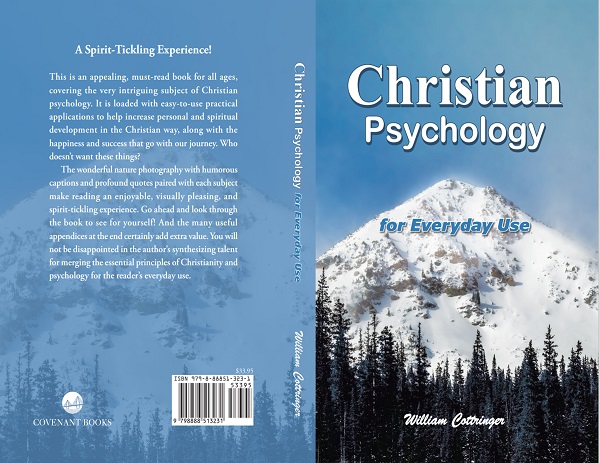
William Cottringer, Ph.D. Is President of Puget Sound Security, Inc. in Bellevue, WA. He is author of You Can Have Your Cheese & Eat It Too and The Bow-Wow Secrets. He can be reached at (425) 454-5011 or bcottringer.pssp.net























I really like this article. I believe when we are really in love that is the only time that we are really alive and that is such a wonderful feeling. I like what you said about being completely honest with someone from the getgo. If only people would be.