THE STUFF BEHIND THE STUFF
By
Bill Cottringer
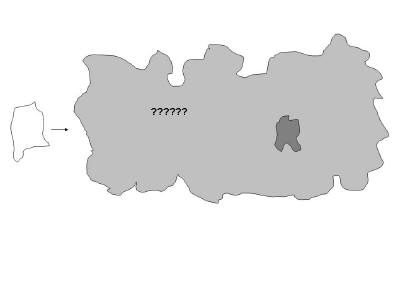
Question: What stuff? Answer: The 5% sensible, invisible stuff hidden behind the other 95% literal, surface, distracting BS nonsense… or the sea of seemingly endless chaos we all have to wade through to get to the really valuable simplicity just on the other side of the complexity that follows initial artificial simplicity.
In the search for the 5% truth, we have a very formidable enemy, and no it’s not reality. The enemy is our efficiency-seeking, non-truth adapting brains. We want quick certainty that is on the shy side of complexity and miles from the real certainty that is simply profound and very relevant and very useful.
What does this stuff have to do with anything important like real life? Anything and everything but definitely not nothing. Everything we do, is a reaction to what we think is the right stuff. The problem is that unknowingly, our brains have filled our minds with way too much of the wrong stuff and some spring cleaning is definitely in order. No small wonder why job, marriage and life failures are more the norm than success. Most of us are acting on what we think we know when it really isn’t so. Time to delete most of our hard drives.
Until we begin to play hardball in thinking about your thinking and start questioning how we accumulated all the 95% nonsense that over-occupies our minds, we will never see or recognize the valuable 5% stuff that we need to go from un-surviving to thriving. Let’s just consider a few tricks our brains play on us in giving us more of the 95% wrong stuff.
- Our brains can’t deal with real reality, so they reduce it down into manageable but artificial simplicity, even as far as putting it into basic categories of this or that, right or wrong or yes or no. Even incredible, artificial certainty of really credible tentativeness satisfies the brain (This is the basis for prejudice and stereotyping).
- Brains do not like to take in any new and unusual information in that can’t somehow be seamlessly integrated into all the other nonsense that is already there. Oddly, we will retain wrong, useless information until death and resist anything new with all the life we have, despite compelling proof of the truth of the new stuff. Old stuff must be preserved at all costs. (Does the De Vinci Code ring a bell about religion and politics?)
- One brain’s single firsthand experience can create a universal fiat for the rest of us without any secondhand evidence or validation. Then such a powerful emotional belief becomes impervious to disbelief. (The world is flat).
- Of course we crave concrete stuff and quickly discount all the abstract metaphorical stuff (the stuff behind the stuff), because it is way too hard to think about and understand well enough to see any value or utility (Ironically the gazillion dollar computer and dot.com age was founded on the abstract metaphor representation of our brain).
- Most of the 95% stuff that feeds our brains is retrieved through memory, which is never very accurate or complete. This just makes even more nonsense out of the existing nonsense (Think about conflicting, unreliable eye-witness versions of an accident or crime).
- Our own brains will always assume environmental causes of our own personal peculiarities, flaws, problem and mistakes, but oddly ascribe internal motivational deficiencies for these same things in other people (No wonder we don’t relate very well or understand each other).
- The brain on-button jams when it sees two things occurring near each other in time or space; naturally one is assumed to cause the other and they must be closely inter-related, even when they are really random accidents and exclusive events (the ice cream sales and Bear stock market phenomenon).
And this is only the short list because even thinking writers can’t get outside their own brains for too long without oxygen!
We only have one solution here that fits within the 5% sensible stuff. Let’s do some self-help brain surgery by volunteering to remove one bit of insensible stuff in our own brains and replace that useless nonsense with some useful, sensible stuff. In other words, let’s make pledge to learn how to go from quick and easy literal readings to metaphorical and beyond meanings that get closer to reality.
When we figure out a workable technique to do this for ourselves, we can share it with one other person and subsequently begin to restore more reasonable balance between consuming chaos and more desirable order. All we really need to do is to love the people in our closest relationships, enjoy the work we do, eat the right food, make a comfortable home, sleep well and contemplate the 5% stuff with quality thinking. Everything else is potential nonsense and just gets in the way of the right stuff—the good and simple life.
Here are some thinking exercises that can help clarify the 5% stuff we all need.
1. What are your most fundamental values that drive your approach to life and everything you do? Are they the “right” values that are working well and leading you to being happy, peaceful and successful? Have you built your lifestyle around those values? How often do you practice these things?
2. What two things do you need most and are you getting them? Why not? How can you get them?
3. What life lessons have you learned from nature? Why do humans resist these valuable, truthful lessons? What can you actually do to improve the quality of your own and others’ lives?
4. What purpose do you have for being here? How much progress are you making at finding out what that purpose is or living it? What does life want from you in return for giving you the opportunity to live? Where can you go to find out the answer to these daunting questions?
5. How much power do you have in controlling the quality of life you live? How do you hold yourself back from fulfilling your potential?
6. What special talents do you have? How have you developed and used these unique gifts? Do you spend too much time trying to overcome your weaknesses and too little on improving your strengths?
7. How well do you communicate? What are your main communication strengths? Do you over-interpret the meaning of words that people say to you? Do you do more talking or more listening?
8. Are you out of balance in critical areas of your life? What are you doing to restore reasonable balance? Why do you allow yourself to get out of balance?
9. Are you clear on what you really want? Do you ask others to give you what you want? Do you know the difference between what you want and what you need?
10. What are you doing to explore your own natural creativity? How do you define creativity? Is there any relationship between how you define something like creativity and how much or how little of it you have?
11. Have you noticed a connection between what you think and expect and what you get? Why is that so? Is there any connection between the choices you make, the actions you take, the results you get, and how that all makes you feel?
12. What is the relationship between your thinking, feeling and behavior? Which causes which? How do you get untangled from chasing your own tail?
When you ask a really good question, get a really good answer and then ask why it is so, you are knocking at the door that is locking the small percentage of right stuff behind the larger percentage of wrong stuff. Then before you know it you begin to see all sorts of positive possibilities to the most dismal and negative events and see more solutions than problems in magically managing to get more by doing less and having your cake and eating it too. That is the really good stuff!
William Cottringer, Ph.D. is President of Puget Sound Security in Bellevue, WA. He is author of You Can Have Your Cheese & Eat It Too and The Bow-Wow Secrets; both books deal with the stuff behind the stuff. He can be reached at (425) 454-5011 or bcottringer.pssp.net