THREE LEVELS OF “KNOWING”
by Bill Cottringer
“What you think you know may not be so.”
The purpose of this article is to amuse some readers who have already figured this out and to explain to others why they probably haven’t. The bottom line to “knowing” is this: We are all on a treasure hunt to sort out the 5% truths and realities that get us to where we want to be from the 95% illusions and nonsense that distract us onto the get-no-where detours. Successful treasure hunting requires working smart.
And in the end, no matter where we get the information, knowledge and wisdom from—our perceptions, our thinking, our intuition, a higher authority, mediation, enlightenment or wherever—there is always a leap of faith in trusting the accuracy and completeness of even what we are most “sure” of to be “certain.” We can’t even see this important insight until we become open and comfortable enough to be able to entertain the possibility of “what we think we know may not necessarily be so.” Giving up allegiance to the 95% nonsense becomes harder the more of it we accumulate. I know, because it took me 60 years to start pushing the delete button and I always considered myself as being totally committed to working smart and knowing the truth.
Here is what I have discovered in this transition phase of my life. We learn and know things in a continuously evolving journey that involves three different levels and arenas, and where we are at any given point in time determines what realities and truths are “really so” for us. And in a sense, unless two people are at the same point in time and space, no two truths or realities are anywhere near the same. This learning trilogy is very complex and confusing, but let me try to unravel it anyway.
We come to know the 5% truths, realities, and principles, first in our heads by thinking about them, and analyzing and judging their validity and value. From there these beliefs and ideas must be integrated into our feelings to become more comfortable and “true .” And finally these things have to be practiced as behavioral habits with our hands for us to truly know them in our bones. But this is only the tip of the iceberg!
Our brains divide the whole world up into this and that opposites—right and wrong, male and female, good and bad, yes and no, true and false, and all the other yang’s and yin’s, etc. We have to go and do this to know what it is all about, and then go do that to know what it is all about, only so we can distinguish between the two to choose one from the other or join the two with a creative compromise, which we anticipate and expect will give us the 5% treasure we are looking for.
Let’s look at this basic creative process a little closer, because even this very process itself involves three levels of learning and knowing—from understanding the purely personal, literal and concrete meaning of something, then expanding this meaning to a more global, abstract, metaphorical one to generalize it universally, all in order to merge these two extremes and get to the middle to see the whole bigger picture and all the details that make it up. Of course below this process, we are continuously trying to remember all the unconscious wisdom we were born with, translate this stuff to our conscious awareness, so we can live it in reality.
Take our approach to relating with others as a good example. We either start our passively and accept everything another person says and does to us even when this may hurt us (extreme mental illness), or we may start out with aggression and defend our own defensiveness with offensive words and behavior that hurt others (extreme criminality), but usually somewhere in between. When we finally wake up to the 5% reality that leaning towards the one extreme doesn’t get the 5% results we had hoped for, we try leaning in the other direction and learn the same failure, only to eventually learn the real value of getting to the true middle and becoming “assertive” in between these extremes—claiming what is good and enabling for us without being hurtful or disabling to someone else.
As another example, take the lifelong battle between our heads and hearts—which always leads us to different desires and conclusions about what we should or shouldn’t do, only to teach us to wake up to the real conflict between what our minds think we want (the 95% things in the material world) and what our souls know we need (the 5% spiritual treasures of love, compassion, understanding, acceptance, creativity and wisdom). Of course our ultimate goal is to reconcile our minds and souls so we can have the whole Kahuna, or finally get to eat our cake and have it too. And until we can learn how to crack this basic life paradox, we can never be truly happy, successful and at peace.
And as a final example, let’s look at personal development. This complex process involves the reconciliation of two exclusive realms of being—material and spiritual worlds, and two very intimate personal processes—exploring selfishness and selflessness, just to learn the value of both in becoming more whole. As it turns out, we are human beings on a spiritual quest to help humanity become more humane with spiritual truths.
All important truths and principles in life follow this creative process of arriving at the golden mean or point of balance between extremes, and the purpose is to get us to the best vantage point to see what we are looking at—the real 5% treasure we are looking for. But the problem is that each of these three vantage points involves going through its own three different levels of learning and knowing. Trying to see this reality is like trying to tell you what I know you think I know. That gets kind of messy.
Now, do you begin to see why the 5% success, truth, happiness and peace we are all desperately looking for are so illusive? The short answer is because we always have those things and just don’t know it. The long answer is that we have to experience the whole journey to experience that bit of wisdom by letting it filter down from our heads to our hearts to our hands. But, the magic of all this is that there are many paths to this treasure as revealed in the beginning—trusting your perceptions, thinking, feelings, intuition, higher authority, mediation, love, altruistic service or any other source of the information.
So, whichever of these three levels you are currently exploring, just realize how they all fit together to take you to the best vantage point of all—in the middle. From there you can see up, down, right, left, inside-out and all about. It’s a fantastic view on a solid island in the sea of chaos!
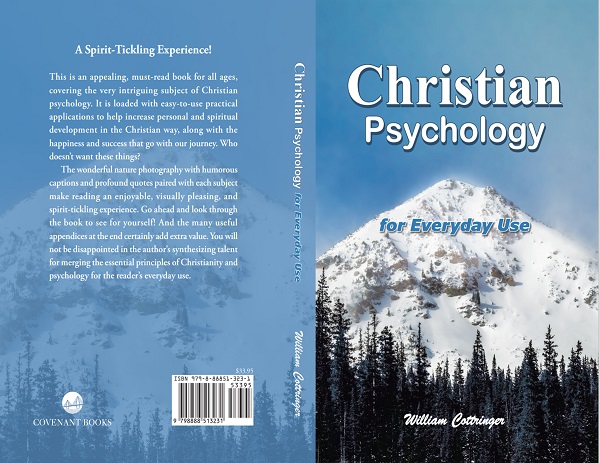
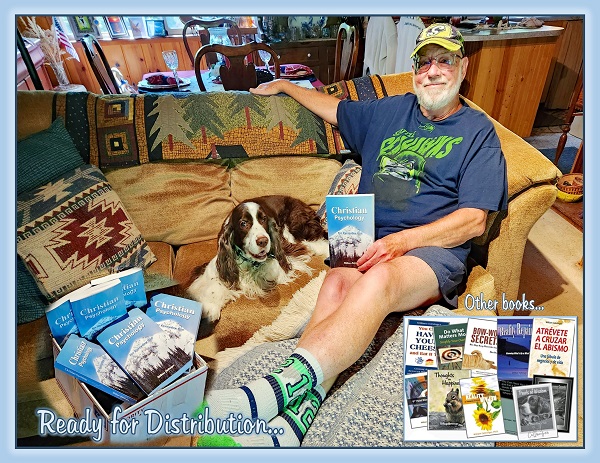
William Cottringer, Ph.D. is President of Puget Sound Security, Inc. in Bellevue, WA. He is author of You Can Have Your Cheese & Eat It Too and The Bow-Wow Secrets. He can be reached at (425) 454-5011 or bcottringer.pssp.net

















“Knowing”
This night comes down in slow degrees
Knowing
All untimely questions will arise
It will ruffle the temper of many
To sour my thoughts
And spoil my vision
With one foot on a banana peel
The other in my mouth
As the sad song of the lonely bird
Will sing along with me
Happy tunes there will never be
Casting your blazing eyes at me
As the night come down on me
Knowing
I...t can never be
Love Tinka