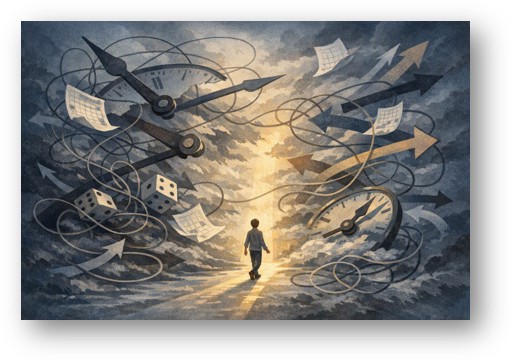
 Words can be enabling or disabling and that reality effects the quality of our live's in a major way which needs some attention to restore balance.
ENABLING VS. DISABLING WORDS
By
Bill Cottringer
In the beginning, we invented words to represent real things in our world that we eventually discovered
couldn’t be shown firsthand. If the sun and moon weren’t visible it was awkward to refer to these things and we certainly couldn’t pluck them from the sky; and when we found an interesting tree, rock or animal on a journey, carrying them back to show our friends in person just wasn’t possible. Somewhere along the way words began to take on more importance and reality than the more real objects they were invented to represent—from a “finger” pointing towards something to the actual something itself.
I suspect the main cause of this shift came about as a result of the dual system of communication we invented without realizing what this involved. We speak, write, hear and read both verbally and non-verbally. The interaction between these two systems has built a tower of babble, which makes good communication today extremely difficult.
These two systems of communication are actually mutually exclusive, but we often forget that fact. Verbal communication is precise, definitive, permanent, and rational; while non-verbal communication is vague, undefined, ephemeral and emotional. In a sense verbal communication plays by set rules whereas non-verbal communication makes
its own rules up as it goes. Never-the-less, for some reason or another, we imagine we can use verbal communication to understand and communicate about non-verbal communication and that is where most of the problems in human relationships start and end.
If we are to topple this tower of babble we have created, then we must realize how we have inadvertently contaminated the verbal communication component of this dual system with the culprit that poisoned it. We have to
direct the snake to bite its own tail and to get the tail to stop wagging the dog. I suggest we give serious
consideration to re-defining some key words to help shift our present negative, disabling focus and effect of certain words towards a more positive, enabling one.
Consider this idea: The way you define something has a lot to do with how much or how little of it you have
and the subsequent impact that has on the quality of your life. Hard to imagine? Words and the private definitions and connotations we give to these words can be either disabling or enabling. Disabling words disable life; enabling ones enable it. Which side of this equation do we really want to be on?
Some important words in the English language have obviously become more disabling than they may need to be, because they can collectively lead to a very unhappy, unsuccessful life of quiet desperation. Why just walk and survive when you can fly and thrive? Why just be “not unhappy” when you can be blissfully joyful? Perhaps you may want to rethink the definitions you give these and other important words. Are you disabling or enabling yourself
with your definitions of these thirty words? Which way makes more sense?
WORD AND MEANING
LETTING GO: Giving up a sense of control vs. Gaining real control by losing imaginary control.
CONFLICT: An ugly disagreement or problem to be avoided or attacked vs. An opportunity to learn, grow and improve into your best.
ACCEPTANCE: Being weakly passive and blindly tolerating everything vs. Understanding something better so you can accept it easier.
SUCCESS: Doing certain things and acquiring stuff to prove success vs. Giving your best effort in improving whatever you are doing right now.
OBEDIENCE: Being weak and subservient to someone else who is stronger and more powerful vs. Obeying natural laws of life willfully and enthusiastically to get the right results.
SURRENDER: Quitting and giving up vs. Accepting the realities that are not under our control.
LOVE: A lovely, intoxicating feeling to enjoy (noun) vs. Giving generously, unconditionally and unselfishly (verb).
FAILURE: Having faults, making fatal mistakes, and losing vs. Having an opportunity to try again with
better information.
COMMON SENSE: Something you have to be born with vs. Something you can learn.
PEACE OF MIND: Freedom from all turmoil, problems, and conflict vs. Understanding the positive purpose in negative things such as turmoil.
POWER: Disabling weaker people to become weaker vs. Enabling weaker people to become stronger.
SELF-CENTERED: Being selfish, narcissistic and egotistical vs. Being humbly balanced between self and others.
SOUL: Some mysterious entity that survives death after life vs. Our eternal, collective connection with God that craves vivid, real experiences in creating and growing.
CITIZENSHIP: Getting benefits from membership in a group vs. Being responsible and contributing to a team effort in a group.
ASSUMPTIONS: Something you have to start with vs. Something you can always verify.
HAPPINESS: A feeling you get when your mind and heart seem to be satisfied vs. Something that you both do and receive from living a good life.
TIME: The mechanical sequence of past, present and future that flies or drags by vs. The psychological perception of an eternal now moment that has no past or future and lasts indefinitely.
RELIGION: The absolute truth about everything in life and death vs. A mere finger pointing towards indescribable, infinite realities.
SPIRITUALITY: The direct, mystical experience and meaning of religion vs. Mystical experience that can be
better understood with sound theology.
GOOD
COMMUNICATION: Skilled talking and writing vs. Active listening/reading and accurate/complete understanding.
OPTIMISM: Always thinking positively and hoping for nothing but the best vs. Expecting that good things will outweigh the bad ones.
ADVERSITY: A painful test to pass or fail vs. An opportunity to grow into your best character.
GOOD TIMING: Being at the right place at the right time vs. Slowing down to become more sensitive to moments of opportunity.
FEE WILL: The freedom to rebel and do your own thing in your own way vs. The response-ability to want to cooperate and follow life’s laws.
MORALITY: Following set rules of conduct that often deny pleasure vs. Listening to your conscience and
practicing the Golden Rule.
JUDGING: Criticizing others for doing something you don’t like vs. Discerning what is right and good
for you to get the results you want.
RELATIONSHIP: Sacrificing individuality vs. Gaining a sense of true partnership that includes individuality.
GOD: A separate, external ruler of the universe vs. An internal part of everything that desires to work in harmony.
DEVIL: The horned guy in a red suit and pitchfork who scatters havoc vs. Any irresponsible choices that have harmful, disabling consequences.
EVIL: Inherent badness and meanness in people vs. Extreme conditions that disturbingly emphasize the value of goodness.
CHANGE: Something that interferes vs. Something that facilitates.
Which meanings and interpretations help create a better life? What words need re-defining in your life?
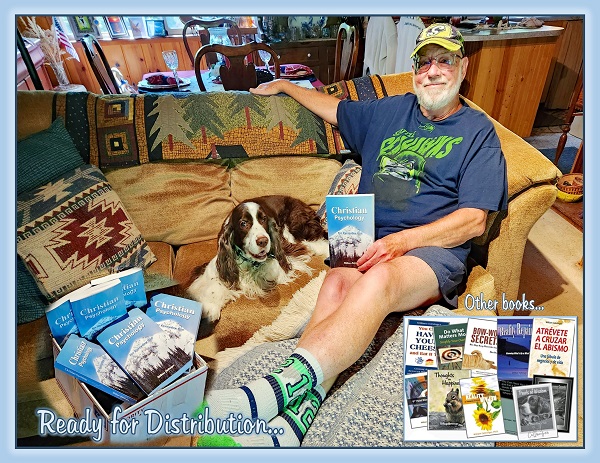
William Cottringer, Ph.D. is President of Puget Sound Security in Bellevue, WA. He is author of You Can Have Your
Cheese & Eat It Too and The Bow-Wow Secrets. He can be reached at (425) 454-5011 or bcottringer.pssp.net
|