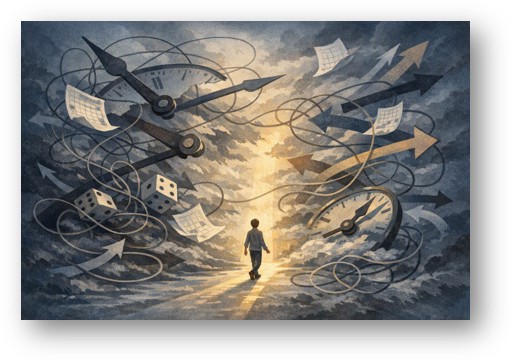
 Life is a series of tests--lessons to be learned. Two important areas of testing are in work and relationships.
LIFE AS A TEST
by
Bill Cottringer
One of the advantages of growing older is that your big picture keeps getting bigger and starts to include information that helps you make more sense out of what is right in front of you. From the advantageous viewpoint of being able to look back upon my life, I can now see that it has all been a giant series of tests. Everything that has ever happened to me requiring a response has been a test of sorts. When I learned the lesson I passed the test and felt good, and when I didn’t, I got all the rest. And like other tests with the end in sight, I am getting nervous about the final exam grade I will get.
My evolving bigger picture has also taught me a secret worth sharing: Nobody ever said there was a rule against collaborating with others to get a better grade on the test! The questions or the correct answers don’t have to be a guessing game. When we have questions it is okay to ask them and when we find answers it is okay to share them. Here are some good questions and some good answers.
The main question I have always had is, what the heck am I supposed to be doing here? Put another way, what is my purpose in life? My life has been a series of attempts to answer this perplexing question, resulting in a mixture of both bruises and broken bones and bliss and benefits—successes and failures. At this point in my life, I have come to the tentative conclusion that this is the test of life—to figure out the answer to this single most important question. I would like to share my tentative answer, to see if I am getting closer to being right.
I believe we all have the same purpose that was assigned to us, but that we get to choose how to carry it out in our own special way. Sometimes we are doing this without even knowing it. It is more satisfying to know it though.
A universal purpose we can all easily identify with is: To give our best performance as a team member to help the team get to the finish line. The answers we need to collaborate on is: Where is the finish line? And how can we get there easily and quickly? Our real purpose in life is to see this destination clear enough to discuss it intelligently with others for confirmation. Personally, I suspect the finish line is closer than we imagine—right here in our most frequent day-to-day activities: Work and Relationships.
WORK
We can help ourselves and others get a clearer view of the finishing line and the best path there, by taking inventory of our personal toolbox of talents and gifts and using each tool appropriately to answer questions as they arise in our work. When we adopt the right work attitude—our work is a great opportunity for us to grow and become our best, and develop successful thinking—using a mixture of logic, creativity and common sense to solve work problems, we are most productive and satisfied. Anything less just results in a foggy vision of the finish line and wandering down dead end paths. The more you contribute to your workplace, the more you get back.
Whatever work you do—from being a stay-at-home mom to a corporate executive—you get the opportunity to use your special skills to be successful in helping your team get to the finish line. You do this by using your unique talents to build good working relationships, be productive, and achieve mutual goals through good communication, focused determination, giving and taking, friendliness, creativity, flexible thinking, measuring progress and adapting. Probably more than anything though, it is your positive, accommodating and cooperating attitude of fitting in first, before you try to re-arrange everything from the outside-in, which nets you a world of success.
REALTIONSHIPS
Relationships are a major part of the test of life. The challenge is to have loving, productive and satisfying relationships with other team members by overcoming all the human tendencies that inhibit such healthy relationships. Both our work and private lives offer great opportunities to have good relationships, once we realize how to control our own human tendencies that interfere—and there are a lot of these, such as being a little too self-centered, waiting for the other person to change their bad habits, allowing yourself to slip precariously out of balance, having unrealistic expectations for yourself and others, being an unlikable person with serious character flaws, focusing too much on negative differences, denying or running from conflict, and creating unnecessarily defensive communication.
The challenge of having good relationships—so we can share our secrets and suspicions about the finish line—is to learn how to love unconditionally. This may be a hidden purpose in life that affects everything else we do. Unconditional love starts with giving up our expectations of getting something in return for our efforts and progresses when we start freely giving our most precious resource to others—our time.
By giving our best performance in our work and relationships we are defining the finish line for ourselves and others. What better way is there in being a contributing team member?
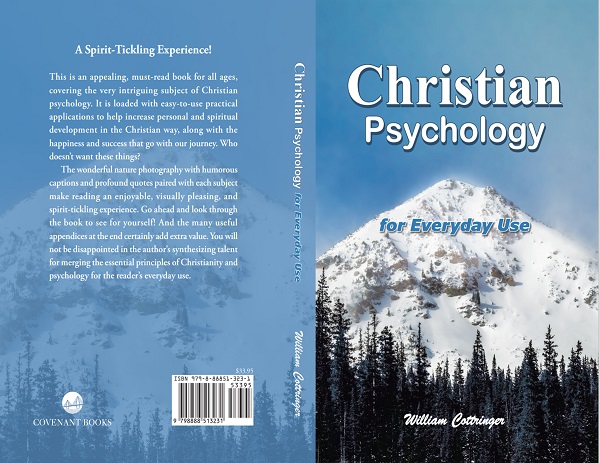
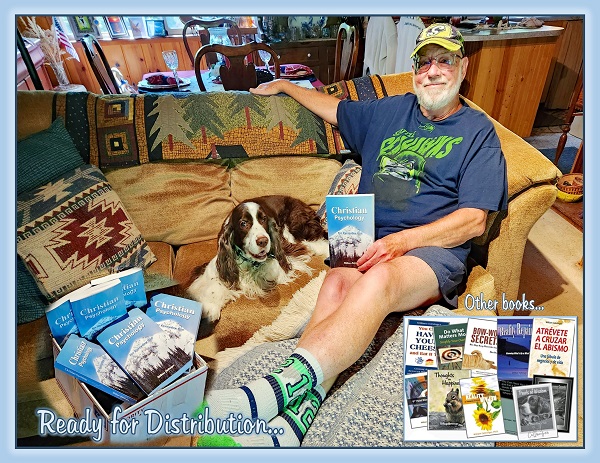
William Cottringer. Ph.D. is a Security Company CEO, Business Success Coach, College Teacher, Photographer, Sport Psychologist, and Writer from Bellevue, WA. He is author of You Can have Your Cheese & Eat It Too and The Bow-Wow Secrets: How Dogs Live Simple Lives & How People Don’t. He can be reached at (425) 454-5011.
|













Love Tinka