Falling in love is easy once you become lovable; being in love takes a little less selfishness and self-centeredness; but loving is where all the hard personal work comes in to play, but this is where all the real rewards are.
FROM FALLING IN LOVE TO BEING IN LOVE TO LOVING
By
Bill Cottringer
Over four decades of trial and error in relationships have taught me a valuable lesson. This lesson is to slow down and learn to listen to the lesson. The main purpose of a relationship is to get you to do something to get something you can’t get any other way. What we are all trying to do in a relationship is to close the gap between falling in love and being in love (nouns), with loving (verb). The pot of gold we can get is the joy and freedom that comes from learning how to love unconditionally in the toughest arena of all—in an intimate relationship with another human being.
You really don’t have to do much to fall in love. In fact, it is the passive approach that usually pulls in this initial, overpowering type of love (which may be sprinkled by angels above), once you learn the basics of being lovable. Being lovable simply requires you to put your ego and negative emotionality aside and focus more on being appealing, positive, honest, empathetic, polite, humorous, a good communicator and agreeable.
Being in love requires just a little more effort in the area of becoming less self-centered and selfish and a little more tolerant. It is the last part of this tri-journey—learning to love unconditionally—that is the longest voyage in the universe and where all the noisy failures occur. Admittedly, unconditional love is a very high, ideal standard, seemingly beyond our reach. But the fact that we can easily do this with children, pets and nature and even God with a little patience, is proof it is a real ideal.
Here are a few things I learned to change about myself to get closer to the finish line in the real challenge of learning how to love unconditionally in relationships:
LOSING PRIDE
There is no place for personal pride in learning to love unconditionally, but unfortunately there is no easy way to lose this hostage-holding affliction that we quickly and easily grow into from day one. The bad news is that losing pride may take as much time as learning it. The good news is that in getting to the finish line quicker, you can do two things at the same time to reduce the challenge in half— running faster and moving the finish line closer. You probably know how to do both and the only obstacle is in understanding what is keeping you from doing these things, if you haven’t already tried.
I believe the development of pride comes about with the illusion of having a separate self apart from everything else, thanks to the invention of mirrors. Without getting mired down in an abstract philosophical discussion, let me just say that all of life is made up of opposites—good and bad, up and down, me and you, and this and that. If you live long enough, you begin to see that these opposites are really just a different side to the same coin like night and day in a twenty-four hour day and Summer and Winter in the four seasons (unless you live in the tropics or the Antarctic). For most of us, it is towards the end of life when we get more in touch with the ultimate reality of union and oneness and realize that the pride of being a separate self only occurs to help us realize this ultimate reality—to put ourselves in our proper place so to speak. Humbling, but enlightening!
LIGHTEN UP ON EXPECTATIONS
Yes, it is very normal to have expectations in relationships. If I take care of my body to be healthy and appealing, then naturally I expect you will want to do this for me too. If I am open to learning, growing and improving, should I expect you to remain stagnant and status quo? If I have loads of career ambition, shouldn’t you have that too? If I go to the Catholic Church, where am I going to expect you to go? If I avoid unhealthy addictions, you will also do this too right? And I am not sure if I for “better or worse” really meant anything real to me when we were young, appealing, mentally upbeat, busy in our careers, financially comfortable, and healthy. We make promises too freely.
The problem is that these normal expectations put conditions on love. If the conditions are met then the love grows, but if the conditions are unmet, then there is big trouble in paradise. The bottom line to all this is that you can’t have your cake and eat it too, at least until you don’t have to—having expectations and having the joy and freedom that comes from learning how to lighten up on these expectations and love unconditionally. Certainly, loving unconditionally is an ideal, but one that we have to swim towards, no matter how cold or rough the water gets.
BECOMING MORE HONEST
Learning how to love unconditionally requires us to become more honest. This process starts with accepting the fact that honesty is a very difficult word to get agreement on, especially when we are very clear on it. A reality strikes me between the eyes—we are all just now becoming who we think we already are. The more we struggle to become more honest with ourselves, the more we see that deficiency in others. You really only get somewhere in the honesty voyage, when you accept how far you are from being perfectly honest in difficult situations yourself and stop worrying about everyone else’s dishonesty. The fact is we all have a long way to go in becoming honest.
I suppose my own honesty gains started with the realization that life and other people weren’t always the way I wanted them to be, mainly because I wasn’t being the way I wanted to be myself. What I learned was that you can never make someone else happy, only unhappy. That is because you have to start by accepting yourself for who you are—happy and unhappy—so you can become more realistic in dealing with other people’s vacillation. When you are happy, you expect and want the other person you are relating to, to be the same way. Here we go again with unrealistic expectations.
GETTING MORE BALANCED AND CENTERED
This was the tough part for a person stimulated to extremes by ADHD, like me. But if you stop to think about it, a place of temperance and balance is a very safe oasis for unconditional love to be nurtured and grow. Maybe there is an actual “golden mean” that earlier philosophers talked about, that is your real love spot—your true self which is naturally loving and lovable. Extremes in either direction of this center spot may give off negative chemistry that “attacks” love.
The real trick in becoming more balanced is to know the few things that you may need to be leaning more towards and the very few that you go all the way with. For me, it was this latter part that has been the hardest lesson and my conclusion is that genuine forgiveness, good money management, relationship commitment and unconditional love are not things to ride the fence on. It’s all or nothing in these four areas, for me at least.
If you are in love, enjoy it while it lasts, but be prepared to do some personal growth work when it starts fizzling. If you are there, put some effort into losing your pride, increasing personal honesty, lightening up on your expectations and learning the few things you need to be unbalanced in. Joy and freedom are worth the effort to learn how to love unconditionally. They are the real gold at the end of the rainbow.
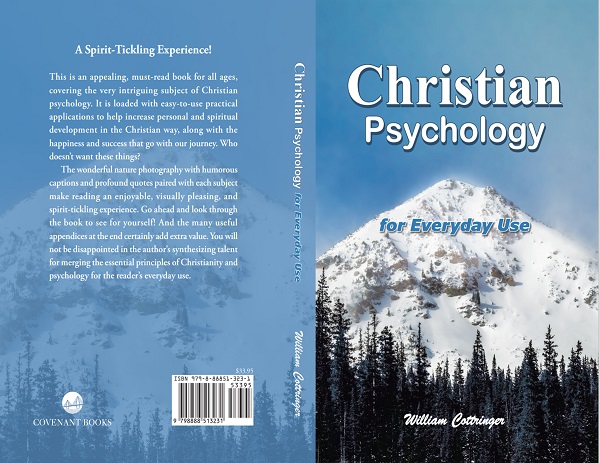
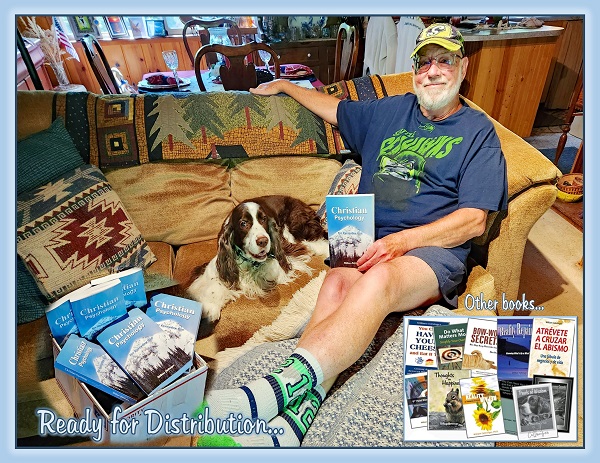
William Cottringer, Ph.D. is president of Puget Sound Security, Business Success Coach, Sport Psychologist, writer and photographer in Bellevue, WA. He is author of You Can Have Your Cheese & Eat It Too and The Bow-Wow Secrets: How Dogs Live Simple Lives & People Don’t. He welcomes comments and questions and can be reached at bcottringer.pssp.net or (425) 454-5011.
|














Angela
P.S. Sometimes words have negative connotations that spoil the message! The more I consider this reality, the more it rings true.