ADHD is both a curse and a gift. Unfortunately it takes awhile for the gift to emerge.
THE EVENTUAL GIFT OF ADHD
By
Bill Cottringer
In an earlier article, I portrayed ADHD as either a curse or gift, depending upon how you reacted to it. Probably the title should have been ADHD: Curse and Gift. And I might have been a tad premature by just anticipating the potential of the “gift” perspective, rather than actually experiencing the real gift version after my own transformation from its curse. So then, in a sense, this is the infamous ‘rest of the story.’
The most disruptive and disturbing aspect of ADHD is the constant need for and insatiable seeking of intensity and variety of experience. This primary symptom took me on a 62 year winding journey full of pot holes, dead ends and gravel roads—through 7 careers, 3 engagements, 4 marriages and 2 live-ins, twenty domains, 5 college degrees and so many other things I can’t even remember. I am just not sure how I escaped physical, emotional, mental and spiritual obesity from my ridiculous smorgasbord approach to life.
There is bad news for young people who are afflicted with this brain condition we call ADHD: the road ahead will be full of failures, disappointments and disasters in the form of major unhappiness, depressing discontent and rambunctious restlessness. But relax, as there is good news too: You will eventually discover the “one thing” that Curly was pointing towards in the City Slickers movie. This is the one and only thing that can bring you authentic happiness, genuine peace and real success. But you have to travel your own winding road to get there. And not even the Internet is a valid short cut.
I think we all have the illusion of being much better or worse than we think we are; and that mental habit makes the gap between where we are and where we want to be even wider than it needs to be in setting and achieving our goals. We never feel quite satisfied with what we have and often don’t know its value until we lose it. I believe we mistakenly think this drive is about positive motivation when its real purpose might be to frustrate us into seeing the reality that very few things are intrinsically rewarding over the long haul.
With me, I think the gap was between what my mind thought I wanted and what my soul knew I needed. And these things were rarely the same if ever. Unfortunately, I was so immersed in intensity and variety, that I wasn’t even tuned into the tremendous significance of this distinction between wants and needs. Actually I may have been caught up with the battle between my head and heart, which only the soul can intermediate effectively. But that is a lesson that often lasts a lifetime. Thinking and feeling are very difficult to separate from one another.
Now I realize you are probably thinking, “when is he going to explain the ‘one thing’ reference.” Patience please. You are probably already approaching this one thing just like I am, only probably a little earlier in the game. In this life we all engage in two main activities, frequently mixing them up—creating chaos and restoring order. We usually create chaotic messes before we finally see the need to clean up these messes, maybe so there is more room to make more chaotic messes. It doesn’t matter, sooner or later we all get tired of creating chaos. “Simplify” becomes the voluntary mantra of the masses.
Try to imagine, if you will, a chaos-producing brain getting overloaded with its own chaos, oozing out every brain cell. You probably can’t, unless you have ADHD yourself and even then it is hard to slow down long enough to get a vivid picture. That is the difficulty in explaining the reality of anything to someone who hasn’t experienced something firsthand. Well, to make a long story short, even an ADHD brain eventually burns out and gets tired of so much chaos.
But here is the irony. And this is a warning for fellow ADHER’s: All the trillions of unattended to data that tried to bombard your brain when you weren’t inclined to receive it, went somewhere. And where it went was to you unconscious brain for later retrieval and use. What will happen to you at one point when you get tired of the chaotic overload, is that it will all come back with full creative fury. But this time there is so much overload, that pure survival dictates the need for quality to rule over the quantity of intensity and variety. So, the simplification process eventually occurs. Thank heavens for that! Things do work out.
I hate to disappoint you though, by not speaking about the ‘one thing’ openly, but it is the one fundamental truth that everyone has to find all by themselves. Handholding doesn’t work because our basic nature won’t allow it to. Besides, one person can’t really explain it to another. All I can do is assure you that I have found it and offer a few clues for proof. I suspect the one thing is starting to get on everyone’s minds these days and if there is some sharing of deep secrets and suspicions through urgent conversations, it will come out. It is too big and too simple not to.
The one habit I have developed over the years that probably lead me to the “one thing” is making an effort to see a positive purpose to negative events, especially the nasty ones I would rather deny or ignore. That habit helped me to see the wisdom of looking for ways to rejoin illusory opposites and putting back together with my hands, what my mind took apart. This is my way of restoring order to the chaos I created. But this involves going from knowing to doing and that is the longest voyage in the universe. My only advice about speeding up this process is to encourage you to ask yourself why it is so hard to see the truth and then act on it like nothing else matters. We easily try so many other things that don’t have a chance of giving us a happy outcome, what is one more? It might be the ‘one thing.”
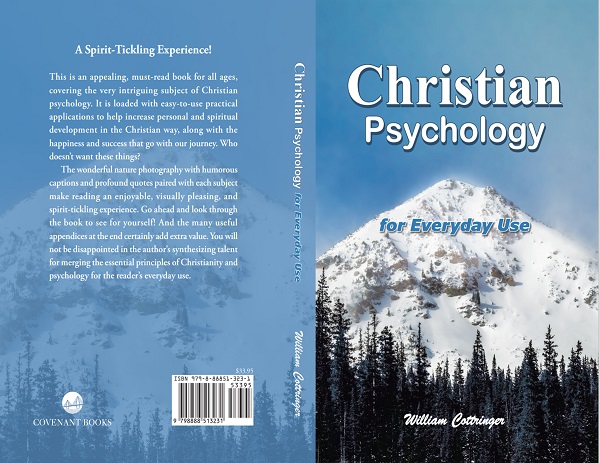
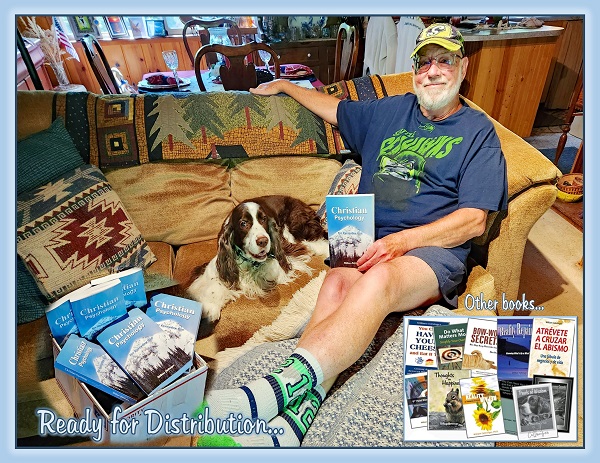
William Cottringer, Ph.D. is President of Puget Sound Security, Business Success Coach, Sport Psychologist, Writer and Photographer from Issaquah, WA. He is author of You Can have Your Cheese & Eat It Too and The Bow-Wow Secrets: How Dogs Live a Simple Life & People Don’t. Bill can be reached at (425) 454-5011 or bcottringer.pssp.net for questions or comments.
|


















Elizabeth