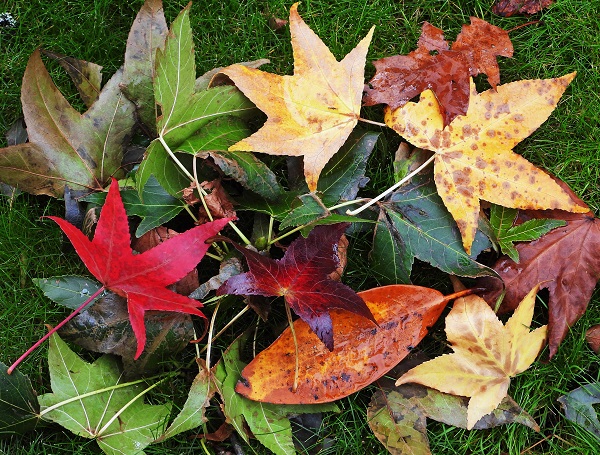
 Here is a way we can all put our differences aside and focus on helping one another focus on and achieve a mutual goal--to live a good life.
We Are Alike & We Are Different
By
Bill Cottringer
“It is a darn shame that we spend so much time arguing and being annoyed with our differences, and not enough time understanding and celebrating them.” ~The Author.
An important insight to apply for success is knowing the commonalities we have in unity as human beings and the differences that separate us and make us all different. Our unique ability of self-consciousness already separates us from the rest of life and that should be quite enough separation.
Since differences create conflicts and conflicts are an inevitable, perpetual part of life (that we can never conquer, just manage the best we can), it is helpful to move towards a sort of holy matrimony with our differences to rejoin all the polar opposites in our dualistic minds. Consider the following list of things we have in common and the way we make these commonalities into troublesome differences:
- We all think, feel, believe, decide, choose, reason, learn and behave, BUT our thoughts, feelings, beliefs, decisions, choices, reasoning, learning, and behaviors are all very different and unique with our varied personalities, abilities, upbringing and experiences in reading, listening and doing. That alone, is virtually an infinite number of different interactions with so many possible outcomes, that it is incomprehensible.
- We all have basic needs—physiological, safety and security, belongingness and love, self-esteem, and self-actualization; BUT our personal game plan regarding the order in which we pursue these needs and the effort we use in applying our mental efforts from the first bullet point above, in order to achieve these needs, is very different.
- We all must deal with a constant barrage of conflicts, problems and adversities, BUT our motivations, methods and abilities to deal with these adversities are different and get different results.
- We all look for meaning, purpose and satisfaction in living, BUT our ways of doing this is as different as we define things like love, right and wrong, justice and truth.
- We all communicate with each other as our main form of interaction, BUT the connections, conveyances, forum, meanings, tone, climate and interpretations are all different. In creating much miscommunication.
- We all dream, hope and have goals as to where we want to be in life, BUT our dreams, hopes and goals are all different, with differing levels of effort, commitment and results.
- We all have fears, BUT they are all different in intensity, the way they affect us and drive different actions.
- We all seek happiness and success and try to avoid pain and failure, BUT in our own unique way, usually by trial and error.
- We all pursue self-improvement in living a good life, morally and ethically, BUT again, in our own unique way and speed.
- We all think we know the truth, BUT our truths are all different, a realization which usually starts the conflicts.
Our present-day commercial economy is driven by innovation and one of the greatest innovations of our time is the Internet. We invented the Internet to make life better for us all as a common value, with pervasive access to more useful information and knowledge, to more friends, to more happiness, meaning, purpose, healthiness, beauty and money—more of everything.
But the one thing we don’t ever seem to learn from history is that we don’t learn from history. What we should be learning from past experience is that: (a) any great solution to a big problem or conflict, will always bring another, bigger problem with it, with more ramifications, and (b) we often get to the top rung of the ladder before we realize we have inadvertently placed it beside the wrong building.
In being hyper-cautious of not heeding these two warnings about how to join differences without sacrificing freedom or individuality, let me propose what we should at least consider as our common goal for our mutual focus and efforts. This common drive is for each of us to become a better person by practicing virtuous behavior and teaching that to our kids from living our own virtuosity as an example. Consider how improved the world would be if we all stived to practice and demonstrate these behaviors:
|
Virtue
|
Practical Meaning
|
|
· Acceptance
|
Being satisfied with the way things are without a panic to change them.
|
|
· Accountability
|
Taking responsibility for and owning consequences of our actions.
|
|
· Assertiveness
|
Politely standing up for our rights without being passive or aggressive.
|
|
· Balance
|
Not giving into extremes, going for the middle ground.
|
|
· Benevolence
|
Being kind with the disposition to do good.
|
|
· Caring
|
Having a genuine interest in and being concerned about others.
|
|
· Charity
|
Being generous and giving aid to those in need.
|
|
· Chastity
|
Purity in conduct and intentions.
|
|
· Commitment
|
Consistent allegiance to a purpose; being devoted to a cause.
|
|
· Cooperation
|
Joining with others for mutual benefit in achieving a shared goal.
|
|
· Courage
|
Overcoming your fears to act boldly in the face of danger.
|
|
· Courtesy
|
Being polite, respectful and thoughtful of other people.
|
|
· Curiosity
|
Maintaining a driving desire to find out about and know things.
|
|
· Dependability
|
Being reliable and worthy of trust, making good on your promises.
|
|
· Diligence
|
Always being conscientious and caring about what you are doing.
|
|
· Discipline
|
Practicing the consistent trait of self-control and well-behaved.
|
|
· Empathy
|
Identifying with and understanding others’ perspectives and feelings.
|
|
· Flexibility
|
Being adaptable and able to change to fit the situation appropriately.
|
|
· Forgiveness
|
Ceasing to be angry over others’ mistakes and transgressions.
|
|
· Fortitude
|
Persistence in strength of mind to courageously endure adversity.
|
|
· Gratitude
|
Showing appreciation and being thankful.
|
|
· Honesty
|
Being truthful, sincere and not lying or cheating as a means to an end.
|
|
· Hope
|
Trusting in life’s wisdom and truths more that your own.
|
|
· Humility
|
Managing your ego to be modest and not arrogant or boastful.
|
|
· Humor
|
Not taking things so seriously, being able to laugh at life and yourself.
|
|
· Impartiality
|
Seeing both sides of an issue with objectivity over subjectivity.
|
|
· Justice
|
Treating people fairly, with equality and respect.
|
|
· Love
|
Practicing unconditional and inherent regard and empathy for others.
|
|
· loyalty
|
Faithful steadfast allegiance to a person, cause, or duty.
|
|
· Mercy
|
Feeling clemency, leniency and compassion with wrong-doers.
|
|
· Obedience
|
Willingness to obey and be controlled when necessary.
|
|
· Openness
|
Being agreeable to accept new ideas, candid and un-secretive.
|
|
· Patience
|
Ability to delay gratification and calmly endure trouble and pain.
|
|
· Peace
|
Freedom from mental agitation, serenity.
|
|
· Perseverance
|
Refusing to quit despite the adversity of failures and delays.
|
|
· Piety
|
Humble devotion to a higher ideal.
|
|
· Prudence
|
Wise or careful conduct; shrewd and thrifty in planning ahead.
|
|
· Resilience
|
Bouncing back from defeat or setbacks.
|
|
· Resourcefulness
|
Acting effectively and imaginatively in difficult situation.
|
|
· Reverence
|
Profound awe and respect.
|
|
· Selflessness
|
Giving up one’s benefit for the good of others.
|
|
· Simplicity
|
Being straightforward and unpretentious; not complex or complicated.
|
|
· Sincerity
|
Free from pretense or deceit; authentically genuine and real.
|
|
· Sobriety
|
Serious, solemn, and calm.
|
|
· Spontaneity
|
Behaving and speaking naturally, not planned; free from strategy.
|
|
· Tact
|
Thoughtfulness in dealing with others without being offensive.
|
|
· Temperance
|
Moderation and self-restraint in behavior and expression.
|
|
· Tolerance
|
Tending to permit, allow and accept something.
|
|
· Trustworthiness
|
Trusting others and being trusted by them
|
|
· Unity
|
Freedom from division, sense of community of shared values.
|
|
· Wisdom
|
Knowing how things work to get the best results.
|
|
· Zeal
|
Having enthusiasm and eagerness; being zestful.
|
If this list is too much to take on, consider Aristotle’s short list:
Courage- To not define yourself by fear, but to live bravely.
Temperance- To live in moderation and not seek joy from material wealth.
Liberality- To not restrict oneself but to live freely.
Magnificence- To be charismatic and move in style.
Magnanimity- To possess a spirit of generosity.
“Courage is the most important of all the virtues because without courage, you can't practice any other virtue consistently.” ~Maya Angelou.
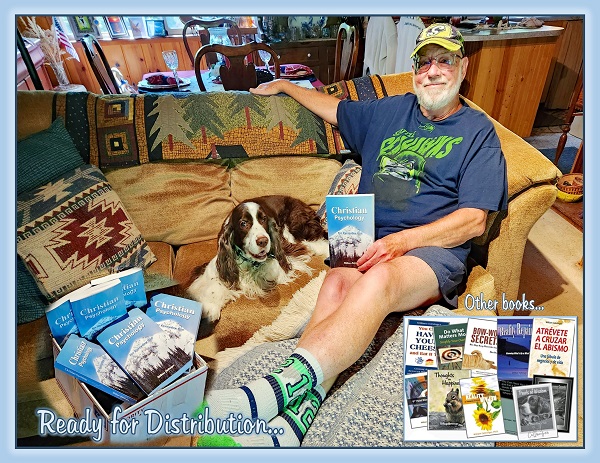
William Cottringer, Ph.D. is Executive Vice President of Puget Sound Security in Bellevue, WA, along with being a Sport Psychologist, Business Success Coach, Photographer and Writer living on the scenic Snoqualmie River and mountains of North Bend. He is author of several business and self-development books, including, Re-Braining for 2000 (MJR Publishing); The Prosperity Zone (Authorlink Press); You Can Have Your Cheese & Eat It Too (Executive Excellence); The Bow-Wow Secrets (Wisdom Tree); Do What Matters Most and “P” Point Management (Atlantic Book Publishers); Reality Repair, (Global Vision Press), Reality Repair Rx (Publish America); Thoughts on Happiness; Pearls of Wisdom: A Dog’s Tale (Covenant Books, Inc.) Coming soon: A Cliché a day will keep the Vet Away (Another Dog’s Tale). Bill can be reached for comments or questions at (206) 914-1863 or ckuretdoc.comcast.net.
|