The Three Core Conflicts
by
Bill Cottringer
“Unresolved conflicts usually return as noisier versions with more intensity, vengeance and difficulty.” ~The author.
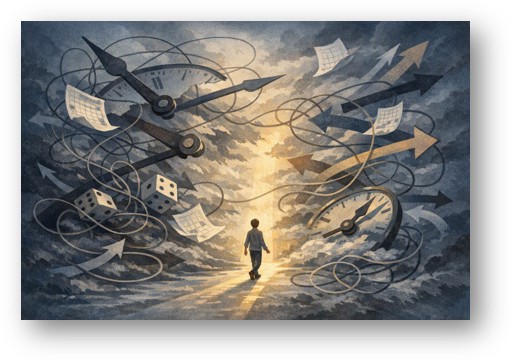
There are three core conflicts for humans: (1) Us vs. life (2) Us vs. others, and (3) Us vs. ourselves. We all experience repeated episodes of these three categories of conflicts and all good stories in books and movies include these core conflicts and their proposed resolutions. We have effective strategies for dealing with the first two types of conflicts—us vs. life and us vs. others—but we are still struggling with the third variety—us vs. ourselves, and for very good reasons.
The us vs. ourselves conflict involves the perpetual battle between our two twins within—our thinking brains and feeling heart/soul. Our thinking brains loudly tell us what we think we want with relative certainty and clarity, while our feeling self whispers what we need with less clarity. Earlier psychologists believed that our thinking drove our behavior and if you didn’t want a certain behavior you had to eliminate the particular thoughts that resulted in the unwanted behavior. This was done by not rewarding the wrong thoughts that drove the wrong behavior. Some thought you had to align the thoughts with an alternative, more productive behavior, resulting on modification of the behavior symptoms.
There has been an increased interest in an intermediate function between thoughts and behaviors and that is the feelings we have about our thoughts. So, although our minds tell us what we think we want, it is our feelings that motivate these thoughts into action. The trouble here is that thoughts are about wants and feelings are about needs and that conflict adds a new dimension to the us vs. ourselves battle.
For example, we may think we have arrived at the best and most accurate landing spot on an important issue, choice or decision. That alone doesn’t result in any action or response. But if we feel strongly, one way or the other about what we are thinking being correct, then we are likely to respond accordingly. And of course, there are only three possible responses to any conflict, whether it be us against life, others or ourselves. These possibilities are to do nothing and continue suffering silently or complaining out loud; run away in flight against fright; or stay and fight for the right outcome.
Moreover, there are two additional glitches to this thinking-feeling-behavior equation: These are:
· Although we sometimes work very hard to thoughtfully anticipate the consequences of our planned actions, there just is no way to predict what will happen with any degree of certainty. That is unless the sequence is a pre-arranged package like if you willfully murder someone and get caught, you are highly likely to spend the rest of your life in prison. On the other hand, our intuitive feelings may very well know what the consequences are likely to be with both good and bad choices, but they do not know how to warn us about danger or opportunity, beyond a vague sense.
· The second glitch is that our thinking our feeling parts use a different form of communication. The thinking realm uses ideas and words, while the feeling realm relies on images, sensations, symbols and sometimes dreams. The result is that our thoughts and feelings can’t talk to each other in order to work through the conflict at hand to get to the other side. This leaves us in a perplexing quandary.
Here is an example of how this works. Say we are in a marriage, job or living location that is making us very unhappy to the point of thinking we must do something about the situation, or we will die on the vine. We can think about what we could do—do nothing, accept things, and suffer; leave the marriage, job or living location that is building contempt which demands resolution with or without a plan B; or we could stay and fight to try and change our unhappiness with alternatives, which may make us happier.
But the divorce, job change or relocation, or the three stay, flight or fight options won’t materialize until our feelings about the best path show up clearly enough for us to know for sure, or at least sure enough to act. The dilemma is always who knows best—our head/mind or heart/soul? And what a terrible mess with the thinking and feeling about the situation unable to share their important information for a smart resolution!
This is all about fear of the unknown and trust and faith in life for always having our best interest at heart. And any thoughts or feelings we may have about these things are based on our past experiences of leaning towards optimism for more good outcomes than bad or towards pessimism for bad ones being prevalent, or somewhere in between. And since we usually get what we expect, the outcome seems predetermined. However, the good news is that mathematical probability laws run contrary for this sequence to continue into a permanent ongoing experience. This is because each new event in the future isn’t really tied to past events in reality, and the probability of the possible outcome will always go back to an initial zero sum starting point.
One healing suggestion to the us. vs. ourselves and thinking-feeling conflicts worth considering is to work on fine tuning our sensitivity to our feelings, sensations and intuitions. A viable alternative is to give less airtime to making pre-arranged judgments about certain outcomes from responses, actions, choices and decisions being good or bad, and more faith and trust in getting to where we need to be by following the stronger feelings. It is always nice when your thoughts and feelings agree, but unfortunately that rarely happens.
One final comment. To navigate this life properly, we need double vision. This is necessary to see both the ordinary material reality we are a seemingly inescapable part of, and also the higher spiritual reality that our hearts and souls know about. The material reality has the problems, and the spirit world has the solutions. We need both to move from surviving to thriving.
“Peace is not absence of conflict; it is the ability to handle conflict by peaceful means.” ~Ronald Reagan.
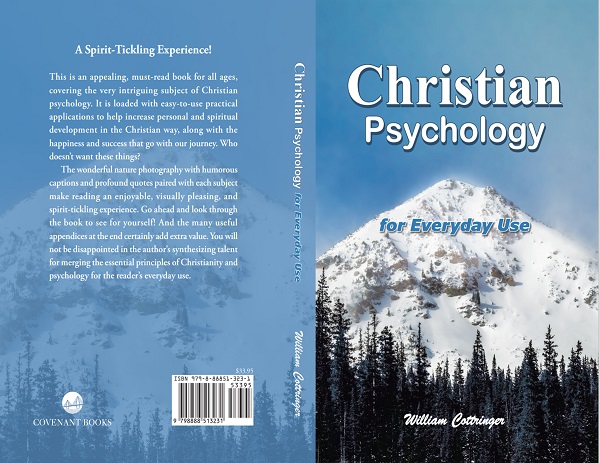
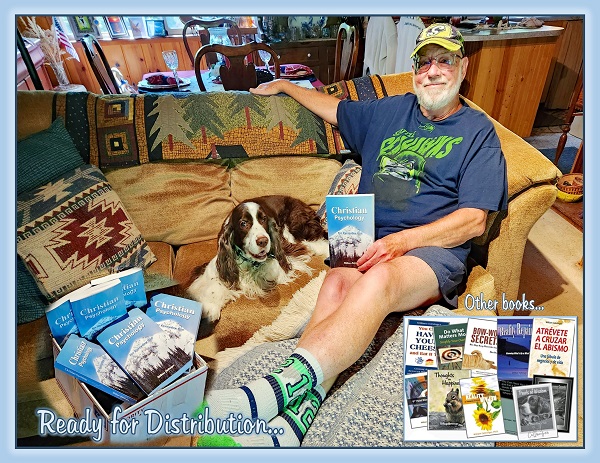
William Cottringer, Ph.D. is retired Executive Vice President of Puget Sound Security in Bellevue, WA, along with being a Sport Psychologist, Business Success Coach, Photographer and Writer living on the scenic Snoqualmie River and mountains of North Bend. He is author of several business and self-development books, including, Re-Braining for 2000 (MJR Publishing); The Prosperity Zone (Authorlink Press); You Can Have Your Cheese & Eat It Too (Executive Excellence); The Bow-Wow Secrets (Wisdom Tree); Do What Matters Most and “P” Point Management (Atlantic Book Publishers); Reality Repair, (Global Vision Press), Reality Repair Rx (Publish America); Thoughts on Happiness; Pearls of Wisdom: A Dog’s Tale (Covenant Books, Inc.) Coming soon: A Cliché a day will keep the Vet Away (Another Dog’s Tale). Bill can be reached for comments or questions at (206) 914-1863 or ckuretdoc.comcast.net.