A Serious Limitation with Words
by
Bill Cottringer
“Silence is the language of God, all else is poor translation.” ~Rumi.
Ever since being a young acolyte in the Episcopal Church studying the Bible and doing a book report on it for English class in high school, I have always been intrigued with the literal and metaphorical meanings of two declarations in the book of John. The first fiat is “In the beginning, was the Word”) (John: 1:1) and the second is “The Truth will set you free” (John 8:32). I’ll start things off with the Word and end with the freeing Truth.
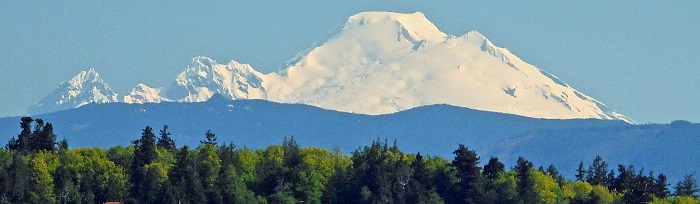
In looking back through the rear-view mirror, it seems as though we originally invented a language of words to stand for things that were too large, too difficult to carry around, or too far away to show firsthand, things like mountains, oceans, stars, beaches, forests, and elephants. Before this, we first started noticing obvious differences in everything from ourselves, with the ability to be self-conscious and have the compelling sense we were separate and distinct from everything else.
And, thanks to mirrors, we had the undeniable experience and certainty of the existence of ourselves apart from every other thing around us. By the way, this self-consciousness created the three conflicts from which none of us can escape including us vs. life, us vs. others, and us vs. ourselves. Thus seems to hold true at least until we understand how words can keep us hostage in realities that aren’t really there, except in our imagination.
Soon we divided the whole world into either-or opposite this and that words, and even added the opposite qualities to judge those opposites, such as good vs. bad, pleasure vs. pain, right vs. wrong, and desirable vs. undesirable. One pair of opposites that has a lot of influence on our behavior is thinking vs. feeling. At any rate, we have grown our language of words exponentially, with varied denotative word meanings and a multitude of connotative meanings subject to personal interpretations. The result is that there is too much abstract space between the words we speak and write and the actual things the words are supposed to represent. Just image the thinking part of our brains communicating in words to our emotional parts of the brain, which sense in images. No meaningful connection will ever occur until we invent a common language.
This all reminds me of an adage I knew before I knew how to spell things like epistemology, that being that “How we define things like success, happiness, truth, love and justice, determines how much or how little of the thing we have in hand.” So, in this sense, words have the power to shape reality and even create new realities. The Gestalt Principle takes over now, where the whole is much more than the mere sum of its own. Computers epitomize this universal psychological principle. So do guns in anyone’s hands and NBA teams which paly like teams, rather than a collection of superstars.
This is a follow-up article to admit the failures of using relative words to capture the essence of understanding the absolute reality of what we have possibly mistakenly called the “Great Divide,” which we are all sensing and the “VUCA” driving forces (Volatility, Uncertainty, Complexity, and Ambiguity) as we are calling these things to explain the dynamics of the event. We are no further along in our understanding of this escalating event than we were in 1987, when it was first articulated.
However, a lifelong college friend of mine recently reminded me that this VUCA world we seem to be living in now, is like art, whose real truth, beauty, and meaning all lie within the beholder's eyes. VUCA is merely a relative term that is only trying but really failing, to provide meaning to an absolute experience of reality, which we are only trying to understand, maybe to see if it is more good or more harmful and whether we can, can’t or don’t need to do anything about. First comes the Word, or the metaphorical absolute reality the relative word is trying to show.
When we come face to face with an utter and complete understanding of what the limitations of words really means for us--that we just use words to try and capture the essence of the true meaning of an unnamable experience, that ironically can't be captured wholly with these words--then we are coming closer to glimpsing into the absolute reality our words are pointing towards. Such is the case of the relative, un-namable/unknowable word "God" and what other religious, philosophical or spiritually flavored words really mean. In this spirit, words tend to spoil the experience, by diluting it to fit more comfortably in our small minds and only be partially grasped for quick and easy practical application. Paradoxically, maybe the real God-like experience is both nothing and everything. But how can we possibly understand these two nebulous terms?
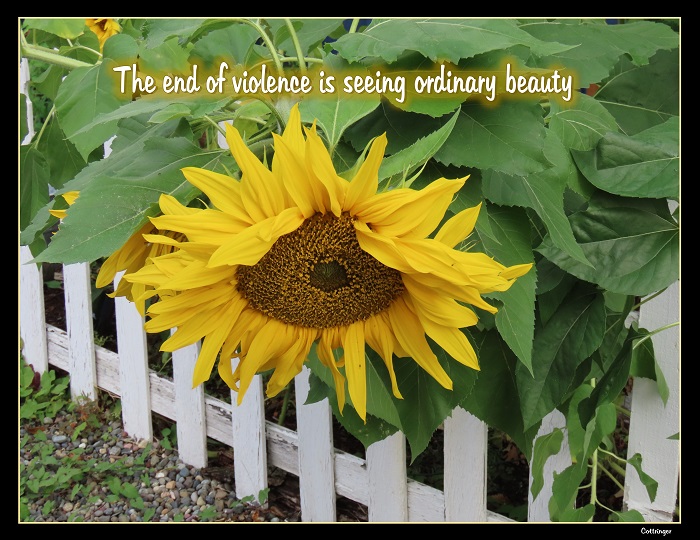
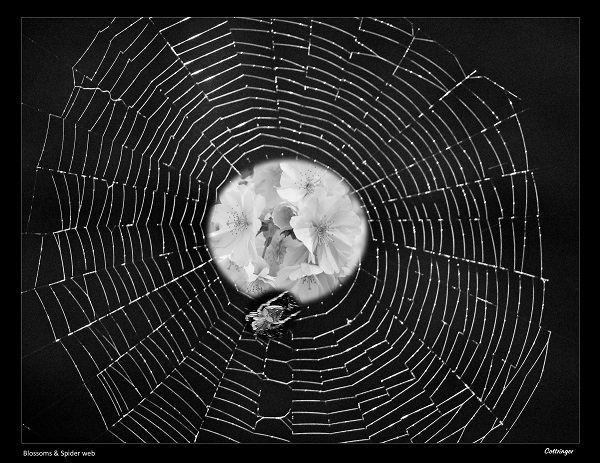
This is why art, music, literature, photography, and poetry are more successful in showing absolute realities, wisely using a different sort of language. This smart admonition goes along with what Einstein said earlier..."That you can't solve a problem by using the same kind of thinking (language), that created the problem. I guess that is why mathematics is better at proving absolute truths than the words used by scientists, philosophers, psychologists, and theologians.
Isn't this a fundamental problem for teachers to try and overcome? Using feeble words to explain truths about realities in life they think students need to understand to be successful and happy in living good lives? Maybe all the helpers in our worlds face this dilemma? It is entirely feasible that an awareness that this problem exists, helps loosen the problem-solving knot, a little bit, kind of like being aware of all the cognitive biases that keep us from seeing the real truth of something. And words become the eyes that can see everything but themselves.
In this sense, there is an absolute reality that such a words as "reincarnation" or “afterlife” are trying to capture the meaning of, but the real meaning is entirely missed. The closest way we can begin to understand the afterlife reincarnation process in the universe is with the quantum physics metaphor of something to nothing and back to something again, eternally...but losing our "selfness" in the transition to the "oneness" removes any relative memory of the process or "ownership" by a continuing soul’s energy that has already been transformed (although hypnosis has been used to recall prior lives and even foreign languages used in those prior lives; and of course we all know about the Deja Vu phenomenon).
So, calling the "Great Divide" the "great divide" being driven by "VUCA" force drivers does not at all capture the essence and full meaning of what is going on before us right now. And using this minimal understanding to change things for the better, is limited to the amount of absolute reality that the words themselves capture, which may be like shooting an arrow into the forest hoping it will strike a bullseye on a hidden, moving target somewhere deep in the forest, with a rubber bow and arrow while running in a random manner. Only if it is meant to be.
So, we have pulled the rug out from under us all, tossed the security blanket away, and are now beginning to understand the wisdom of insecurity—that all our most sacred knowledge, beliefs and truths are really just a faraway approximation of the full meaning of what we can never fully capture in this life This reality is not taking away any fun and surprises in our futile pursuit of knowledge and virtue, but rather just making the journey more enjoyable...as long as we don't take our role in this play of life, too seriously, because we will never get out of this life alive. Back to the closest thing we can get to as an absolute moral principle to live by—Love and do what you will, trying to do more good than harm. First, we will have to work on getting a common meaning to those two ideas.
We suddenly seem to have come to an end our my mindful mental journey to selflessness (if that is what it is), but maybe it is just the beginning...and that may depend upon what words we choose to use to describe the unfolding experience (of what we have previously called the “Great Divide”) and how others choose to interpret these words. We may have either found a very important insight, or just got lost going down another rabbit hole.
Good luck to us all, although we probably don't need it! And the important parts of this discussion may represent a few of the truths that can set you free, mainly that it is virtually impossible to know or sensibly talk about any absolute realities. And maybe they are only meant to be experienced and not analyzed. One word that can help more than hurt is “empathy” because it still retains part of its mystery to remain mysterious enough to be known as it is, like commonsense. You just know these things when you see them and don’t need words to prove it. In conclusion, “acceptance” is an action verb, just like “love,” and both are as close to absolute realities as you can get, in trying to move, without changing positions.
“But if thought corrupts language, language can also corrupt thought.” ~George Orwell, 1984.
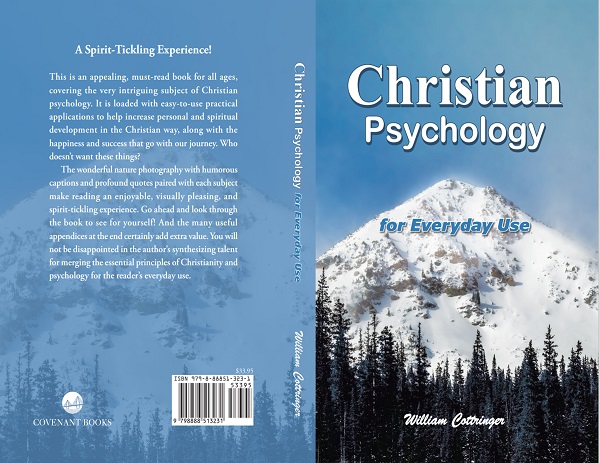
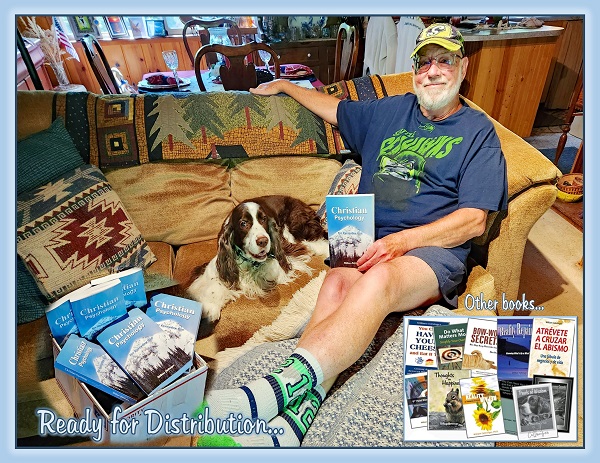
William Cottringer, Ph.D. is retired Executive Vice President of Puget Sound Security in Bellevue, WA, but still practices sport psychology, business success coaching, photography, and writing, living on the scenic Snoqualmie River and mountains of North Bend. He is also on the Board of Directors of the Because Organization, an intervention program in human trafficking. Bill is author of several business and self-development books, including, Re-Braining for 2000 (MJR Publishing); The Prosperity Zone (Authorlink Press); You Can Have Your Cheese & Eat It Too (Executive Excellence); The Bow-Wow Secrets (Wisdom Tree); Do What Matters Most and “P” Point Management (Atlantic Book Publishers); Reality Repair (Global Vision Press), Reality Repair Rx (Publish America); Critical Thinking (Authorsden); Thoughts on Happiness, Pearls of Wisdom: A Dog’s Tale (Covenant Books, Inc.). Coming soon: A Cliché a day will keep the Vet Away and Christian Psychology for Everyday Use (Covenant Books, Inc.). Bill can be reached for comments or questions at (206)-914-1863 or ckuretdoc.comcast.net.



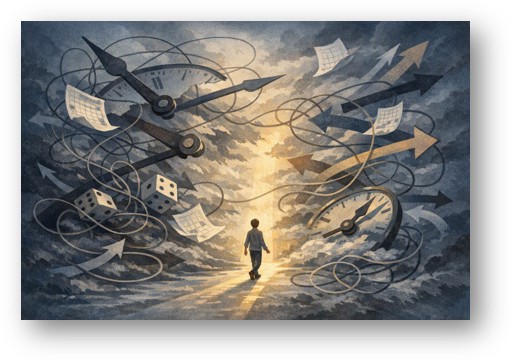









Those visual and mathematical approximations of reality, were far better than using the traditional boring lecture to teach subjects as concrete as problem-solving. However, as I've watched, some of those problem-solving techniques like mass production, value analysis, downsizing and outsourcing, have caused us more headaches than good.
And those that believe in absolutes. What can I say? I am a lifelong learner and have found that absolutes are really fuzzy logic. Wolves are beneficial to the environment and not bloodthirsty evil to be killed on sight. Just try to describe what the "afterlife really is," Why is it that we portray spaceships as being made of metal and roaring loudly in the vacuum of space where sound does not travel? I love the 21st century for its not only revealing new truths, but its debunking old and new rumors.
Ron