Ten Essential Elements of Violence Trauma Recovery
by William Cottringer Ph.D.
There are wounds that never show on the body that are deeper and more hurtful than anything that bleeds.
~Laurell K. Hamilton, Mistral's Kiss.
Building Blocks (the basement).
1. Supportive Communication.
The notion of creating a supportive climate to improve communication which is often shut down by the presence of a defensive tone, was first conceptualized by Gibb (1965). He maintained a supportive tone enhanced good communication by conveying the qualities of equality, acceptance, freedom, tentativeness, sensitivity, and spontaneity. On the other hand, defensive communication occurs with implications of superiority, judgment, control, certainty, indifference, and manipulation. Since verbal and behavioral communication is the main way most things happen, supportive communication is the style to use for trauma recovery, to counteract the defensiveness that helped create the trauma. Supportive collaboration is the new application.
2. Empathy.
Empathy is one of Goleman’s (2005) components of emotional intelligence. However, in his model, empathy is more about being sensitive to others’ emotions and later helpful to understand others’ different perspectives. De Waal (2009) expands the definition even further to intimate that empathy is the energy that seeks our authentic connection with other people and the rest of nature. The end result applied to violence trauma recovery is a variation of the Golden Rule and the question becomes: Why would we want to harm others when we are really harming a part of ourselves?
3. Emotional Intelligence.
Goleman (2005) summarizes the five main components of emotional intelligence as: (a) self-awareness (b) self-regulation (c) intrinsic motivation (d) sensitivity to others’ emotions (e) interpersonal social skills. His research raised the importance of EI by connecting all the dots between this concept and success in school, work, and relationships. The trauma intervention helpers using a high degree of emotional intelligence are more likely to help survivors to develop all these recovery building blocks on the way to achieving the five primary goals of hope, inner control, resilience, interdependence, and perceptual repair.
4. Mindfulness.
A very influential facilitator of any trauma recovery is the practice of mindfulness. This is a state of mind where we intentionally focus on the present moment, more than mind-wandering back to past memories or drifting off into future expectations, neither of which really exist, in their own right at least. It is only becoming more aware of what is going on right now in our immediate environment when we start noticing all the really important things, we have been failing to notice all along. These things are often noticing: (a) what we can control (our reactions) and can’t control (mostly everything else), and (b) the connection between how we act or react and the consequences those actions and reactions bring to us. Kabat-Zinn (2023) aptly describes the many benefits of and paths to mindfulness.
5. Trauma-Informed Care.
A key cornerstone of success trauma recovery is care that is trauma-informed. According to SAMHSA (2014) there are six guiding principles to trauma-informed care. These are:
· Safety.
· Trust and transparency.
· Collaboration and mutuality.
· Empowerment, voice, and choice.
· Understanding cultural, historical and gender issues.
· Peer support.
Expected Goals (the ceiling).
6. Hope.
Goodall (2021) makes a case for the utter importance of having hope for a better day in trying times. Victims of violence trauma stay victims by being hopeless and helpless. One of the most important goal of violence trauma recovery is to help victims become survivors by leaning away from hopeless pessimism to leaning towards hopeful optimism. Thinking, feeling, or believing can’t do this, only new behavior experiences that are positive and successful, in re-writing the negative brain circuits. The lack of hope tends to take away purpose and we all need both.
7. Inner Control.
Rotter (1966) was the first psychologist researching the importance of locus of control in mental health and pathology, especially internal vs. external control. Clearly, victims of violence trauma have a predominantly external locus of control, not having any sense of being in control of their past, present or future situations. This could be the core horror of all victimization and marginalization. Successful violence trauma recovery requires the survivors to gain a solid sense of inner control over their lives and how they act and react to what happens to them. This builds the needed competence and confidence.
8. Resilience.
Many authors, including Brooks & Goldstein (2004) have emphasized the paramount importance of being resilient to bounce back from setbacks and change failures into successes. Here again we can’t just think positively to build resilience muscles, without actually practicing it, especially when we may need it most and have the least of it. Studying trauma recovery failures may be the best way to spot the times and places where resilience could have made the difference, and that can be a strong motivating force to take advantage of the powerful influences of these other nine elements of violence trauma recovery. In a world of interconnectedness of the ten elements, trauma survival can get compounded recovery help.
9. Interdependence.
An important goal in violence trauma recovery is to help survivors move from a position of over-dependence to one or reasonable independence, so they can eventually live interdependently. Hübl & Averitt (2023) suggest the value of listening mindfully to all the interconnections of inner sensations, feelings, and information of independent things from the relational field. There is no doubt that the interdependence networks may becoming the ascendant metaphor of our day. Technology has only taken us halfway and now is the time for real human collaboration.
10. Perceptual Repair.
In the book Reality Repair, Cottringer (2010), maintains that it is not reality that needs to be repaired, but rather our incorrect and incomplete perceptions of it. Applying this thesis to violence trauma recovery goals, it is not the actual memory of the trauma that may need to be re-written in the brain, but rather a wrong perceptual memory of the event or over-perceived strength of feeling about the trauma impact. Again, thinking, feeling, or believing cannot rewrite the brain circuits. Only actual experience with new behaviors can do this.
The good news is that these five building blocks and 5 goals all interact with and support each other to help strengthen trauma recovery.
References
Brooks, R. and Goldstein, S. (2004). The power of resilience. New York: McGraw-Hill.
Cottringer, W.S. (2010). Reality repair: Fixing a lot, by knowing a little. New Delhi: Global Vision Press.
De Waal, F. (2009). The age of empathy: Nature’s lessons for a kinder society. NY: Harmony Books.
Gibb. J.R. (1965). Defensive Communication. Etc.: Review of General Semantics, 22(2), 221-229.
Goodall, J. (2021). The book of hope: A survival guide for trying times. NY: Celadon Books.
Goleman, D. (2005) Emotional intelligence: Why it can matter more than IQ. N.Y.: Bantam.
Hübl, T & Averitt, J. (2023). Attuned: Practicing interdependence to heal our trauma—And our world. Louisville, CO: Sounds True.
Kabat-Zinn. J. (2023). Wherever you go, there you are: Mindfulness meditation in everyday life. NY: Hatchette Books.
Rotter, J. (1966) ‘Generalized expectancies for internal versus external control of reinforcement’, Psychological Monographs, 80(1), 1–28).
Substance Abuse and Mental Health Services Administration. SAMHSA’s Concept of Trauma and Guidance for a Trauma-Informed Approach. HHS Publication No. (SMA) 14-4884. Rockville, MD: Substance Abuse and Mental Health Services Administration, 2014.
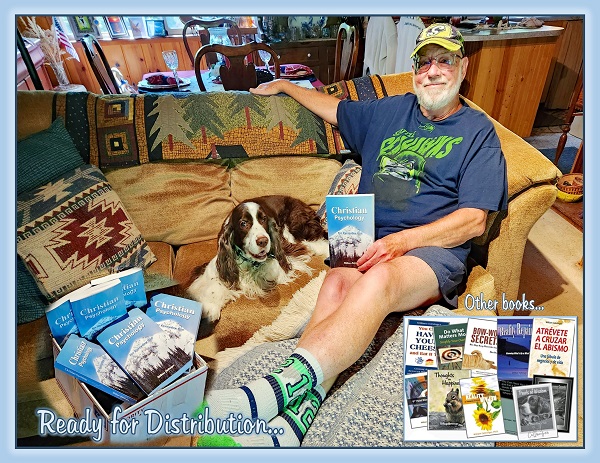
William Cottringer, Ph.D. is retired Executive Vice President of Puget Sound Security in Bellevue, WA, but still teaches criminal justice classes and practices business success coaching and sport psychology. He is also on the Board of Directors of the Because Organization, an intervention program in human trafficking, the King County Sheriff’s Community Advisory Board, and involved with volunteer work in several veteran’s groups and the horse therapy program at NWNHC Family Fund. Bill is author of several business and self-development books, including, Re-Braining for 2000 (MJR Publishing); The Prosperity Zone (Authorlink Press); You Can Have Your Cheese & Eat It Too (Executive Excellence); The Bow-Wow Secrets (Wisdom Tree); Do What Matters Most and “P” Point Management (Atlantic Book Publishers); Reality Repair (Global Vision Press), Reality Repair Rx (Publish America); Critical Thinking (Authorsden); Thoughts on Happiness, Pearls of Wisdom: A Dog’s Tale, and Christian Psychology (Covenant Books, Inc.). Coming soon: Reality Repair Rx + and Dog Logic. Bill can be reached for comments or questions at (206)-914-1863 or ckuretdoc.comcast.net.


























Ron