 The biggest challenge we have in life is to merge what we want to do in life with God's will for us. When our choices start matching God's desires, the music is melodious.
A LOVE SONG
By
Bill Cottringer and Anil Bhatnagar
Wayne Dyer colorfully defines the universe as one magnificently orchestrated love song. Modern Physicists now believe that the universe is one unified organism and that all living beings join together to provide the individual musical notes that sustain and accompany this love-song.
The purpose of each individual note is to be in sync with the music of which it forms an integral, harmonious part. Fulfilling this purpose is what gives us meaning, health, peace and intrinsic satisfaction. Of course, not participating in the song or being out of harmony has other not-so-comforting consequences.
No wonder, we secretly suspect the greatest challenge that we all have in living this life is to know God’s musical role in for us in this love song and to then accept and carry it out. Put another way, maybe the human journey we are on as spiritual beings—as Stephen Covey likes to say—is to discover how to merge the quality of music we want from life and the musical notes God needs from us, into the same love song. Reconciliation between these two things may be the single most important purpose in our lives.
Knowing, accepting and carrying out God’s musical will for us tends to go against our basic human nature. The popular human way is to follow our left brain’s insatiable quest to understand things (in our own terms) and obsessive drive to fix them (in the ways we prefer). Often, we are not happy if we are not controlling things to our expectations.
Fortunately the older and wiser we get, we finally wake up to an important realization—the more patience we practice in understanding this love song and our role in it, the less the song needs fixing or controlling. And at the same time, we wisely allow our creative right brains to develop our musical talents further so we can play an even bigger part in the song.
So in the meantime, how do we learn and accept our assigned part in the love song? It is all a matter of choices—choices to play this instrument or that note. The other important realization we get from our musical learning journey is that life is one really big behavior modification process. You make musical choices—even when you don’t consciously make them—and there are consequences for those choices. You make the right choices and you get the right harmony; you make the wrong choices and you get everything and anything else—basically disharmony.
If you are not getting the musical sounds you want and need (be careful—they may not be the same thing, and we are usually more aware of our wants than our needs)—then you have to rethink your choices of instruments and notes. A big part of the musical learning process is asking good questions. One such question we have discovered that appears to be a very successful tool in uncovering our role in the love song is this:
What musical choice is a little more difficult to make now but will likely result in the most valuable gain for the love song in the long run?
This test is deceivingly simple though. For example, if you are in a personal relationship and you are having serious concerns about conflicting spiritual or personal values—and one person wants to confront this conflict head on while the other just wants it to go away—each choice may be equally difficult for both people and equally beneficial in the long run.
The person who wants to confront the conflict with low notes from a trombone may need to learn and benefit from higher notes in violin-like sensitivity and patience toward others. The person who wants to run from the conflict with his or her flute, may need to stretch and grow by risking emotional danger in clashing some symbols or beating on a drum. The answer is an individual one that has to come from deep within and from repetitive self-conversations using this simple test.
Any great love song has worrisome moments of potential disharmony. The lion’s share of preventing any problem is in having a clear picture of what the problem is. Gradual awareness of disharmony helps dissolve it. Our main human problem seems to be to know and accept God’s role for us in his love song. But the real problem is that we want the joy of listening to the finished song, before we learn and carry out our part.
We can gradually uncover our musical role by continuously asking ourselves, what instrument and notes (choices) are most difficult for me right now and which ones will benefit the love song most in the long run? Joining in on the love song then becomes an ever-growing awareness of when we aren’t doing that. We are not necessarily being bad musicians, but rather just loitering and wasting valuable time.
The next important life choice that confronts you deserves to be put to this test: What choice will be a little more difficult for me now but will benefit me most in the long run? The answer will be the genuine contentment and success you experience from making the right choice.
Here is an intriguing framework to discover the musical genius in each of us:
(I)Instant Pain /Distant Pain
(Quadrant to be eliminated)
• Misusing our power to hurt others
• Expressing our anger
• Worrying about things that cannot be helped
• Feeling guilty without learning lessons for the future
• Planning revenge
• Being pessimistic, negative
• Carrying out unconscious programming
(II) Instant Pleasure/Distant Pain
(Quadrant to be avoided)
• Eating junk food and not exercising
• Taking revenge
• Smoking and substance abuse
• Making decisions based on short-term gains
• Avoiding conflict
• Chasing after what our mind thinks we want (little cheese)
• Resisting change, maintaining status quo
(III) Instant Pain /Distant Pleasure
(Learning Quadrant)
• Exercising and eating wisely
• Exploring self to close the gap between current and ideal self
• Learning, growing and improving
• Adapting to uncomfortable change
• Responding to negative acts with positive acts (forgiving)
• Thinking inclusively, reconciling opposites
• Confronting, resolving conflicts
(IV) Instant Pleasure /Distant Pleasure
(Reward Quadrant)
• Practicing Reiki , Yoga, meditation etc.
• Listening to soothing music
• Enjoying nature
• Carrying out the needs of our soul—love, compassion, creativity, understanding, wisdom (big cheese)
• Practicing self-less love and altruistic service
• Increasing conscious awareness
• Being our ideal self—productive, happy and content
Pick your instrument, study your music and play your harmonious notes in the love song.
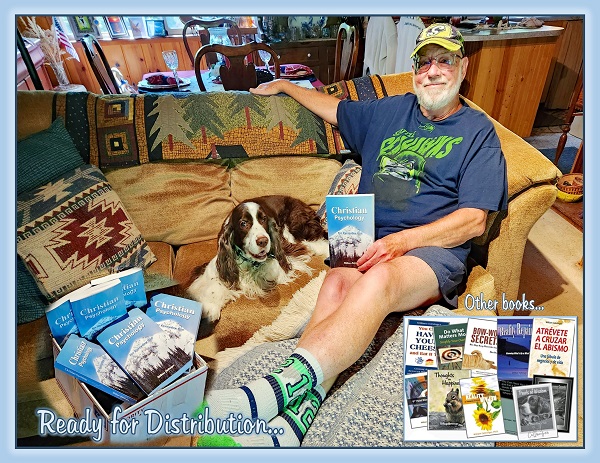
Bill Cottringer is a Success Coach, College Teacher and Writer from Collinsville, IL. He is author of You Can Have Your Cheese & Eat It Too. He can be reached at ckurtdoc.charter.net ;
Anil Bhatnagar is a corporate trainer, motivational speaker, career and personal growth coach, Reiki consultant, and author of four books: ‘Ten Keys to Corporate and Personal Success’, ‘Water the Roots: Leave the Leaves’, ‘The Little Book of Forgiveness’ and ‘Transform Your Life with Reiki’ He can be reached at: anil_bhatnagar_2000.yahoo.com or 91-951202773384
|