What Eye‑Glass Vendors Don’t Want You to See
by John Herlihy
There are certain places in American life where the ordinary citizen walks in unsuspecting and walks out diminished — not only in wallet, but in dignity. For me, the eyeglass shop has always been one of those places. I have never trusted them. Not twenty years ago, not today, and certainly not after my most recent encounter.
It begins innocently enough. You step inside, and immediately you are absorbed into their little world — a world of soft lighting, hushed voices, and the cultivated mystique of “professional care.” They usher you into the exam room as if you were entering a sanctuary. They speak in tones of concern and expertise. They invest time in you, and that investment is part of the trap.
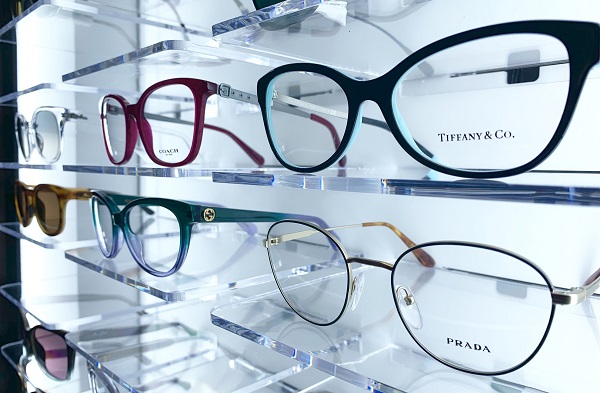
Then comes the ritual in disguise: the frames, the lenses, the coatings, the upgrades, the enhancements, the “options” that are never really optional. They parade the merchandise before you — from the flimsy to the designer, from the merely functional to the absurdly luxurious. And through it all, one thing is conspicuously absent: Price. Money is treated like a vulgarity. A contaminant, even a dirty word. Something not to be spoken aloud in polite optical society. You are expected to make choices in the dark, guided only by their reassurances and your own growing sense of obligation.
I learned this lesson the hard way twenty years ago, back when I had a good job and excellent insurance. I walked in expecting a simple pair of reading glasses. I walked out with the sickening realization that my “excellent” insurance — which covered up to $1,000 — still required me to pay another near $1,000 out of pocket. That was the day I began to understand the game.
I vowed never to be caught again. But vows are one thing; the slow erosion of affordability in American life is another. Every few years, like clockwork, I found myself back in the same position — needing glasses, navigating the same opaque rituals, and paying more than I could justify and this brings me to today.
I used one of my vacation days to go down to Miami Beach, hoping to get a second pair of glasses — a backup pair, nothing fancy, something functional in case my current pair broke or got lost. I can’t read a thing without them. I returned to the same little shop I’d used last year under my Aetna vision plan. Back then, I managed to get a decent pair for only $150 out of pocket and the insurance paid the excessive rest. A small victory. This I considered a small victory in comparison to the experience of decades earlier.
This time, I walked in with modest expectations and a clear request: I don’t need another eye exam. I want the same prescription, the same frames, the same lenses without the do-dads. Just an inexpensive second, back-up pair. The saleswoman — the same one as last year who sadly didn’t remember me — insisted otherwise. “You have to have the eye exam,” she said, as if it were a matter of federal law. Why? She couldn’t explain. Her English was limited, but her sales instincts were not. She took my insurance card and dove into the computer like a surgeon focusing on the operation at hand in an operating theater.
Out came the wooden box under her reception desk — the “cheap frames,” the ones they keep hidden under the counter like contraband. Flimsy, uninspiring, cheap frames that all looked alike and certainly not worth the price I knew was coming. Then, after the ritual delay, after the tapping of keys and the murmured calculations, she produced the number: $350. “Before or after the insurance payment,” I sheepishly asked. You can guess her response. I asked how much the insurance was paying. She couldn’t say. Or wouldn’t. The details were foggy, the explanations evasive, the entire process shrouded in the same old mystique. I thanked her politely and walked out. Another near‑miss. Another almost‑ripoff avoided by instinct and the demands of my limited budget.
As I stepped back into the sunlight, I realized something: This isn’t just about eyeglasses. It’s about the unaffordability of everything in modern American life. It’s about the quiet predilection built into the systems we rely on. It’s about the way ordinary people are maneuvered, manipulated, and monetized. It’s about the industries that thrive on opacity because transparency would destroy them.
Eyeglass vendors don’t want you to see the truth — that the product they sell is not vision, but confusion. Not clarity, but dependency. Not frames and lenses, but the illusion of expertise wrapped around a price you’re never allowed to know until it’s too late. And in times like these, when every dollar matters and every necessity feels like a luxury, that illusion becomes more than a nuisance. It becomes a quiet form of exploitation.
Another dispatch from the heartland of American commerce — where the customer is always right, but never fully informed and almost always ripped-off.











Always frugal, I haven't experienced what you have. I was diagnosed as myopic with astigmatism in the 10th grade. My first heavy rimmed plastic eyeglasses in the Buddy Holly style didn't endear me to the opposite sex and made me look like a geek. But I needed them to drive and watch TV. Took them off to read and write.
At 19 and in my second year of college, I spent $120 to get contact lens. My father called me, "Money bags." They were the cause of much eye irritation. One year later, when my hands were paralyzed, I could no longer put them in or take them out. I still have them. Somehow, when I found out that I couldn't get my broken frames replaced because the fashion had changed, I managed to get through my entire life with only about four different pair that never cost me any more than $100 to change. Since retired, unless I drove, I haven't worn glasses and I'm not wearing glasses to write this or read your article. And no cataracts, yet, like my twin brother as had removed, restoring 20-20 vision.
Finally, a few years ago, 60 Minutes had an expose about the eyeglass frame business. It seemed that one company in Italy had bought out nearly all of the eyeglass manufacturers. They were controlling the price of eyeglass frames from that small country. Including some brand names with very high prices. But since 2000 or so, print manufacturing and Internet companies have began to undercut those high prices. You just have to look or search the Internet to find them.
Ron