 Essays about various topics in current philosophy.
AUTHOR BIO:
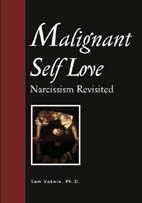
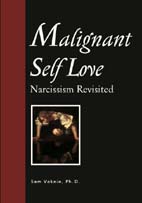
Sam Vaknin is the author of Malignant Self Love - Narcissism Revisited and After the Rain - How the West Lost the East. He served as a columnist for Central Europe Review, PopMatters, and eBookWeb, a United Press International (UPI) Senior Business Correspondent, and the editor of mental health and Central East Europe categories in The Open Directory, Bellaonline, and Suite101.
Until recently, he served as the Economic Advisor to the Government of Macedonia.
Visit Sam's Web site at http://samvak.tripod.com
The Sample Articles (please scroll down to review them):
I. The Aborted Contract
II. The Basic Dilemma of the Artist
III. The Fourth Law of Robotics
IV. The Impeachment of the President of the USA
V. Psychology as Storytelling
The Aborted Contract
By: Dr. Sam Vaknin
I. The Right to Life
It is a fundamental principle of most moral theories that all human beings have a right to life. The existence of a right implies obligations or duties of third parties towards the right-holder. One has a right AGAINST other people. The fact that one possesses a certain right - prescribes to others certain obligatory behaviours and proscribes certain acts or omissions. This Janus-like nature of rights and duties as two sides of the same ethical coin - creates great confusion. People often and easily confuse rights and their attendant duties or obligations with the morally decent, or even with the morally permissible. What one MUST do as a result of another's right - should never be confused with one SHOULD or OUGHT to do morally (in the absence of a right).
The right to life has six distinct strains:
IA. The right to be brought to life
IB. The right to be born
IC. The right to be maintained
ID. The right not to be killed
IE. The right to have one's life saved
IF. The right to save one's life (erroneously limited to the right to self-defence)
IG. The Right to terminate one's life
IH. The right to have one's life terminated
IA. The Right to be Brought to Life
Only living people have rights. There is a debate whether a fetus is a living person - but there can be no doubt that it exists. Its rights - whatever they are - derive from the fact that it exists. The right to be brought to life (the right to become or to be) pertains to a yet non-existent entity and, therefore, is null and void. Had this right existed, it would have implied an obligation or duty to give life to the unborn and the not yet conceived. No such duty or obligation exist.
IB. The Right to be Born
The right to be born crystallizes at the moment of voluntary and intentional fertilization. If a woman knowingly engages in sexual intercourse for the explicit and express purpose of having a child - then the resulting fertilized egg has a right to mature and be born. Furthermore, the born child has all the rights a child has against his parents: food, shelter, emotional nourishment, education, and so on.
It is debatable whether such rights of the fetus and, later, of the child, exist if the fertilization was either involuntary (rape) or unintentional ("accidental" pregnancies). It would seem that the fetus has a right to be kept alive outside the mother's womb, if possible. But it is not clear whether it has a right to go on using the mother's body, or resources, or to burden her in any way in order to sustain its own life (see IC below).
IC. The Right to be Maintained
Does one have the right to maintain one's life and prolong them at other people's expense? Does one have the right to use other people's bodies, their property, their time, their resources and to deprive them of pleasure, comfort, material possessions, income, or any other thing?
The answer is yes and no.
No one has a right to sustain his or her life, maintain, or prolong them at another INDIVIDUAL's expense (no matter how minimal and insignificant the sacrifice required is). Still, if a contract has been signed - implicitly or explicitly - between the parties, then such a right may crystallize in the contract and create corresponding duties and obligations, moral, as well as legal.
Example:
No fetus has a right to sustain its life, maintain, or prolong them at his mother's expense (no matter how minimal and insignificant the sacrifice required of her is). Still, if she signed a contract with the fetus - by knowingly and willingly and intentionally conceiving it - such a right has crystallized and has created corresponding duties and obligations of the mother towards her fetus.
On the other hand, everyone has a right to sustain his or her life, maintain, or prolong them at SOCIETY's expense (no matter how major and significant the resources required are). Still, if a contract has been signed - implicitly or explicitly - between the parties, then the abrogation of such a right may crystallize in the contract and create corresponding duties and obligations, moral, as well as legal.
Example:
Everyone has a right to sustain his or her life, maintain, or prolong them at society's expense. Public hospitals, state pension schemes, and police forces may be required to fulfill society's obligations - but fulfill them it must, no matter how major and significant the resources are. Still, if a person volunteered to join the army and a contract has been signed between the parties, then this right has been thus abrogated and the individual assumed certain duties and obligations, including the duty or obligation to give up his or her life to society.
ID. The Right not to be Killed
Every person has the right not to be killed unjustly. What constitutes "just killing" is a matter for an ethical calculus in the framework of a social contract.
But does A's right not to be killed include the right against third parties that they refrain from enforcing the rights of other people against A? Does A's right not to be killed preclude the righting of wrongs committed by A against others - even if the righting of such wrongs means the killing of A?
Not so. There is a moral obligation to right wrongs (to restore the rights of other people). If A maintains or prolongs his life ONLY by violating the rights of others and these other people object to it - then A must be killed if that is the only way to right the wrong and re-assert their rights.
IE. The Right to have One's Life Saved
There is no such right as there is no corresponding moral obligation or duty to save a life. This "right" is a demonstration of the aforementioned muddle between the morally commendable, desirable and decent ("ought", "should") and the morally obligatory, the result of other people's rights ("must").
In some countries, the obligation to save life is legally codified. But while the law of the land may create a LEGAL right and corresponding LEGAL obligations - it does not always or necessarily create a moral or an ethical right and corresponding moral duties and obligations.
IF. The Right to Save One's Own Life
The right to self-defence is a subset of the more general and all-pervasive right to save one's own life. One has the right to take certain actions or avoid taking certain actions in order to save his or her own life.
It is generally accepted that one has the right to kill a pursuer who knowingly and intentionally intends to take one's life. It is debatable, though, whether one has the right to kill an innocent person who unknowingly and unintentionally threatens to take one's life.
IG. The Right to Terminate One's Life
See "The Murder of Oneself".
IH. The Right to Have One's Life Terminated
The right to euthanasia, to have one's life terminated at will, is restricted by numerous social, ethical, and legal rules, principles, and considerations. In a nutshell - in many countries in the West one is thought to has a right to have one's life terminated with the help of third parties if one is going to die shortly anyway and if one is going to be tormented and humiliated by great and debilitating agony for the rest of one's remaining life if not helped to die. Of course, for one's wish to be helped to die to be accommodated, one has to be in sound mind and to will one's death knowingly, intentionally, and forcefully.
II. Issues in the Calculus of Rights
IIA. The Hierarchy of Rights
All human cultures have hierarchies of rights. These hierarchies reflect cultural mores and lores and there cannot, therefore, be a universal, or eternal hierarchy.
In Western moral systems, the Right to Life supersedes all other rights (including the right to one's body, to comfort, to the avoidance of pain, to property, etc.).
Yet, this hierarchical arrangement does not help us to resolve cases in which there is a clash of EQUAL rights (for instance, the conflicting rights to life of two people). One way to decide among equally potent claims is randomly (by flipping a coin, or casting dice). Alternatively, we could add and subtract rights in a somewhat macabre arithmetic. If a mother's life is endangered by the continued existence of a fetus and assuming both of them have a right to life we can decide to kill the fetus by adding to the mother's right to life her right to her own body and thus outweighing the fetus' right to life.
IIB. The Difference between Killing and Letting Die
There is an assumed difference between killing (taking life) and letting die (not saving a life). This is supported by IE above. While there is a right not to be killed - there is no right to have one's own life saved. Thus, while there is an obligation not to kill - there is no obligation to save a life.
IIC. Killing the Innocent
Often the continued existence of an innocent person (IP) threatens to take the life of a victim (V). By "innocent" we mean "not guilty" - not responsible for killing V, not intending to kill V, and not knowing that V will be killed due to IP's actions or continued existence.
It is simple to decide to kill IP to save V if IP is going to die anyway shortly, and the remaining life of V, if saved, will be much longer than the remaining life of IP, if not killed. All other variants require a calculus of hierarchically weighted rights.
One form of calculus is the utilitarian theory. It calls for the maximization of utility (life, happiness, pleasure). In other words, the life, happiness, or pleasure of the many outweigh the life, happiness, or pleasure of the few. It is morally permissible to kill IP if the lives of two or more people will be saved as a result and there is no other way to save their lives. Despite strong philosophical objections to some of the premises of utilitarian theory - I agree with its practical prescriptions.
In this context - the dilemma of killing the innocent - one can also call upon the right to self defence. Does V have a right to kill IP regardless of any moral calculus of rights? Probably not. One is rarely justified in taking another's life to save one's own. But such behaviour cannot be condemned. Here we have the flip side of the confusion - understandable and perhaps inevitable behaviour (self defence) is mistaken for a MORAL RIGHT. That most V's would kill IP and that we would all sympathize with V and understand its behaviour does not mean that V had a RIGHT to kill IP. V may have had a right to kill IP - but this right is not automatic, nor is it all-encompassing.
III. Abortion and the Social Contract
The issue of abortion is emotionally loaded and this often makes for poor, not thoroughly thought out arguments. The questions: “Is abortion immoral” and “Is abortion a murder” are often confused. The pregnancy (and the resulting fetus) are discussed in terms normally reserved to natural catastrophes (force majeure). At times, the embryo is compared to cancer, a thief, or an invader: after all, they are both growths, clusters of cells. The difference, of course, is that no one contracts cancer willingly (except, to some extent, smokers -–but, then they gamble, not contract).
When a woman engages in voluntary sex, does not use contraceptives and gets pregnant – one can say that she signed a contract with her fetus. A contract entails the demonstrated existence of a reasonably (and reasonable) free will. If the fulfillment of the obligations in a contract between individuals could be life-threatening – it is fair and safe to assume that no rational free will was involved. No reasonable person would sign or enter such a contract with another person (though most people would sign such contracts with society).
Judith Jarvis Thomson argued convincingly (“A Defence of Abortion”) that pregnancies that are the result of forced sex (rape being a special case) or which are life threatening should or could, morally, be terminated. Using the transactional language: the contract was not entered to willingly or reasonably and, therefore, is null and void. Any actions which are intended to terminate it and to annul its consequences should be legally and morally permissible.
The same goes for a contract which was entered into against the express will of one of the parties and despite all the reasonable measures that the unwilling party adopted to prevent it. If a mother uses contraceptives in a manner intended to prevent pregnancy, it is as good as saying: " I do not want to sign this contract, I am doing my reasonable best not to sign it, if it is signed – it is contrary to my express will". There is little legal (or moral) doubt that such a contract should be voided.
Much more serious problems arise when we study the other party to these implicit agreements: the embryo. To start with, it lacks consciousness (in the sense that is needed for signing an enforceable and valid contract). Can a contract be valid even if one of the “signatories” lacks this sine qua non trait? In the absence of consciousness, there is little point in talking about free will (or rights which depend on sentience). So, is the contract not a contract at all? Does it not reflect the intentions of the parties?
The answer is in the negative. The contract between a mother and her fetus is derived from the larger Social Contract. Society – through its apparatuses – stands for the embryo the same way that it represents minors, the mentally retarded, and the insane. Society steps in – and has the recognized right and moral obligation to do so – whenever the powers of the parties to a contract (implicit or explicit) are not balanced. It protects small citizens from big monopolies, the physically weak from the thug, the tiny opposition from the mighty administration, the barely surviving radio station from the claws of the devouring state mechanism. It also has the right and obligation to intervene, intercede and represent the unconscious: this is why euthanasia is absolutely forbidden without the consent of the dying person. There is not much difference between the embryo and the comatose.
A typical contract states the rights of the parties. It assumes the existence of parties which are “moral personhoods” or “morally significant persons” – in other words, persons who are holders of rights and can demand from us to respect these rights. Contracts explicitly elaborate some of these rights and leaves others unmentioned because of the presumed existence of the Social Contract. The typical contract assumes that there is a social contract which applies to the parties to the contract and which is universally known and, therefore, implicitly incorporated in every contract. Thus, an explicit contract can deal with the property rights of a certain person, while neglecting to mention that person’s rights to life, to free speech, to the enjoyment the fruits of his lawful property and, in general to a happy life.
There is little debate that the Mother is a morally significant person and that she is a rights-holder. All born humans are and, more so, all adults above a certain age. But what about the unborn fetus?
One approach is that the embryo has no rights until certain conditions are met and only upon their fulfillment is he transformed into a morally significant person ("moral agent"). Opinions differ as to what are the conditions. Rationality, or a morally meaningful and valued life are some of the oft cited criteria. The fallaciousness of this argument is easy to demonstrate: children are irrational – is this a licence to commit infanticide?
A second approach says that a person has the right to life because it desires it.
But then what about chronic depressives who wish to die – do we have the right to terminate their miserable lives? The good part of life (and, therefore, the differential and meaningful test) is in the experience itself – not in the desire to experience.
Another variant says that a person has the right to life because once his life is terminated – his experiences cease. So, how should we judge the right to life of someone who constantly endures bad experiences (and, as a result, harbors a death wish)? Should he better be "terminated"?
Having reviewed the above arguments and counter-arguments, Don Marquis goes on (in “Why Abortion is Immoral”, 1989) to offer a sharper and more comprehensive criterion: terminating a life is morally wrong because a person has a future filled with value and meaning, similar to ours.
But the whole debate is unnecessary. There is no conflict between the rights of the mother and those of her fetus because there is never a conflict between parties to an agreement. By signing an agreement, the mother gave up some of her rights and limited the others. This is normal practice in contracts: they represent compromises, the optimization (and not the maximization) of the parties' rights and wishes. The rights of the fetus are an inseparable part of the contract which the mother signed voluntarily and reasonably. They are derived from the mother’s behaviour. Getting willingly pregnant (or assuming the risk of getting pregnant by not using contraceptives reasonably) – is the behaviour which validates and ratifies a contract between her and the fetus. Many contracts are by behaviour, rather than by a signed piece of paper. Numerous contracts are verbal or behavioural. These contracts, though implicit, are as binding as any of their written, more explicit, brethren. Legally (and morally) the situation is crystal clear: the mother signed some of her rights away in this contract. Even if she regrets it – she cannot claim her rights back by annulling the contract unilaterally. No contract can be annulled this way – the consent of both parties is required. Many times we realize that we have entered a bad contract, but there is nothing much that we can do about it. These are the rules of the game.
Thus the two remaining questions: (a) can this specific contract (pregnancy) be annulled and, if so (b) in which circumstances – can be easily settled using modern contract law. Yes, a contract can be annulled and voided if signed under duress, involuntarily, by incompetent persons (e.g., the insane), or if one of the parties made a reasonable and full scale attempt to prevent its signature, thus expressing its clear will not to sign the contract. It is also terminated or voided if it would be unreasonable to expect one of the parties to see it through. Rape, contraception failure, life threatening situations are all such cases.
This could be argued against by saying that, in the case of economic hardship, f or instance, the damage to the mother’s future is certain. True, her value- filled, meaningful future is granted – but so is the detrimental effect that the fetus will have on it, once born. This certainty cannot be balanced by the UNCERTAIN value-filled future life of the embryo. Always, preferring an uncertain good to a certain evil is morally wrong. But surely this is a quantitative matter – not a qualitative one. Certain, limited aspects of the rest of the mother’s life will be adversely effected (and can be ameliorated by society’s helping hand and intervention) if she does have the baby. The decision not to have it is both qualitatively and qualitatively different. It is to deprive the unborn of all the aspects of all his future life – in which he might well have experienced happiness, values, and meaning.
The questions whether the fetus is a Being or a growth of cells, conscious in any manner, or utterly unconscious, able to value his life and to want them – are all but irrelevant. He has the potential to lead a happy, meaningful, value-filled life, similar to ours, very much as a one minute old baby does. The contract between him and his mother is a service provision contract. She provides him with goods and services that he requires in order to materialize his potential. It sounds very much like many other human contracts. And this contract continue well after pregnancy has ended and birth given.
Consider education: children do not appreciate its importance or value its potential – still, it is enforced upon them because we, who are capable of those feats, want them to have the tools that they will need in order to develop their potential. In this and many other respects, the human pregnancy continues well into the fourth year of life (physiologically it continues in to the second year of life - see "Born Alien"). Should the location of the pregnancy (in uterus, in vivo) determine its future? If a mother has the right to abort at will, why should the mother be denied her right to terminate the " pregnancy" AFTER the fetus emerges and the pregnancy continues OUTSIDE her womb? Even after birth, the woman’s body is the main source of food to the baby and, in any case, she has to endure physical hardship to raise the child. Why not extend the woman’s ownership of her body and right to it further in time and space to the post-natal period?
Contracts to provide goods and services (always at a personal cost to the provider) are the commonest of contracts. We open a business. We sell a software application, we publish a book – we engage in helping others to materialize their potential. We should always do so willingly and reasonably – otherwise the contracts that we sign will be null and void. But to deny anyone his capacity to materialize his potential and the goods and services that he needs to do so – after a valid contract was entered into - is immoral. To refuse to provide a service or to condition it provision (Mother: " I will provide the goods and services that I agreed to provide to this fetus under this contract only if and when I benefit from such provision") is a violation of the contract and should be penalized. Admittedly, at times we have a right to choose to do the immoral (because it has not been codified as illegal) – but that does not turn it into moral.
Still, not every immoral act involving the termination of life can be classified as murder. Phenomenology is deceiving: the acts look the same (cessation of life functions, the prevention of a future). But murder is the intentional termination of the life of a human who possesses, at the moment of death, a consciousness (and, in most cases, a free will, especially the will not to die). Abortion is the intentional termination of a life which has the potential to develop into a person with consciousness and free will. Philosophically, no identity can be established between potential and actuality. The destruction of paints and cloth is not tantamount (not to say identical) to the destruction of a painting by Van Gogh, made up of these very elements. Paints and cloth are converted to a painting through the intermediacy and agency of the Painter. A cluster of cells a human makes only through the agency of Nature. Surely, the destruction of the painting materials constitutes an offence against the Painter. In the same way, the destruction of the fetus constitutes an offence against Nature. But there is no denying that in both cases, no finished product was eliminated. Naturally, this becomes less and less so (the severity of the terminating act increases) as the process of creation advances.
Classifying an abortion as murder poses numerous and insurmountable philosophical problems.
No one disputes the now common view that the main crime committed in aborting a pregnancy – is a crime against potentialities. If so, what is the philosophical difference between aborting a fetus and destroying a sperm and an egg? These two contain all the information (=all the potential) and their destruction is philosophically no less grave than the destruction of a fetus. The destruction of an egg and a sperm is even more serious philosophically: the creation of a fetus limits the set of all potentials embedded in the genetic material to the one fetus created. The egg and sperm can be compared to the famous wave function (state vector) in quantum mechanics – the represent millions of potential final states (=millions of potential embryos and lives). The fetus is the collapse of the wave function: it represents a much more limited set of potentials. If killing an embryo is murder because of the elimination of potentials – how should we consider the intentional elimination of many more potentials through masturbation and contraception?
The argument that it is difficult to say which sperm cell will impregnate the egg is not serious. Biologically, it does not matter – they all carry the same genetic content. Moreover, would this counter-argument still hold if, in future, we were be able to identify the chosen one and eliminate only it? In many religions (Catholicism) contraception is murder. In Judaism, masturbation is “the corruption of the seed” and such a serious offence that it is punishable by the strongest religious penalty: eternal ex-communication (“Karet”).
If abortion is indeed murder how should we resolve the following moral dilemmas and questions (some of them patently absurd):
Is a natural abortion the equivalent of manslaughter (through negligence)?
Do habits like smoking, drug addiction, vegetarianism – infringe upon the right to life of the embryo? Do they constitute a violation of the contract?
Reductio ad absurdum: if, in the far future, research will unequivocally prove that listening to a certain kind of music or entertaining certain thoughts seriously hampers the embryonic development – should we apply censorship to the Mother?
Should force majeure clauses be introduced to the Mother-Embryo pregnancy contract? Will they give the mother the right to cancel the contract? Will the embryo have a right to terminate the contract? Should the asymmetry persist: the Mother will have no right to terminate – but the embryo will, or vice versa?
Being a rights holder, can the embryo (=the State) litigate against his Mother or Third Parties (the doctor that aborted him, someone who hit his mother and brought about a natural abortion) even after he died?
Should anyone who knows about an abortion be considered an accomplice to murder?
If abortion is murder – why punish it so mildly? Why is there a debate regarding this question? “Thou shalt not kill” is a natural law, it appears in virtually every legal system. It is easily and immediately identifiable. The fact that abortion does not “enjoy” the same legal and moral treatment says a lot.
The Basic Dilemma of the Artist
By: Dr. Sam Vaknin
The psychophysical problem is long standing and, probably, intractable.
We have a corporeal body. It is a physical entity, subject to all the laws of physics. Yet, we experience ourselves, our internal lives, external events in a manner which provokes us to postulate the existence of a corresponding, non-physical ontos, entity. This corresponding entity ostensibly incorporates a dimension of our being which, in principle, can never be tackled with the instruments and the formal logic of science.
A compromise was proposed long ago : the soul is nothing but our self awareness or the way that we experience ourselves. But this is a flawed solution. It is flawed because it assumes that the human experience is uniform, unequivocal and identical. It might well be so - but there is no methodologically rigorous way of proving it. We have no way to objectively ascertain that all of us experience pain in the same manner or that pain that we experience is the same in all of us. This is even when the causes of the sensation are carefully controlled and monitored.
A scientist might say that it is only a matter of time before we find the exact part of the brain which is responsible for the specific pain in our gedankenexperiment. Moreover, will add our gedankenscientist, in due course, science will even be able to demonstrate a monovalent relationship between a pattern of brain activity in situ and the aforementioned pain. In other words, the scientific claim is that the patterns of brain activity ARE the pain itself.
Such an argument is, prima facie, inadmissible. The fact that two events coincide (even if they do so forever) does not make them identical. The serial occurrence of two events does not make one of them the cause and the other the effect, as is well known. Similarly, the contemporaneous occurrence of two events only means that they are correlated. A correlate is not an alter ego. It is not an aspect of the same event. The brain activity is what appears WHEN pain happens - it by no means follows that it IS the pain itself.
A stronger argument would crystallize if it was convincingly and repeatedly demonstrated that playing back these patterns of brain activity induces the same pain. Even in such a case, we would be talking about cause and effect rather than identity of pain and its correlate in the brain.
The gap is even bigger when we try to apply natural languages to the description of emotions and sensations. This seems close to impossible. How can one even half accurately communicate one's anguish, love, fear, or desire ? We are prisoners in the universe of our emotions, never to emerge and the weapons of language are useless. Each one of us develops his or her own, idiosyncratic, unique emotional language. It is not a jargon, or a dialect because it cannot be translated or communicated. No dictionary can ever be constructed to bridge this lingual gap. In principle, experience is incommunicable. People - in the very far future - may be able to harbour the same emotions, chemically or otherwise induced in them. One brain could directly take over another and make it feel the same. Yet, even then these experiences will not be communicable and we will have no way available to us to compare and decide whether there was an identity of sensations or of emotions.
Still, when we say "sadness", we all seem to understand what we are talking about. In the remotest and furthest reaches of the earth people share this feeling of being sad. The feeling might be evoked by disparate circumstances - yet, we all seem to share some basic element of "being sad". So, what is this element?
We have already said that we are confined to using idiosyncratic emotional languages and that no dictionary is possible between them.
Now we will postulate the existence of a meta language. This is a language common to all humans, indeed, it seems to be the language of being human. Emotions are but phrases in this language. This language must exist - otherwise all communication between humans would have ceased to exist. It would appear that the relationship between this universal language and the idiosyncratic, individualistic languages is a relation of correlation. Pain is correlated to brain activity, on the one hand - and to this universal language, on the other. We would, therefore, tend to parsimoniously assume that the two correlates are but one and the same. In other words, it may well be that the brain activity which "goes together" is but the physical manifestation of the meta-lingual element "PAIN". We feel pain and this is our experience, unique, incommunicable, expressed solely in our idiosyncratic language.
We know that we are feeling pain and we communicate it to others. As we do so, we use the meta, universal language. The very use (or even the thought of using) this language provokes the brain activity which is so closely correlated with pain.
It is important to clarify that the universal language could well be a physical one. Possibly, even genetic. Nature might have endowed us with this universal language to improve our chances to survive. The communication of emotions is of an unparalleled evolutionary importance and a species devoid of the ability to communicate the existence of pain - would perish. Pain is our guardian against the perils of our surroundings.
To summarize : we manage our inter-human emotional communication using a universal language which is either physical or, at least, has strong physical correlates.
The function of bridging the gap between an idiosyncratic language (his or her own) and a more universal one was relegated to a group of special individuals called artists. Theirs is the job to experience (mostly emotions), to mould it into a the grammar, syntax and vocabulary of a universal language in order to communicate the echo of their idiosyncratic language. They are forever mediating between us and their experience. Rightly so, the quality of an artist is measured by his ability to loyally represent his unique language to us. The smaller the distance between the original experience (the emotion of the artist) and its external representation - the more prominent the artist.
We declare artistic success when the universally communicable representation succeeds at recreating the original emotion (felt by the artist) with us. It is very much like those science fiction contraptions which allow for the decomposition of the astronaut's body in one spot - and its recreation, atom for atom in another (teleportation).
Even if the artist fails to do so but succeeds in calling forth any kind of emotional response in his viewers/readers/listeners, he is deemed successful.
Every artist has a reference group, his audience. They could be alive or dead (for instance, he could measure himself against past artists). They could be few or many, but they must exist for art, in its fullest sense, to exist. Modern theories of art speak about the audience as an integral and defining part of the artistic creation and even of the artefact itself.
But this, precisely, is the source of the dilemma of the artist:
Who is to determine who is a good, qualitative artist and who is not?
Put differently, who is to measure the distance between the original experience and its representation?
After all, if the original experience is an element of an idiosyncratic, non-communicable, language - we have no access to any information regarding it and, therefore, we are in no position to judge it. Only the artist has access to it and only he can decide how far is his representation from his original experience. Art criticism is impossible.
Granted, his reference group (his audience, however limited, whether among the living, or among the dead) has access to that meta language, that universal dictionary available to all humans. But this is already a long way towards the representation (the work of art). No one in the audience has access to the original experience and their capacity to pass judgement is, therefore, in great doubt.
On the other hand, only the reference group, only the audience can aptly judge the representation for what it is. The artist is too emotionally involved. True, the cold, objective facts concerning the work of art are available to both artist and reference group - but the audience is in a privileged status, its bias is less pronounced.
Normally, the reference group will use the meta language embedded in us as humans, some empathy, some vague comparisons of emotions to try and grasp the emotional foundation laid by the artist. But this is very much like substituting verbal intercourse for the real thing. Talking about emotions - let alone making assumptions about what the artist may have felt that we also, maybe, share - is a far cry from what really transpired in the artist's mind.
We are faced with a dichotomy :
The epistemological elements in the artistic process belong exclusively and incommunicably to the artist
The ontological aspects of the artistic process belong largely to the group of reference but they have no access to the epistemological domain
And the work of art can be judged only by comparing the epistemological to the ontological.
Nor the artist, neither his group of reference can do it. This mission is nigh impossible.
Thus, an artist must make a decision early on in his career:
Should he remain loyal and close to his emotional experiences and studies and forgo the warmth and comfort of being reassured and directed from the outside, through the reactions of the reference group,
or should he consider the views, criticism and advice of the reference group in his artistic creation - and, most probably, have to compromise the quality and the intensity of his original emotion in order to be more communicative.
I wish to thank my brother, Sharon Vaknin, a gifted painter and illustrator, for raising these issues.
The Fourth Law of Robotics
By: Dr. Sam Vaknin
Sigmund Freud said that we have an uncanny reaction to the inanimate. This is probably because we know that – pretensions and layers of philosophizing aside – we are nothing but recursive, self aware, introspective,conscious machines. Special machines, no doubt, but machines althesame.
The series of James bond movies constitutes a decades-spanning gallery of human paranoia. Villains change: communists, neo-nazis, media moguls. But one kind of villain is a fixture in this psychodrama, in this parade of human phobias: the machine. James Bond always finds himself confronted with hideous, vicious, malicious machines and automata.
It was precisely to counter this wave of unease, even terror, irrational but all-pervasive, that Isaac Asimov, the late Sci-fi writer (and scientist) invented the Three Laws of Robotics
#A robot may not injure a human being or, through inaction, allow a human being to come to harm
#A robot must obey the orders given it by human beings, except where such orders would conflict with the First Law
#A robot must protect its own existence as long as such protection does not conflict with the First or Second Laws
Many have noticed the lack of consistency and the virtual inapplicability of these laws when put together. First, they are not derived from any coherent worldview or background. To be properly implemented and to avoid their interpretation in a potentially dangerous manner - the robots in which they are embedded must be equipped with a reasonably full model of the physical and human spheres of existence.
Devoid of such contexts, these laws soon lead to intractable paradoxes (experienced as anervous breakdown by one of Asimov’s robots). Conflicts are ruinous in automata based on recursive functions (Turing machines), as all robots are. Godel pointed at one such self destructive paradox in the "Principia Mathematica", ostensibly a comprehensive and self consistent logical system. It was enough to discredit the whole magnificent edifice constructed by Russel and Whitehead over adecade.
Some will argue against this and say that robots need not be automata in the classical, Church-Turing, sense. That they could act according to heuristic, probabilistic rules of decision making. There are many other types of functions (non-recursive) that can be incorporated in a robot, they will say. True, but then, how can one guarantee the robot's fully predictabile behaviour? How can one be certain that the robots will fully and always implement the three laws? Only recursive systems are predictable in principle (at times, their complexity makes it impossible).
This article deals with some commonsense, basic problems immediately discernible uponclose inspection of the Laws. The next article in this series will analyse the Laws from a few vantage points: philosophy, artificial intelligence and some systems theories.
An immediate question springs to mind : HOW will a robot identify a human being? Surely,in a future of perfect androids, constructed of organic materials, no superficial, outer scanning will suffice. Structure and composition will not be sufficient factors of differentiation.
There are two ways to settle this very practical issue: one is to endow the robot with the ability to conduct a Converse Turing Test, the other is to somehow "barcode" all the robots by implanting some signalling device inside them. Both present additional difficulties.
The second solution will prevent the robot from positively identifying humans. He will surely be able identify robots and only robots.
This is ignoring, for discussion’s sake, defects in manufacturing or loss of the implanted identification tags. Should the robot get rid of its tag, it will presumably be classified as a "defect in manufacturing". But the robot will be forced to make a binary selection. It will classify one type of physical entities as robots – all the others, he will group into "non-robots". Will non-robots include monkeys and parrots ?
Yes, unless the manufacturers equip the robots with digital or optical or molecular equivalents of the human figures (masculine and feminine) in varying positions (standing, sitting, lying down). But this is a cumbersome solution and not a very effective one: there will always be the odd position which the robot will find hard to locate in its library. A human disk thrower or swimmer may easily be passed over as "non-human" by a robot. So will certain types of amputated invalids.
The first solution is even more seriously flawed. It is possible to design a test, which the robot will apply to distinguish a robot from a human. But it will have to be non-intrusive and devoid of communication or with very limited communication. The alternative is a prolonged teletype session, with the human behind a curtain, after which the robot will issue its verdict: the respondent is a human or a robot. This is ridiculous. Moreover, the application of such a test will make the robot human in many important respects. A human knows other humans for what they are because he is human. A robot will have to be human to recognize another, it takes one to know one, the saying (rightly) goes.
Let us assume that by some miraculous way the problem is overcome and robots unfailingly identify humans. The next question pertains to the notion of "injury" (still in the First Law). Is it limited only to physical injury (the disturbance of the physical continuity of human tissues or of the normal functioning of the human body)? Should it encompass the no less serious mental, verbal and social injuries (after all, they are all known to have physical side effects which are, at times, no less severe than direct physical "injuries")? Is an insult an injury? What about being grossly impolite, or psychologically abusive? Or offending religious sensitivities, being politically incorrect - are these injuries? The bulk of human (and, therefore, inhuman) actions actually offend one human being or another, have the potential to do so, or seem to be doing so. Consider surgery, driving a car, or investing money in the stock exchange. These "innocuous" acts may end in coma, an accident, or a stock exchange crash respectively. Should a robot refuse to obey human instructions which embody a potential to injure said instruction-givers? Consider a mountain climber – should arobot refuse to hand him his equipment lest he falls off the mountain in an unsuccessful bid to reach the peak? Should a robot abstain from obeying human commands pertaining to crossing busy roads or driving sports cars? Which level of risk should trigger the refusal program? At which stage of a collaboration should it be activated? Should a robot refuse to bring a stool to a person who intends to commit suicide by hanging himself (that’s an easy one)?
Should he ignore an instruction to push someone off a cliff (definitely), help him climb the cliff (less assuredly so), get to the cliff (maybe so), get to his car in order to drive him to the cliff... Where do the responsibility and obeisance bucks stop?
Whatever the answer, one thing is clear: such a robot must be equipped with more than arudimentary sense of judgement, with the ability to appraise and analyse complex situations, to predict the future and to base his decisions on very fuzzy algorithms (no programmer can foresee all possible circumstances). To me, such a "robot" sounds much more dangerous than any recursive automaton which does NOT include the famous Three Laws.
Moreover, what, exactly, constitutes "inaction"? How can we set apart inaction from failed action or, worse, from an action which failed by design, intentionally? If a human is in danger and the robot tries to save him and fails – how will we be able to determine to what extent it exerted itself and did everything it could do?
How much of the responsibility for the inaction or partial action or failed action should be attributed to the manufacturer – and how much imputed to the robot itself? When a robot decides finally to ignore its own programming – how are we to gain information regarding this momentous event? Outside appearances can hardly be expected to help us distinguish a rebellious robot from a lackadaisical one.
The situation gets much more complicated when we consider states of conflict. Imagine that a robot is obliged to hurt one human in order to prevent him from hurting another. The Laws are absolutely inadequate in this case. The robot should either establish an empirical hierarchy of injuries – or an empirical hierarchy of humans. Should we, as humans, rely on robots or on their manufacturers (however wise, moral and compassionate) to make this selection for us? Should we abide by their judgement – which injury is the more serious and warrants an intervention?
A summary of the Asimov Laws would give us the following "truth table"
A robot must obey human orders with the following two exceptions
a) That obeying them will cause injury to a human through an action or
b) That obeying them will let a human be injured
A robot must protect its own existence with three exceptions
a) That such protection will be injurious to a human
b) That such protection entails inaction in the face of potential injury to a human
c) That such protection will bring about robot insubordination (not obeying human instructions).
Here is an exercise:
Imagine a situation (consider the example below or one you make up) and then create a truth table based on these five conditions. In such a truth table, "T" would stand for "compliance" and "F" for non-compliance with a rule. There is no better way to demonstrate the problematic nature of Asimov’s idealized yet highly impractical world.
Examples of a situation:
A radioactivity monitoring robot malfunctions. If it self-destructs, his human operator might be injured. If it does not, his malfunction will EQUALLY SERIOUSLY injure a patient dependent on his performance.
One of the possible solutions is, of course, to introduce gradations, a probability calculus, or a utility calculus. As they are phrased by Asimov, the rules and conditions are of a threshold, yes or no, take it or leave it nature. But if the robots were instructed to maximize overall utility, many borderline cases would have been resolved. Still, even the introduction of heuristics, probability, and utility would not have helped resolve the above dilemma. Life is about inventing new rules on the fly, as we go, and as we encounter new challenges in a kaleidoscopically metamorphosing world. Robots with rigid instruction sets are ill suited to cope with that.
Here is an exercise:
Imagine a situation (consider the example below or one you make up) and then create a truth table based on these five conditions. In such a truth table, "T" would stand for "compliance" and "F" for non-compliance with a rule. There is no better way to demonstrate the problematic nature of Asimov’s idealized yet highly impractical world.
Examples of a situation:
A radioactivity monitoring robot malfunctions. If it self-destructs, his human operator might be injured. If it does not, his malfunction will EQUALLY SERIOUSLY injure a patient dependent on his performance.
One of the possible solutions is, of course, to introduce gradations, a probability calculus, or a utility calculus. As they are phrased by Asimov, the rules and conditions are of a threshold, yes or no, take it or leave it nature. But if the robots were instructed to maximize overall utility, many borderline cases would have been resolved. Still, even the introduction of heuristics, probability, and utility would not have helped resolve the above dilemma. Life is about inventing new rules on the fly, as we go, and as we encounter new challenges in a kaleidoscopically metamorphosing world. Robots with rigid instruction sets are ill suited to cope with that.
(continued)
|