 Language and media play decisive roles in political and economic conflicts.
This letter constitutes a permission to reprint or mirror any and all of the materials mentioned or linked to herein subject to appropriate credit and linkback.
Every article published MUST include the author bio, including the link to the author's Web site.
AUTHOR BIO:
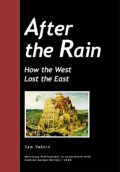
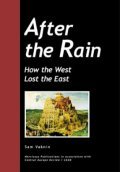
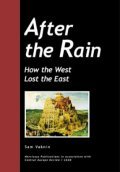
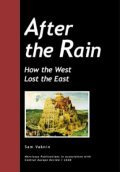
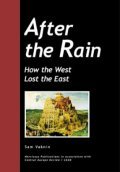
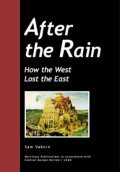
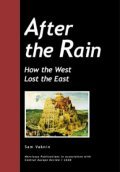
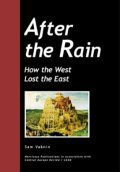
Sam Vaknin is the author of Malignant Self Love - Narcissism Revisited and After the Rain - How the West Lost the East. He served as a columnist for Central Europe Review, PopMatters, and eBookWeb, a United Press International (UPI) Senior Business Correspondent, and the editor of mental health and Central East Europe categories in The Open Directory, Bellaonline, and Suite101.
Until recently, he served as the Economic Advisor to the Government of Macedonia.
Visit Sam's Web site at http://samvak.tripod.com
The Sample Articles (please scroll down to review them):
I. The Mendicant Journalists
II. The Christiane Way
The Mendicant Journalists
By: Dr. Sam Vaknin
Aleksandr Plotnikov died last month in his dacha. He was murdered. He has just lost a bid to restore his control of a local paper in Tyumen Oblast in Russia. Media ownership is frequently a lethal business in eastern Europe. The same week, Ukrainian National Television deputy chief, Andryi Feshchenko, was found dead in a jeep in a deserted street of Kyiv. Prosecutors suspect that he was forced to take his life at gunpoint.
In an interesting variation on this familiar theme, a Moldovan parliamentarian accused the editor of the government-run newspaper, "Moldova Suverana", of collusion in his kidnapping.
Governments throughout the region make it a point to rein in free journalism. Restrictive media statutes are being introduced from Russia to Poland. Romania's Senate approved, on June 6, a law granting persons offended by a print article the right to have their response published in the same media outlet and to seek monetary compensation all the same.
The Romanian president attacked the media and said that he is "amazed" at their "talent to distort" his statements. He attributed this to a "lack of information, lack of culture, or malevolence." In Belarus, journalists are standing trial for defaming the president. They face 5 years incarceration if convicted.
Russia has just introduced a decree regulating the licensing of audio and video production duplication rights. According to abc.ru, a license from the Media Ministry will be required to make copies of any multimedia work. The Culture Ministry will henceforth license such oeuvres for mass audiences.
The frequency of A1+, Armenia's most vocal independent TV station, was auctioned off to politically-sponsored business fronts, forcing the hard-hitting station off the air on April 3 - just in time for next year's elections. The new owners - "Sharm" - promised to concentrate on "optimistic news".
The station appealed the tender procedure to the Armenian Economic Court and opposition groups took to the streets. AFP carried a statement by the self-appointed watchdog, Raporteurs Sans Frontieres, that called the tender "the muzzling of the country's main news voice ... the most serious violation of pluralism in Armenia in years."
Even the US Embassy in Yerevan stirred:
"A1+ performed a valuable public service in offering substantial media access to a broad spectrum of opinion makers, political leaders, and those holding differing views."
The Azerbaijani prime minister promised to allocate $3.5 million in credits to media outlets - but, tellingly, made this announcement exclusively on the state-owned channel. The bulk of the television tax in Macedonia ends up in the coffers of the somnolent and bloated state channel which caters to a mere one quarter of the viewers. The independent media - both print and electronic - face unfair competition in attracting scarce advertising revenues.
The managers of six Latvian private television and radio stations published an open letter to President Vaira Vike-Freiberga, Prime Minister Andris Berzins, the Competition Council, the National Radio and Television Council (NRTC), the State Support Monitoring Commission, and political parties.
They deplored the commercialization of the public media. State support - fumed the signatories - allows these outlets to undercut the prices of advertising airtime. They urged a major revision and modernization of the law. Latvia is considering the introduction of a monthly mandatory "subscription fee" to finance its state-owned media.
Media properties are awarded to loyal cronies and oligarchs - having been expropriated from tycoons and managers who fell from official grace. Such assets are often "parked" with safe corporate hands ad interim. Russian energy behemoth Gazprom, for instance, acquired a media empire overnight by looking after such orphan holdings. It is now dismantling these non-core operations.
In Russia, the tendered broadcasting rights of TV6 were allocated to Media-Sotsium, a consortium led by regime stalwarts such as Yevgeni Primakov, a former prime minister and the current chief of the Chamber of Commerce and Industry and Arkadi Volski, head of the Union of Industrialists and Entrepreneurs. The group included leading managers and active political figures. The consortium's general director is none else than Yevgeni Kiselev, the erstwhile general manager of TV6.
TV6 was taken off the air by the Kremlin last year - as was Russia's most popular independent station, NTV. Quoted by Radio Free Europe Radio Liberty, the Editor in Chief of the Ekho Moskvy radio station commented that this "completes the redistribution of television property in Russia from one oligarch who was not loyal to the authorities to others that are."
Gorbachev, whose group bid for the station, concurred wholeheartedly. In a rare show of consonance, so did the communist Zyuganov. Muscovites polled in April said they hoped TV6 would become a sports-only channel.
In a speech to the National Press Club in Washington on April 9, Russian Media Minister, Mikhail Lesin, admitted that "developments surrounding the NTV and TV-6 companies certainly had a political background, and there is no denying it." He promised to substantially cut funding to "politically oriented mass media."
Russian media, insisted the Minister, is having "growing pains". Referring to the older and more mature media in America, he asked: "Let us remember how this 100-year-old gentleman looked when he was 10 years old. He did not have any problems at that time?"
State interference rarely stops at the ownership level. Subtle self-censorship by obsequious or terrorized journalists is often coupled with governmental micromanagement. The license of NTV, the eponymous successor of the shuttered independent Russian TV station, was renewed only recently for another five years - after many delays and public statements casting doubts on the outcome. This form of subtle pressure to self-discipline is common.
The Russian business daily Kommersant commented:
"(The delays were intended to) stimulate Gazprom to more quickly sell its shares in the company and to frighten (NTV's General Director) Jordan into being a bit more attentive to what NTV puts on the air."
Belarusian president, Alaksandr Lukashenka, instructed the chief of the Belarusian Television and Radio Company to "work around the clock" to improve programming. "The Belarusian Television and Radio Company works in the same information field with powerful foreign broadcasters: ORT, RTR, NTV, Radio Rossiya, Radio Mayak, Radio Liberty, Radio Racja, and others. It is in a state of ideological competition with them and, speaking straightforwardly, sometimes in confrontation.
Belarusian Television, as before, remains an information supplement to foreign television companies." - he was quoted as saying by REF/RL. How would such a turnaround be achieved with a shoestring budget was left unarticulated. Belarus couldn't pay Kirch Media the $500,000 it demanded for the World Cup rights.
The Belarusian Language Society appealed to UNESCO and the EU to help launch a Belarusian heritage and culture satellite broadcast on the Discovery Channel. Russian-language broadcasts, they noted ruefully, account for a crippling 97 percent of airtime.
Lukashenka finished his diatribe with a practical advice: "Beginning from tomorrow, every manager in the Belarusian Radio and Television Company has to sleep with a television set." In a country where disagreeing with the president can be the last thing one does, his wish is a command.
The situation is especially egregious in the fiefdoms of Central Asia.
In Georgia, the politically-pliant tax police, often an instrument of intimidation of opponents, raided Rustavi-2, an independent thorn in the irate government's side. In Kazakhstan, last November, all the media properties of Alma-Media - including its prized Kazakh Commercial TV - were suspended. Malicious rumors were spread by the police against the editor of the outspoken newspaper, "Karavan". The rumors were promptly denied by the Kazakh Minister of Internal Affairs.
If all else fails, crime does the trick. the independent Kazakh paper, "Delovoe-Obozrenie-Respublika", was first firebombed and then - five days later - closed by the court because it failed to provide a publication schedule. OSCE slammed Kazakhstan for its new Administrative Offenses Code which is replete with 40 media-related transgressions.
RFE/RL quoted a statement by Rozlana Taukina, head of the Independent Media Association of Almaty, in a press conference in Moscow. She complained that 22 independent media outlets have been closed in Kazakhstan over the past month.
Another instrument of suppression are libel suits which invariably result in exorbitant and destructive penalties.
Aleksandr Chernov, a Krasnodar judge, won in February $1 million in compensation from "Novaya Gazeta", a paper owned by the disgraced and self-exiled oligarch Boris Berezovsky. Senior Russian public figures issued a passionate plea to reduce the fine and prevent the paper's bankruptcy.
In an unrelated lawsuit, Mezhprombank, alleged by "The Moscow Times" to be a money laundering venue, won c. $500,000 in damages from the aforementioned besieged "Novaya Gazeta". Court bailiffs seem determined to force the closure of the paper despite a pending appeal.
The largest circulation Slovak paper, "Novy cas", was ordered to pay a whopping $100,000 in compensation to Real Slovak National Party (PSNS) Chairman Jan Slota. The paper reported that he had been seen drunk.
Vladimir Putin, Russia's president, encapsulated the philosophy of state interventionism neatly in an interview he granted to ITAR-TASS and other Russian news agencies:
"If freedom of the press is understood as the freedom of a handful of so-called oligarchs to buy journalists, to dictate their will in the interests of their groups, and to protect the way of Russia's oligarchic development that was thrust on the country over the past decade, then yes, it is in danger ... (The authorities should not) allow individuals to shape the country's strategy the way they like, (while) filling their pockets with illegally earned money ... (Freedom of the press) implies the ability of journalists and their groups to freely, openly, and fearlessly define their position on key problems of the development of the country and society, to criticize actions of the authorities (and to make sure that the authorities react properly)."
Putin harked back to the nanny state, calling Russian media immature and still in the development stage. They need assistance in developing ways to secure their future economic independence. The state will create the necessary conditions for the "economic freedom of the press."
The president's aide, Aleksei Volin, was quoted by REF/RL as having told radio Ekho Moskvy that state-ownership of the media is rendered meaningless in an age of multiple channels. The state, said the aide, should concentrate on programming and thus "ensure its role in television media."
Russia's Media Minister, Lesin, hastened to make clear that the state has no intention of privatizing its television media holdings, ORT, the second channel (RTR), and Kultura, an educational cum entertainment network. The government - a minority shareholder in ORT - denies meddling in the editorial affairs and policies of either of these federally-funded channels. ORT and RTR just paid c. $40 million for the Russia World Cup rights.
A bill, introduced in the Duma by independents, failed to pass last week. It would have reduced state ownership of mass media outlets to 25 percent within 6 months. Anti-government deputies claimed that the state controls 90 percent of all the media in the vast country. Their colleagues from the coalition cited a figure of 10 percent.
In Moldova, a committee of lawyers, journalists, and deputies of parliament issued a report on May 3, advocating against privatization of the media. Both radio and television, they intoned, must remain in the safe hands of the state, though in the form of an "autonomous" public broadcasting authority. This flew in the face of recommendation issued earlier by the Parliamentary Assembly of the Council of Europe (PACE).
In response, incensed journalists, intellectuals, and lawyers established Public Television Company. Modeled after the BBC, it will be sponsored by private sector donations and advertising revenues - they told Infotag, the news agency. The head of an EU visiting delegation went as far as warning the Moldovan government that ignoring PACE's advice "will have catastrophic consequences both for the current government and the citizens."
The new Hungarian government is considering to shut down one or more of the state-owned TV channels and to reform the media law. But, EU-orientated statements to the contrary - Hungary's state media is still under the collective thumb of its politicians. According to the May 15 issue of "Nepszabadsag", the Socialist party media spokesman publicly "suggested" that the President of Hungarian Television should resign due to his bias during the elections.
Journalists on all levels readily collaborate with political masters. The staff of Hungarian Pannon Radio took over the previous location of the station and are broadcasting virulent nationalistic propaganda with the financial and political backing of the extremist MIEP - the Hungarian Justice and Life Party.
The ownership of electronic media is the electoral trump card in most countries in transition. Papers are little read. According to Emil Danielyan in RFE/RL:
"There are several newspapers that are highly critical of the authorities but their impact on public opinion is limited, as their combined daily print run does not exceed 10,000 copies (Armenia's population is just over 3 million)."
In Macedonia, the circulation of "Dnevnik", the country's leading paper, is thought to be c. 20,000 copies on a weekday - compared to more than 500,000 regular viewers of A1, the dominant independent TV station, owned by business interests. No weekly sells more than 3000 copies in this country of 2 million people.
Foreign ownership of media is still a rarity. Xenophobia and crookedness combine to drive away potential investors. Central European Media Enterprise (CME), an American holding company for central European media properties, endured the most grueling experiences in the late 1990's in the Czech Republic and Slovenia.
Tele5, a new Polish television channel, is owned by Fincast, a Polish subsidiary of Italian Eurocast Italia and more than 70 percent of Poland's regional media are in the hands on two Western companies. The second largest paper, Rzeczpospolia, is owned by a Norwegian firm. But these are the Polish exceptions that only highlight the regional rule.
Poland is atypical on other fronts as well. Poles are avid devourers of broadsheets. More than 20 percent of them feast on the Gazeta Wyborcza every day. Proposed amendments to the existing law will prevent the formation of media monopolies by restricting media ownership to one nationwide broadcasting license or one nationwide daily. The Wyborcza would thus be prevented from taking possession of the private Polish TV station, Polsat, one of many.
Adam Michnik, an erstwhile dissident turned influential editor, remarked acidulously to "The Economist":
"Of course (prime minister) Miler (a former senior communist) should know how evil a monopoly can be ... (The government wants to render Wyborcza) cowardly, toothless, and servile. Authoritarian states like such papers, but Polish democracy does not need one."
Admittedly, Poland is not above harassment and intimidation. The managers of Rzeczpospolita - 49 percent owned by the government - were hounded by tax inspectors and their passports were confiscated. "An action usually reserved for big-time criminals" - notes "The Economist" dryly.
The board of the state-owned television is packed with sycophants and cronies. Now, the widely-held theory goes, Miller has his sights on the print media. He wants to force the Norwegians to sell to Trybuna, the little-read mouthpiece of the ex-Communists.
But the media in the post-Communist territories may be simply reaping what they sowed.
In an article published by "Central Europe Review", I summed up the state of the media in Central and Eastern Europe thus:
"What sets the media in the countries in transition apart from its brethren in the West is its lack of (even feigned) professionalism, its venality and its tainted and ulterior motives. In these nether regions, journalism amounts to influence peddling. Journalists are easily bought and sold and their price is ever decreasing. They work in mouthpieces of business interests masquerading as media. They receive their instructions - to lie, to falsify, to ignore, to emphasize, to suppress, to extort, to inform, to collaborate with the authorities - from their Editor in Chief. They trade news for advertising.
The commercial media - the likes of "Nova" TV in the Czech Republic - are poor people's imitations of the more derided aspects of American mass culture. Overflowing with lowbrow talk shows, freaks on display, malicious gossip which passes for "news" and glitzy promos and quizzes - these TV stations and print magazines derive the bulk of their income from advertising. Then there is the mercenary media. These are groups of hired pens and keyboards - so called journalists - who offer their services to the highest bidder. Their price is often pathetic: a lunch a month, one hundred euros, a trip abroad and a dingy hotel room. They collaborate with their editors and share the spoils with them.
The mercenaries often work in "business-sponsored media outlets". These are TV stations, daily papers and periodicals owned by the oligarchs of malignant capitalism and used by them to rubbish their opponents and flagrantly and unabashedly further their business interests. This phenomenon used to be most pronounced in Russia, where virtually all the media was once identified with mafia-like interests - before it was taken over by the newly authoritarian state."
According to a poll conducted last month by a few Russian Web sites in collaboration with radio Ekho Moskvy, more than 57 percent of all respondents in all age groups supported state censorship. The main concerns were overt and excessive violence and pornography.
Aware of this popular mandate, Putin's alma mater, the FSB (formerly known as the KGB) moved to further its hijacking of the media. ITAR-TASS reported that FSB Lieutenant General Aleksandr Zdanovich, former chief spokesman and head of the public relations center of the spy organization, was appointed deputy director of the VGTRK, the state broadcasting company.
The Christiane Way
By: Dr. Sam Vaknin
"The primary role of journalists on the front lines is to do your best to tell a story in a situation when truth is not always readily available. It's also vital to tell what you see and question what you don't see, as well as to provide context to complicated issues." "Some journalists might take too many risks, but risk and danger are inherent in combat reporting. We have to know the difference between calculated risk and foolish risks." "There hasn't been a single time I've ever turned down an assignment because of the dangers involved."
Christiane Amanpour on Journalism (Interview granted to TBS and available here: http://tbssuperstation.com/d_sunday/dying/html/christianeinterview.htm )
"Next the statesmen will invent cheap lies, putting the blame upon the nation that is attacked, and every man will be glad of those conscience-soothing falsities, and will diligently study them, and refuse to examine any refutations of them; and thus he will by and by convince himself that the war is just, and will thank God for the better sleep he enjoys after this process of grotesque self-deception". (Mark Twain - The Mysterious Stranger)
"NEWSWEEK: Share with us a little of what you've learned about how foreign-policy priorities are set in particular what role the media plays in that. James Rubin: I think the basic foreign policy priorities are set by the president and the secretary... [But] it's certainly true that the media's focus on big problems often drives congressional interest and pressure-group interest, and they feed off each other, and there is often increased focus on terrible human-rights and humanitarian disasters. The first example in this era, obviously, was Somalia ... I think that there's no question that journalists' coverage of the Bosnia conflict, which was something that involved great bravery and great personal risk for many journalists, helped to galvanize the world finally to act. I think that some of those lessons were drawn and in the next similar case, Kosovo, action was taken much earlier." (Newsweek, February 9, 2000)
"The work of television is to establish false contexts and to chronicle the unravelling of existing contexts; finally, to establish the context of no-context and to chronicle it." (George W. S. Trow, American media critic)
"The troubling thing is that CNN's broadcast represents all that one needs to know about the world, reduced, packaged, and delivered without a trace of conflict or contradiction. Its thought, its sensation, what it sees are insidiously substituted for what the spectator might himself see, feel, think about. This gradual replacement of a private and personal process with a ready-made, manufactured and processed system is nothing less than a hijacking of the mind by a sophisticated apparatus whose purpose is, I believe, deeply ideological. The kernel of this ideology is that "we" define the world, state its purposes and meaning, control its unfolding history. In effect then, the funeral became the occasion for re-asserting control over a distant country, its people, history and departed monarch. And this seizure or hijacking permitted a whole series of further distortions which were later amplified by print journalism." ("Public Spectacle, Public History" by Edward Said in "al-Ahram", 18-24 February 1999)
Persistent rumours in this neck of the woods have it that during the Kosovo crisis, Christiane Amanpour of CNN fame, claimed to have been where she was not (more specifically, Albania and with the KLA). Her image was photo montaged, whisper the maligners. Her counterpart in Skopje lied to the viewing public, they insist, when he presented a crumbling, yet perfectly Macedonian, home, imputed to Kosovar refugees, as being in Kosovo. Other journalists never left the air conditioned comfort of "Alexander Palace" in the Macedonian capital whilst filing heroic dispatches with their understanding editors. After all, the Balkan is more often covered from the taverns of Fleet Street and the haunts of Washington than from the killing fields of Kosovo.
That Serb journalists and Serb-sympathizers would be enviously badmouthing their more prosperous colleagues in the bombarding West should hardly come as a surprise to anyone. That Albanians join the rumour-mongering is baffling. But what gives one pause is that identical stories circulate among the personnel of more august establishments: think tanks, aid organizations, NGOs and the Western media themselves.
The incestuous relationship between the ostensibly impartial Amanpour and her betrothed, James ("Jamie") Rubin, the spokesman of the State Department, has raised brows in East and West alike. Substance aside, appearances should have demanded a clearer separation of powers and a less cosy set of checks and balances between the members of this couple. Their employers, long enamoured of hectoring and preaching good governance and rectitude to a subservient world, would have done well to start at home with added perspicacity. No wonder no one trusted Amanpour's reports, delivered in a mock Oxonian accent and a mane impeccably dishevelled, or the vehement denials of her spuriously insouciant husband.
This incredulousness was further sustained by the series of gaffes and outright lies propagated by NATO and its oblique yet sonorous Jamie Shea. To remove all doubt: whatever NATO's sins, they came nowhere near the abdication of truthful media in Serbia. NATO - (US PsyOp agents rumoured to have been cosily ensconced in the CNN for a fortnight notwithstanding) - did not engage in the vile exploitation of bloodied imagery. Nor did it harp so expertly on the darkest recesses of the unconscious. But such comparison is troubling. Veracity and honesty are not a matter of degree or quantity. And propaganda is at its most effective when closely hugged by lapidary truth. Democracies should never succumb to the contagious immorality of the dictatorships they are fighting. Yet NATO lied incessantly, on needless issues and with a pronounced lack of imagination. Remember the two captured Yugoslav pilots? The murdered Rugova? Arkan in Kosovo? 100,000 Albanians in mass graves? Another 100,000 tortured in the Pristina Stadium? The media reported all this dutifully, suspending its own professed standards, engaging in slanted reporting and reproducing prepared NATO statements as eyewitness accounts (a grave breach of ethics).
Whatever the truth in the pusillanimous rumours above, to the peoples of the countries in transition, the Western media have failed every bit as miserably as their own. To them, they are surely manipulated by political or business puppet masters with an agenda. They report every election in Serbia as tainted and every vote in Macedonia as kosher. To them, the KLA is one day a drug smuggling operation, the next - an army of liberation. They reported all politicians in Bulgaria in thrall to the indigenous mob until the 1997 elections. A few days afterwards, these mobsters all became reformers. Russia's economy was doomed in August 1998 by the likes of "The Economist" and flourished anew in January the following year. The very media that endorsed the Kennedys and now the Bushes decries nepotism. The ones who impugn "cronyism and corruption" are complaisant slaves to their advertisers and their opinion polls. There is no official censorship but a more pernicious and sedulous type of self-bowdlerization.
Of this sad parade of ignorant stereotypes, sweeping generalizations, directed demonisation and penurious venality - no one is exonerated. Lurid British tabloids compete effectively with their picayune American brethren. Sesquipedalian French intellectuals are in cahoots with the fustian Italian press.
It would have all been the cause of much hilarity, had it not been for the serious outcomes of this inveterate hypocrisy.
Free media was an essential ingredient in the utopia aspired to by the denizens of Eastern Europe. They looked in awe and adulation upon the liberated, courageous media of the West. They trusted their every word. They risked their freedom, often their life, to listen to broadcasts. They smuggled copies of Western broadsheets and replicated them in makeshift samizdats. They clung to every Western reporter, hoping for an osmosis of liberty, an infusion of freedom, a breath of wished autonomy. It was a love affair, as blind as they come.
And now the disillusionment is grave, proportional to the energy of the severed bond. In confluence with other disenchantments, it threatens to spill over into a startling wave of anti-Western sentiments. In the pronounced absence of reliable sources of solid information, the hapless citizens revert to insidious gossip and to invidious rumour, to the pasilaly of the mendacious and the protean simulacrum of the contingent. This tension between the imagined and the real is unbearable. Coupled with the rising xenophobia that is the twin of disappointment, it bodes ill to the hoped for integration of these regions in the West. These - the alienation and the rage, the sense of perfidy and abandonment, of an act of fraud of which they were the victims, inveigled and then discarded - are the first outcomes.
The second outcome of media fecklessness is self fulfilling prophecy.
The media often generate the very events that they describe. They add an impetus, import momenta, dictate trajectory, nudge leaders and determines consequences. They are an active partner rather than a disinterested by-stander. As such, they share the matrix of responsibility with politicians and army generals. Every cozened canard, the falsely pullalating numbers of the victims, the obnubilating dehumanization of the enemy, the courage of crapulous pen pushers who risk only their laptops in bloody battle - carry a price tag in human lives. The ratings climb on mountains of corpses and lives destroyed.
Perhaps this should be borne in mind when next the media tackle Montenegro.
The Magla Vocables
by: Dr. Sam Vaknin
The Macedonians have a word for it - "Magla", fog. It signifies the twin arts of duplicity and ambiguity. In the mental asylum that the swathe of socialist countries was, even language was pathologized. It mutated into a weapon of self defence, a verbal fortification, a medium without a message, replacing words with vocables. Easterners (in this text, the unfortunate residents of the Kafkaesque landscape which stretches between Russia and Albania) don't talk or communicate. They fend off. They hide and evade and avoid and disguise. In the planet of capricious and arbitrary unpredictability, of shifting semiotic and semantic dunes, that they inhabited for so many decades (or centuries) - they perfected the ability to say nothing in lengthy, Castro-like speeches. The ensuing convoluted sentences are Arabesques of meaninglessness, acrobatics of evasion, lack of commitment elevated to an ideology. The Easterner prefers to wait and see and see what waiting brings. It is the postponement of the inevitable that leads to the inevitability of postponement as a strategy of survival.
It is impossible to really understand an Easterner. The syntax fast deteriorates into ever more labyrinthine structures. The grammar tortured to produce the verbal Doppler shifts essential to disguise the source of the information, its distance from reality, the speed of its degeneration into rigid official versions. Buried under the lush flora and fauna of idioms without an end, the language erupts, like some exotic rash, an autoimmune reaction to its infection and contamination. And this newspeak, this malignant form of political correctness is not the exclusive domain of politicians or "intellectuals". Like vile weeds it spread throughout, strangling with absent minded persistence the ability to understand, to agree, to disagree and to debate, to present arguments, to compare notes, to learn and to teach. Easterners, therefore, never talk to each other - rather, they talk at each other. They exchange subtexts, camouflage-wrapped by elaborate, florid, texts. They read between the lines, spawning a multitude of private languages, prejudices, superstitions, conspiracy theories, rumours, phobias and mass hysterias. Theirs is a solipsistic world - where communication is permitted only with oneself and the aim of language is to throw others off the scent.
This has profound implications. Communication through unequivocal, unambiguous, information-rich symbol systems is such an integral and crucial part of our world - that its absence is not postulated even in the remotest galaxies which grace the skies of science fiction. In this sense, Easterners are nothing short of aliens. It is not that they employ a different language, a code to be deciphered by a new Champollion. The Cyrillic alphabet is not the obstacle. It is also not the outcome of cultural differences. It is the fact that language is put by Easterners to a different use - not to communicate but to obscure, not to share but to abstain, not to learn but to defend and resist, not to teach but to preserve ever less tenable monopolies, to disagree without incurring wrath, to criticize without commitment, to agree without appearing to do so. Thus, Eastern contracts are vague expressions of intentions at a given moment - rather than the clear listing of long term, iron-cast and mutual commitments. Eastern laws are loopholed incomprehensibles, open to an exegesis so wide and so self-contradictory that it renders them meaningless. Eastern politicians and Eastern intellectuals often hang themselves by their own verbose Gordic knots, having stumbled through a minefield of logical fallacies and endured self inflicted inconsistencies. Unfinished sentences hover in the air, like vapour above a semantic swamp.
In some countries (the poorer ones, which were suppressed for centuries by foreign occupiers), there is the strong urge not to offend. Still at the tribal-village stage of social development, intimacy and inter-dependence are great. Peer pressure is irresistible and it results in conformity and mental homogeneity. Aggressive tendencies, strongly repressed in this social pressure cooker, are close under the veneer of forced civility and violent politeness. Constructive ambiguity, a non-committal "everyone is good and right", an atavistic variant of moral relativism and tolerance bred of fear and of contempt - are all at the service of this eternal vigilance against aggressive drives, at the disposal of a never ending peacekeeping mission.
In other countries, language is used cruelly and ruthlessly to ensnare one's enemies, to saw confusion and panic, to move the masses, to leave the listeners in doubt, in hesitation, in paralysis, to gain control, or to punish. There, symbols are death sentences in both the literal and the figurative senses. Poets, authors and journalists still vanish regularly and newspapers and books are compiled into black lists with dreadful consequences. In these countries, language is enslaved and forced to lie. There are no news - only views, no interest - only interests, no facts - only propaganda, no communication - only ex-communication. The language is appropriated and expropriated. It is considered to be a weapon, an asset, a piece of lethal property, a traitorous mistress to be gang raped into submission.
And yet in other places in the East, the language is a lover. The infatuation with its very sound leads to a pyrotechnic type of speech which sacrifices its meaning to its music. Its speakers pay more attention to the composition than to the content. They are swept by it, intoxicated by its perfection, inebriated by the spiralling complexity of its forms. Here, language is an inflammatory process. It attacks the social tissues with artistic fierceness. It invades the healthy cells of reason and logic, of cool headed argumentation and level headed debate. It raises the temperature of the body politic. It often kills. It moves masses. Submerged in and lured by the notes issued forth by the pied piper of the moment - nations go to war, or to civil war, resonating with the echoes of their language.
Language is a leading indicator of the psychological and institutional health of social units. Social capital can often be measured in cognitive (hence, verbal-lingual) terms. To monitor the level of comprehensibility and lucidity of texts is to study the degree of sanity of nations (think about the rambling "Mein Kampf"). There can exist no hale society without unambiguous speech, without clear communications, without the traffic of idioms and content that is an inseparable part of every social contract. Our language determines how we perceive our world. It IS our mind and our consciousness. The much touted transition starts in the mind and consciousness determines reality. Marx would have approved.
The Books of the Damned
By: Dr. Sam Vaknin
"I have gone into the outer darkness of scientific and philosophical transactions and proceedings, ultra-respectable, but covered with the dust of disregard. I have descended into journalism. I have come back with the quasi-souls of lost data." Charles Hoy Fort in "The Book of the Damned"
"Let me have the three major American networks and three leading newspapers for a year and I'll bring back public lynchings and racial war in the US." Charles Simic quoting a Belgrade journalist
"We do not have censorship. What we have is a limitation on what newspapers can report." Louis Nel, Deputy Minister of Information, South Africa
In the country of ex-Nazi officer Kurt Waldheim and current Nazi-sympathizer Jorg Haider, the xenophobic and anti-Semitic offering of local media come as little surprise. Austria, after all, contributed disproportionately to the Nazi death machine. But what seems to be a unique Austrian phenomenon is not. The media outlets in Central, Eastern and Southern Europe are easily interchangeable. In the same week of Austrian derision and paranoia, "Start", a trash weekly in Macedonia attacked the British Ambassador and the Americans for conspiring to dismantle Macedonia with the collaboration of its local, disloyal and haughty Albanian minority.
The media in the countries in transition is taxonomically not dissimilar to its brethren in the West. It, too, can be divided to five categories of ownership and agenda. What sets it apart, though, is its lack of (even feigned) professionalism, its venality and its tainted ulterior motives. I wrote about it elsewhere, in "The Rip van Winkle Institutions":
"And then there is the media - the waste basket of post communist societies, the cesspool of influence peddling and calumny. Journalists are easily bought and sold and their price is ever decreasing. They work in mouthpieces of business interests masquerading as newspapers or electronic media. They receive their instructions - to lie, to falsify, to ignore, to emphasize, to suppress, to extort, to inform, to collaborate with the authorities - from their Editor in Chief. They trade news for advertising. Some of them are involved in all manner of criminal activities, others are simply unethical in the extreme. They all have pacts with Mammon. People do not believe a word these contortionists of language and torturers of meaning write or say. It is by comparing these tampered and biased sources that people reach their own conclusions within their private medium."
The commercial media - the likes on "Nova" TV in the Czech Republic - are poor people's imitations of the more visible aspects of American mass culture. Overflowing with lowbrow talk shows, freaks on display, malicious gossip which passes for "news" and glitzy promos and quizzes - these TV stations and print magazines derive the bulk of their income from advertising. While ostensibly politically innocuous, they exert a subtle and cumulative influence on the numbed and dwindling minds of their spectators and readers. By conditioning their consumers to ever lower fare of pulp common denominators, they set a standard of no holds barred and no standards observed. They are the opium for the masses that religion once was, diverting potentially dangerous attention from real events and personalities to the staged alarms of public enemies and the artificial crises of bingo lotteries. No less persecutory than any totalitarian regime, these mass media are ominous symptoms of the social malaise of disillusionment with the realities of life and with more institutionalized modes of expression. They are escapism embodied, a dreamland, a scape of fantasy, the vale of telenovellas. Whole nations are in thrall. In Macedonia, the protagonist of a servant's saga, "Kassandra", was given a hero's welcome upon her visit to this impoverished and bitter land. Whole families consume hours of this visual Ritalin, hypnotized by cheap scenery built to resemble unattainable riches.
Then there is the mercenary media. These are groups of hired pens and keyboards - so called journalists who offer their services to the highest bidder. Their price is often pathetic: a lunch a month, one hundred deutschmarks, a trip abroad and a dingy hotel room. They collaborate with their editors and share the spoils with them. They are the whores of the profession, ever the hungry look, ever the hat in hand, ever the submissive and furtive glances of the serfs of capital. They often publish other people's self-serving communiqués without altering a word. I, myself, provided them with "interviews" which I, solely, have authored, questions and all. Too lazy to or embittered to invest in their profession, consumed by self-loathing and by general disdain - they let themselves be passively abused in the dirty intercourse of money and of influence.
The mercenaries often work in brothels known as "business-backed media". These are TV stations, daily papers and periodicals owned by the oligarchs of malignant capitalism and used by them to rubbish their opponents and flagrantly and unabashedly further their business interests. This phenomenon is most pronounced in this land of depredation and depravity, in Russia, where virtually all the media is now identified with and digested by business, mafia-like interests. Despite their infamous one-sidedness, they still claim neutrality and objectivity but these spurious claims are met with revolt by a hostile population, long trained to distrust the printed word and even the broadcast image. Thus the art of "reading between the lines" is flourishing again and the very language is distorted by its media rapists (see: "The Magla Vocables"). This - the abyss opening between the people and their language, the demise of true communication and the ensuing rupture in the social fabric - are the veritable damages of enlisted journalism.
Political vehicles are less pernicious in that their masters are well known and their itinerary clear. Always one sided, always half truthed, forever the righteous - these rags produce no riches and they preach to the converted, serving as bulletins and message boards rather than as media in any known sense. A rallying point, a flag, an emblem, a collective memory, the group's unconscious and conscience - these papers and TV channels are often widely read, even by rivals and adversaries. They are so self-absorbed, so narcissistic, so sickeningly partial that they make for fine amusement in dreary times. There are the coalition papers and the opposition papers, the left wing and the right wing and the centre ones. It is a colourful admixture of indignation and triumphalism, veiled threats and promises, trial balloons and drama, the daily equivalent of the romance.
Thus, Central, Eastern and Southern Europe do have daily papers and magazines and periodicals and television. What they do not have is media even remotely resembling the Western ideal. In some countries, this ideal is disparaged as a Western manipulative ploy or, worse, naive idealism. In others, it is a kind of holy grail to be pursued only in myths and narratives. Yet others view it with envy and aspire to it, but without much hope. To them, it is an ever-receding mirage. Perhaps that other phantasmagoria, the Internet, is the solution. In it, budding, fresh beginnings of irreverence and courage seem to coalesce into recognizable - though virtual - media. The small number of web surfers currently limits both their outreach and their survivability. But if Western trends are anything to go by, this is a temporary state of affairs. The Internet, this immaterial and ethereal medium might yet spawn the first real media and a return to reality. It might yet liberate the prisoners of all the telenovellas, foreign and domestic. It might yet win.
======================================================
Sam Vaknin's "United Press International (UPI)" Author Archive:
Sam Vaknin's "Central Europe Review" Author Archive:
|