Huam sexuality, its psychology and biological roots.
AUTHOR BIO:
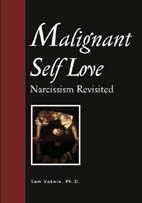
Sam Vaknin is the author of Malignant Self Love - Narcissism Revisited and After the Rain - How the West Lost the East. He served as a columnist for Central Europe Review, PopMatters, and eBookWeb, a United Press International (UPI) Senior Business Correspondent, and the editor of mental health and Central East Europe categories in The Open Directory, Bellaonline, and Suite101.
Until recently, he served as the Economic Advisor to the Government of Macedonia.
Visit Sam's Web site at http://samvak.tripod.com
Sex or Gender
By: Sam Vaknin
Alan Pease, author of a book titled "Why Men Don't Listen and Women Can't Read Maps", believes that women are spatially-challenged compared to men. The British firm, Admiral Insurance, conducted a study of half a million claims. They found that "women were almost twice as likely as men to have a collision in a car park, 23 percent more likely to hit a stationary car, and 15 percent more likely to reverse into another vehicle" (Reuters).
Yet gender "differences" are often the outcomes of bad scholarship. Consider Admiral insurance's data. As Britain's Automobile Association (AA) correctly pointed out - women drivers tend to make more short journeys around towns and shopping centers and these involve frequent parking. Hence their ubiquity in certain kinds of claims. Regarding women's alleged spatial deficiency, in Britain, girls have been outperforming boys in scholastic aptitude tests - including geometry and maths - since 1988.
On the other wing of the divide, Anthony Clare, a British psychiatrist and author of "On Men" wrote:
"At the beginning of the 21st century it is difficult to avoid the conclusion that men are in serious trouble. Throughout the world, developed and developing, antisocial behavior is essentially male. Violence, sexual abuse of children, illicit drug use, alcohol misuse, gambling, all are overwhelmingly male activities. The courts and prisons bulge with men. When it comes to aggression, delinquent behavior, risk taking and social mayhem, men win gold."
Men also mature later, die earlier, are more susceptible to infections and most types of cancer, are more likely to be dyslexic, to suffer from a host of mental health disorders, such as Attention Deficit Hyperactivity Disorder (ADHD), and to commit suicide.
In her book, "Stiffed: The Betrayal of the American Man", Susan Faludi describes a crisis of masculinity following the breakdown of manhood models and work and family structures in the last five decades. In the film "Boys don't Cry", a teenage girl binds her breasts and acts the male in a caricatural relish of stereotypes of virility. Being a man is merely a state of mind, the movie implies.
But what does it really mean to be a "male" or a "female"? Are gender identity and sexual preferences genetically determined? Can they be reduced to one's sex? Or are they amalgams of biological, social, and psychological factors in constant interaction? Are they immutable lifelong features or dynamically evolving frames of self-reference?
Certain traits attributed to one's sex are surely better accounted for by cultural factors, the process of socialization, gender roles, and what George Devereux called "ethnopsychiatry" in "Basic Problems of Ethnopsychiatry" (University of Chicago Press, 1980). He suggested to divide the unconscious into the id (the part that was always instinctual and unconscious) and the "ethnic unconscious" (repressed material that was once conscious). The latter is mostly molded by prevailing cultural mores and includes all our defense mechanisms and most of the superego.
So, how can we tell whether our sexual role is mostly in our blood or in our brains?
The scrutiny of borderline cases of human sexuality - notably the transgendered or intersexed - can yield clues as to the distribution and relative weights of biological, social, and psychological determinants of gender identity formation.
The results of a study conducted by Uwe Hartmann, Hinnerk Becker, and Claudia Rueffer-Hesse in 1997 and titled "Self and Gender: Narcissistic Pathology and Personality Factors in Gender Dysphoric Patients", published in the "International Journal of Transgenderism", "indicate significant psychopathological aspects and narcissistic dysregulation in a substantial proportion of patients." Are these "psychopathological aspects" merely reactions to underlying physiological realities and changes? Could social ostracism and labeling have induced them in the "patients"?
The authors conclude:
"The cumulative evidence of our study ... is consistent with the view that gender dysphoria is a disorder of the sense of self as has been proposed by Beitel (1985) or Pfäfflin (1993). The central problem in our patients is about identity and the self in general and the transsexual wish seems to be an attempt at reassuring and stabilizing the self-coherence which in turn can lead to a further destabilization if the self is already too fragile. In this view the body is instrumentalized to create a sense of identity and the splitting symbolized in the hiatus between the rejected body-self and other parts of the self is more between good and bad objects than between masculine and feminine."
Freud, Kraft-Ebbing, and Fliess suggested that we are all bisexual to a certain degree. As early as 1910, Dr. Magnus Hirschfeld argued, in Berlin, that absolute genders are "abstractions, invented extremes". The consensus today is that one's sexuality is, mostly, a psychological construct which reflects gender role orientation.
Joanne Meyerowitz, a professor of history at Indiana University and the editor of The Journal of American History observes, in her recently published tome, "How Sex Changed: A History of Transsexuality in the United States", that the very meaning of masculinity and femininity is in constant flux.
Transgender activists, says Meyerowitz, insist that gender and sexuality represent "distinct analytical categories". The New York Times wrote in its review of the book: "Some male-to-female transsexuals have sex with men and call themselves homosexuals. Some female-to-male transsexuals have sex with women and call themselves lesbians. Some transsexuals call themselves asexual."
So, it is all in the mind, you see.
This would be taking it too far. A large body of scientific evidence points to the genetic and biological underpinnings of sexual behavior and preferences.
The German science magazine, "Geo", reported recently that the males of the fruit fly "drosophila melanogaster" switched from heterosexuality to homosexuality as the temperature in the lab was increased from 19 to 30 degrees Celsius. They reverted to chasing females as it was lowered.
The brain structures of homosexual sheep are different to those of straight sheep, a study conducted recently by the Oregon Health & Science University and the U.S. Department of Agriculture Sheep Experiment Station in Dubois, Idaho, revealed. Similar differences were found between gay men and straight ones in 1995 in Holland and elsewhere. The preoptic area of the hypothalamus was larger in heterosexual men than in both homosexual men and straight women.
According an article, titled "When Sexual Development Goes Awry", by Suzanne Miller, published in the September 2000 issue of the "World and I", various medical conditions give rise to sexual ambiguity. Congenital adrenal hyperplasia (CAH), involving excessive androgen production by the adrenal cortex, results in mixed genitalia. A person with the complete androgen insensitivity syndrome (AIS) has a vagina, external female genitalia and functioning, androgen-producing, testes - but no uterus or fallopian tubes.
People with the rare 5-alpha reductase deficiency syndrome are born with ambiguous genitalia. They appear at first to be girls. At puberty, such a person develops testicles and his clitoris swells and becomes a penis. Hermaphrodites possess both ovaries and testicles (both, in most cases, rather undeveloped). Sometimes the ovaries and testicles are combined into a chimera called ovotestis.
Most of these individuals have the chromosomal composition of a woman together with traces of the Y, male, chromosome. All hermaphrodites have a sizable penis, though rarely generate sperm. Some hermaphrodites develop breasts during puberty and menstruate. Very few even get pregnant and give birth.
Anne Fausto-Sterling, a developmental geneticist, professor of medical science at Brown University, and author of "Sexing the Body", postulated, in 1993, a continuum of 5 sexes to supplant the current dimorphism: males, merms (male pseudohermaphrodites), herms (true hermaphrodites), ferms (female pseudohermaphrodites), and females.
Intersexuality (hermpahroditism) is a natural human state. We are all conceived with the potential to develop into either sex. The embryonic developmental default is female. A series of triggers during the first weeks of pregnancy places the fetus on the path to maleness.
In rare cases, some women have a male's genetic makeup (XY chromosomes) and vice versa. But, in the vast majority of cases, one of the sexes is clearly selected. Relics of the stifled sex remain, though. Women have the clitoris as a kind of symbolic penis. Men have breasts (mammary glands) and nipples.
The Encyclopedia Britannica 2003 edition describes the formation of ovaries and testes thus:
"In the young embryo a pair of gonads develop that are indifferent or neutral, showing no indication whether they are destined to develop into testes or ovaries. There are also two different duct systems, one of which can develop into the female system of oviducts and related apparatus and the other into the male sperm duct system. As development of the embryo proceeds, either the male or the female reproductive tissue differentiates in the originally neutral gonad of the mammal."
Yet, sexual preferences, genitalia and even secondary sex characteristics, such as facial and pubic hair are first order phenomena. Can genetics and biology account for male and female behavior patterns and social interactions ("gender identity")? Can the multi-tiered complexity and richness of human masculinity and femininity arise from simpler, deterministic, building blocks?
Sociobiologists would have us think so.
For instance: the fact that we are mammals is astonishingly often overlooked. Most mammalian families are composed of mother and offspring. Males are peripatetic absentees. Arguably, high rates of divorce and birth out of wedlock coupled with rising promiscuity merely reinstate this natural "default mode", observes Lionel Tiger, a professor of anthropology at Rutgers University in New Jersey. That three quarters of all divorces are initiated by women tends to support this view.
Furthermore, gender identity is determined during gestation, claim some scholars.
Milton Diamond of the University of Hawaii and Dr. Keith Sigmundson, a practicing psychiatrist, studied the much-celebrated John/Joan case. An accidentally castrated normal male was surgically modified to look female, and raised as a girl but to no avail. He reverted to being a male at puberty.
His gender identity seems to have been inborn (assuming he was not subjected to conflicting cues from his human environment). The case is extensively described in John Colapinto's tome "As Nature Made Him: The Boy Who Was Raised as a Girl".
HealthScoutNews cited a study published in the November 2002 issue of "Child Development". The researchers, from City University of London, found that the level of maternal testosterone during pregnancy affects the behavior of neonatal girls and renders it more masculine. "High testosterone" girls "enjoy activities typically considered male behavior, like playing with trucks or guns". Boys' behavior remains unaltered, according to the study.
Yet, other scholars, like John Money, insist that newborns are a "blank slate" as far as their gender identity is concerned. This is also the prevailing view. Gender and sex-role identities, we are taught, are fully formed in a process of socialization which ends by the third year of life. The Encyclopedia Britannica 2003 edition sums it up thus:
"Like an individual's concept of his or her sex role, gender identity develops by means of parental example, social reinforcement, and language. Parents teach sex-appropriate behavior to their children from an early age, and this behavior is reinforced as the child grows older and enters a wider social world. As the child acquires language, he also learns very early the distinction between "he" and "she" and understands which pertains to him- or herself."
So, which is it - nature or nurture? There is no disputing the fact that our sexual physiology and, in all probability, our sexual preferences are determined in the womb. Men and women are different - physiologically and, as a result, also psychologically.
Society, through its agents - foremost amongst which are family, peers, and teachers - represses or encourages these genetic propensities. It does so by propagating "gender roles" - gender-specific lists of alleged traits, permissible behavior patterns, and prescriptive morals and norms. Our "gender identity" or "sex role" is shorthand for the way we make use of our natural genotypic-phenotypic endowments in conformity with social-cultural "gender roles".
Inevitably as the composition and bias of these lists change, so does the meaning of being "male" or "female". Gender roles are constantly redefined by tectonic shifts in the definition and functioning of basic social units, such as the nuclear family and the workplace. The cross-fertilization of gender-related cultural memes renders "masculinity" and "femininity" fluid concepts.
One's sex equals one's bodily equipment, an objective, finite, and, usually, immutable inventory. But our endowments can be put to many uses, in different cognitive and affective contexts, and subject to varying exegetic frameworks. As opposed to "sex" - "gender" is, therefore, a socio-cultural narrative. Both heterosexual and homosexual men ejaculate. Both straight and lesbian women climax. What distinguishes them from each other are subjective introjects of socio-cultural conventions, not objective, immutable "facts".
In "The New Gender Wars", published in the November/December 2000 issue of "Psychology Today", Sarah Blustain sums up the "bio-social" model proposed by Mice Eagly, a professor of psychology at Northwestern University and a former student of his, Wendy Wood, now a professor at the Texas A&M University:
"Like (the evolutionary psychologists), Eagly and Wood reject social constructionist notions that all gender differences are created by culture. But to the question of where they come from, they answer differently: not our genes but our roles in society. This narrative focuses on how societies respond to the basic biological differences - men's strength and women's reproductive capabilities - and how they encourage men and women to follow certain patterns.
'If you're spending a lot of time nursing your kid', explains Wood, 'then you don't have the opportunity to devote large amounts of time to developing specialized skills and engaging tasks outside of the home'. And, adds Eagly, 'if women are charged with caring for infants, what happens is that women are more nurturing. Societies have to make the adult system work [so] socialization of girls is arranged to give them experience in nurturing'.
According to this interpretation, as the environment changes, so will the range and texture of gender differences. At a time in Western countries when female reproduction is extremely low, nursing is totally optional, childcare alternatives are many, and mechanization lessens the importance of male size and strength, women are no longer restricted as much by their smaller size and by child-bearing. That means, argue Eagly and Wood, that role structures for men and women will change and, not surprisingly, the way we socialize people in these new roles will change too. (Indeed, says Wood, 'sex differences seem to be reduced in societies where men and women have similar status,' she says. If you're looking to live in more gender-neutral environment, try Scandinavia.)"
The Natural Roots of Sexuality
By: Dr. Sam Vaknin
Recent studies in animal sexuality serve to dispel two common myths: that sex is exclusively about reproduction and that homosexuality is an unnatural sexual preference. It now appears that sex is also about recreation as it frequently occurs out of the mating season. And same-sex copulation and bonding are common in hundreds of species, from bonobo apes to gulls.
Moreover, homosexual couples in the Animal Kingdom are prone to behaviors commonly - and erroneously - attributed only to heterosexuals. The New York Times reported in its February 7, 2004 issue about a couple of gay penguins who are desperately and recurrently seeking to incubate eggs together.
In the same article ("Love that Dare not Squeak its Name"), Bruce Bagemihl, author of the groundbreaking "Biological Exuberance: Animal Homosexuality and Natural Diversity", defines homosexuality as "any of these behaviors between members of the same sex: long-term bonding, sexual contact, courtship displays or the rearing of young."
Still, that a certain behavior occurs in nature (is "natural") does not render it moral. Infanticide, patricide, suicide, gender bias, and substance abuse - are all to be found in various animal species. It is futile to argue for homosexuality or against it based on zoological observations. Ethics is about surpassing nature - not about emulating it.
The more perplexing question remains: what are the evolutionary and biological advantages of recreational sex and homosexuality? Surely, both entail the waste of scarce resources.
Convoluted explanations, such as the one proffered by Marlene Zuk (homosexuals contribute to the gene pool by nurturing and raising young relatives) defy common sense, experience, and the calculus of evolution. There are no field studies that show conclusively or even indicate that homosexuals tend to raise and nurture their younger relatives more that straights do.
Moreover, the arithmetic of genetics would rule out such a stratagem. If the aim of life is to pass on one's genes from one generation to the next, the homosexual would have been far better off raising his own children (who carry forward half his DNA) - rather than his nephew or niece (with whom he shares merely one quarter of his genetic material.)
What is more, though genetically-predisposed, homosexuality may be partly acquired, the outcome of environment and nurture, rather than nature.
An oft-overlooked fact is that recreational sex and homosexuality have one thing in common: they do not lead to reproduction. Homosexuality may, therefore, be a form of pleasurable sexual play. It may also enhance same-sex bonding and train the young to form cohesive, purposeful groups (the army and the boarding school come to mind).
Furthermore, homosexuality amounts to the culling of 10-15% of the gene pool in each generation. The genetic material of the homosexual is not propagated and is effectively excluded from the big roulette of life. Growers - of anything from cereals to cattle - similarly use random culling to improve their stock. As mathematical models show, such repeated mass removal of DNA from the common brew seems to optimize the species and increase its resilience and efficiency.
It is ironic to realize that homosexuality and other forms of non-reproductive, pleasure-seeking sex may be key evolutionary mechanisms and integral drivers of population dynamics. Reproduction is but one goal among many, equally important, end results. Heterosexuality is but one strategy among a few optimal solutions. Studying biology may yet lead to greater tolerance for the vast repertory of human sexual foibles, preferences, and predilections. Back to nature, in this case, may be forward to civilization.
Suggested Literature
Bagemihl, Bruce - "Biological Exuberance: Animal Homosexuality and Natural Diversity" - St. Martin's Press, 1999
De-Waal, Frans and Lanting, Frans - "Bonobo: The Forgotten Ape" - University of California Press, 1997
De Waal, Frans - "Bonobo Sex and Society" - March 1995 issue of Scientific American, pp. 82-88
Trivers, Robert - Natural Selection and Social Theory: Selected Papers - Oxford University Press, 2002
Zuk, Marlene - "Sexual Selections: What We Can and Can't Learn About Sex From Animals" - University of California Press, 2002
On the Incest Taboo
The Offspring of Aeolus
Incest as an Autoerotic Social and Cultural Act
By: Sam Vaknin
"...An experience with an adult may seem merely a curious and pointless game, or it may be a hideous trauma leaving lifelong psychic scars. In many cases the reaction of parents and society determines the child's interpretation of the event. What would have been a trivial and soon-forgotten act becomes traumatic if the mother cries, the father rages, and the police interrogate the child."
(Encyclopedia Britannica, 2004 Edition)
In contemporary thought, incest is invariably associated with child abuse and its horrific, long-lasting, and often irreversible consequences. Incest is not such a clear-cut matter as it has been made out to be over millennia of taboo. Many participants claim to have enjoyed the act and its physical and emotional consequences. It is often the result of seduction. In some cases, two consenting and fully informed adults are involved.
Many types of relationships, which are defined as incestuous, are between genetically unrelated parties (a stepfather and a daughter), or between fictive kin or between classificatory kin (that belong to the same matriline or patriline). In certain societies (the Native American or the Chinese) it is sufficient to carry the same family name (=to belong to the same clan) and marriage is forbidden.
Some incest prohibitions relate to sexual acts - others to marriage. In some societies, incest is mandatory or prohibited, according to the social class (Bali, Papua New Guinea, Polynesian and Melanesian islands). In others, the Royal House started a tradition of incestuous marriages, which was later imitated by lower classes (Ancient Egypt, Hawaii, Pre-Columbian Mixtec). Some societies are more tolerant of consensual incest than others (Japan, India until the 1930's, Australia).
The list is long and it serves to demonstrate the diversity of attitudes towards this most universal of taboos. Generally put, we can say that a prohibition to have sex with or marry a related person should be classified as an incest prohibition.
Perhaps the strongest feature of incest has been hitherto downplayed: that it is, essentially, an autoerotic act.
Having sex with a first-degree blood relative is like having sex with oneself. It is a Narcissistic act and like all acts Narcissistic, it involves the objectification of the partner. The incestuous Narcissist over-values and then devalues his sexual partner. He is devoid of empathy (cannot see the other's point of view or put himself in her shoes).
For an in depth treatment of Narcissism and its psychosexual dimension, see: "Malignant Self Love - Narcissism Revisited" and "Frequently Asked Questions".
Paradoxically, it is the reaction of society that transforms incest into such a disruptive phenomenon. The condemnation, the horror, the revulsion and the attendant social sanctions interfere with the internal processes and dynamics of the incestuous family. It is from society that the child learns that something is horribly wrong, that he should feel guilty, and that the offending parent is a defective role model.
As a direct result, the formation of the child's Superego is stunted and it remains infantile, ideal, sadistic, perfectionist, demanding and punishing. The child's Ego, on the other hand, is likely to be replaced by a False Ego version, whose job it is to suffer the social consequences of the hideous act.
To sum up: society's reactions in the case of incest are pathogenic and are most likely to produce a Narcissistic or a Borderline patient. Dysempathic, exploitative, emotionally labile, immature, and in eternal search for Narcissistic Supply – the child becomes a replica of his incestuous and socially-castigated parent.
If so, why did human societies develop such pathogenic responses? In other words, why is incest considered a taboo in all known human collectives and cultures? Why are incestuous liaisons treated so harshly and punitively?
Freud said that incest provokes horror because it touches upon our forbidden, ambivalent emotions towards members of our close family. This ambivalence covers both aggression towards other members (forbidden and punishable) and (sexual) attraction to them (doubly forbidden and punishable).
Edward Westermarck proffered an opposite view that the domestic proximity of the members of the family breeds sexual repulsion (the epigenetic rule known as the Westermarck effect) to counter naturally occurring genetic sexual attraction. The incest taboo simply reflects emotional and biological realities within the family rather than aiming to restrain the inbred instincts of its members, claimed Westermarck.
Though much-disputed by geneticists, some scholars maintain that the incest taboo may have been originally designed to prevent the degeneration of the genetic stock of the clan or tribe through intra-family breeding (closed endogamy). But, even if true , this no longer applies. In today's world incest rarely results in pregnancy and the transmission of genetic material. Sex today is about recreation as much as procreation.
Good contraceptives should, therefore, encourage incestuous, couples. In many other species inbreeding or straightforward incest are the norm. Finally, in most countries, incest prohibitions apply also to non-genetically-related people.
It seems, therefore, that the incest taboo was and is aimed at one thing in particular: to preserve the family unit and its proper functioning.
Incest is more than a mere manifestation of a given personality disorder or a paraphilia (incest is considered by many to be a subtype of pedophilia). It harks back to the very nature of the family. It is closely entangled with its functions and with its contribution to the development of the individual within it.
The family is an efficient venue for the transmission of accumulated property as well as information - both horizontally (among family members) and vertically (down the generations). The process of socialization largely relies on these familial mechanisms, making the family the most important agent of socialization by far.
The family is a mechanism for the allocation of genetic and material wealth. Worldly goods are passed on from one generation to the next through succession, inheritance and residence. Genetic material is handed down through the sexual act. It is the mandate of the family to increase both by accumulating property and by marrying outside the family (exogamy).
Clearly, incest prevents both. It preserves a limited genetic pool and makes an increase of material possessions through intermarriage all but impossible.
The family's roles are not merely materialistic, though.
One of the main businesses of the family is to teach to its members self control, self regulation and healthy adaptation. Family members share space and resources and siblings share the mother's emotions and attention. Similarly, the family educates its young members to master their drives and to postpone the self-gratification which attaches to acting upon them.
The incest taboo conditions children to control their erotic drive by abstaining from ingratiating themselves with members of the opposite sex within the same family. There could be little question that incest constitutes a lack of control and impedes the proper separation of impulse (or stimulus) from action.
Additionally, incest probably interferes with the defensive aspects of the family's existence. It is through the family that aggression is legitimately channeled, expressed and externalized. By imposing discipline and hierarchy on its members, the family is transformed into a cohesive and efficient war machine. It absorbs economic resources, social status and members of other families. It forms alliances and fights other clans over scarce goods, tangible and intangible.
This efficacy is undermined by incest. It is virtually impossible to maintain discipline and hierarchy in an incestuous family where some members assume sexual roles not normally theirs. Sex is an expression of power – emotional and physical. The members of the family involved in incest surrender power and assume it out of the regular flow patterns that have made the family the formidable apparatus that it is.
These new power politics weaken the family, both internally and externally. Internally, emotive reactions (such as the jealousy of other family members) and clashing authorities and responsibilities are likely to undo the delicate unit. Externally, the family is vulnerable to ostracism and more official forms of intervention and dismantling.
Finally, the family is an identity endowment mechanism. It bestows identity upon its members. Internally, the members of the family derive meaning from their position in the family tree and its "organization chart" (which conform to societal expectations and norms). Externally, through exogamy, by incorporating "strangers", the family absorbs other identities and thus enhances social solidarity (Claude Levy-Strauss) at the expense of the solidarity of the nuclear, original family.
Exogamy, as often noted, allows for the creation of extended alliances. The "identity creep" of the family is in total opposition to incest. The latter increases the solidarity and cohesiveness of the incestuous family – but at the expense of its ability to digest and absorb other identities of other family units. Incest, in other words, adversely affects social cohesion and solidarity.
Lastly, as aforementioned, incest interferes with well-established and rigid patterns of inheritance and property allocation. Such disruption is likely to have led in primitive societies to disputes and conflicts - including armed clashes and deaths. To prevent such recurrent and costly bloodshed was one of the intentions of the incest taboo.
The more primitive the society, the more strict and elaborate the set of incest prohibitions and the fiercer the reactions of society to violations. It appears that the less violent the dispute settlement methods and mechanisms in a given culture – the more lenient the attitude to incest.
The incest taboo is, therefore, a cultural trait. Protective of the efficient mechanism of the family, society sought to minimize disruption to its activities and to the clear flows of authority, responsibilities, material wealth and information horizontally and vertically.
Incest threatened to unravel this magnificent creation - the family. Alarmed by the possible consequences (internal and external feuds, a rise in the level of aggression and violence) – society introduced the taboo. It came replete with physical and emotional sanctions: stigmatization, revulsion and horror, imprisonment, the demolition of the errant and socially mutant family cell.
As long as societies revolve around the relegation of power, its sharing, its acquisition and dispensation – there will always exist an incest taboo. But in a different societal and cultural setting, it is conceivable not to have such a taboo. We can easily imagine a society where incest is extolled, taught, and practiced - and out-breeding is regarded with horror and revulsion.
The incestuous marriages among members of the royal households of Europe were intended to preserve the familial property and expand the clan's territory. They were normative, not aberrant. Marrying an outsider was considered abhorrent.
An incestuous society - where incest is the norm - is conceivable even today.
Two out of many possible scenarios:
1. "The Lot Scenario"
A plague or some other natural disaster decimate the population of planet Earth. People remain alive only in isolated clusters, co-habiting only with their closest kin. Surely incestuous procreation is preferable to virtuous extermination. Incest becomes normative.
Incest is as entrenched a taboo as cannibalism. Yet, it is better to eat the flesh of your dead football team mates than perish high up on the Andes (a harrowing tale of survival recounted in the book and eponymous film, "Alive").
2. The Egyptian Scenario
Resources become so scarce that family units scramble to keep them exclusively within the clan.
Exogamy - marrying outside the clan - amounts to a unilateral transfer of scarce resources to outsiders and strangers. Incest becomes an economic imperative.
An incestuous society would be either utopian or dystopian, depending on the reader's point of view - but that it is possible is doubtless.
The Pathology of Love
By: Sam Vaknin
The unpalatable truth is that falling in love is, in some ways, indistinguishable from a severe pathology. Behavior changes are reminiscent of psychosis and, biochemically speaking, passionate love closely imitates substance abuse. Appearing in the BBC series Body Hits on December 4, Dr. John Marsden, the head of the British National Addiction Center, said that love is addictive, akin to cocaine and speed. Sex is a "booby trap", intended to bind the partners long enough to bond.
Using functional Magnetic Resonance Imaging (fMRI), Andreas Bartels and Semir Zeki of University College in London showed that the same areas of the brain are active when abusing drugs and when in love. The prefrontal cortex - hyperactive in depressed patients - is inactive when besotted. How can this be reconciled with the low levels of serotonin that are the telltale sign of both depression and infatuation - is not known.
The initial drive - lust - is brought on by surges of sex hormones, such as testosterone and estrogen. These induce an indiscriminate scramble for physical gratification. Attraction transpires once a more-or-less appropriate object is found (with the right body language and speed and tone of voice) and is tied to a panoply of sleep and eating disorders.
A recent study in the University of Chicago demonstrated that testosterone levels shoot up by one third even during a casual chat with a female stranger. The stronger the hormonal reaction, the more marked the changes in behavior, concluded the authors. This loop may be part of a larger "mating response". In animals, testosterone provokes aggression and recklessness. The hormone's readings in married men and fathers are markedly lower than in single males still "playing the field".
Helen Fisher of Rutger University suggests a three-phased model of falling in love. Each stage involves a distinct set of chemicals. The BBC summed it up succinctly and sensationally: "Events occurring in the brain when we are in love have similarities with mental illness".
Moreover, we are attracted to people with the same genetic makeup and smell (pheromones) of our parents. Dr Martha McClintock of the University of Chicago studied feminine attraction to sweaty T-shirts formerly worn by males. The closer the smell resembled her father's, the more attracted and aroused the woman became. Falling in love is, therefore, an exercise in proxy incest and a vindication of Freud's much-maligned Oedipus and Electra complexes.
Writing in the February 2004 issue of the journal NeuroImage, Andreas Bartels of University College London's Wellcome Department of Imaging Neuroscience described identical reactions in the brains of young mothers looking at their babies and in the brains of people looking at their lovers.
"Both romantic and maternal love are highly rewarding experiences that are linked to the perpetuation of the species, and consequently have a closely linked biological function of crucial evolutionary importance" - he told Reuters.
This incestuous backdrop of love was further demonstrated by psychologist David Perrett of the University of St Andrews in Scotland. The subjects in his experiments preferred their own faces - in other words, the composite of their two parents - when computer-morphed into the opposite sex.
Contrary to prevailing misconceptions, love is mostly about negative emotions. As Professor Arthur Aron from State University of New York at Stonybrook has shown, in the first few meetings, people misinterpret certain physical cues and feelings - notably fear and thrill - as (falling in) love. Thus, counterintuitively, anxious people - especially those with the "serotonin transporter" gene - are more sexually active (i.e., fall in love more often).
Obsessive thoughts regarding the Loved One and compulsive acts are also common. Perception is distorted as is cognition. "Love is blind" and the lover easily fails the reality test. Falling in love involves the enhanced secretion of b-Phenylethylamine (PEA, or the "love chemical") in the first 2 to 4 years of the relationship.
This natural drug creates an euphoric high and helps obscure the failings and shortcomings of the potential mate. Such oblivion - perceiving only the spouse's good sides while discarding her bad ones - is a pathology akin to the primitive psychological defense mechanism known as "splitting". Narcissists - patients suffering from the Narcissistic Personality Disorder - also Idealize romantic or intimate partners. A similar cognitive-emotional impairment is common in many mental health conditions.
The activity of a host of neurotransmitters - such as Dopamine, Adrenaline (Norepinephrine), and Serotonin - is heightened (or in the case of Serotonin, lowered) in both paramours. Yet, such irregularities are also associated with Obsessive-Compulsive Disorder (OCD) and depression.
It is telling that once attachment is formed and infatuation gives way to a more stable and less exuberant relationship, the levels of these substances return to normal. They are replaced by two hormones (endorphins) which usually play a part in social interactions (including bonding and sex) - Oxytocin (the "cuddling chemical") and Vasopressin. Oxytocin facilitates bonding. It is released in the mother during breastfeeding, in the members of the couple when they spend time together - and when they sexually climax.
Love, in all its phases and manifestations, is an addiction, probably to the various forms of internally secreted norepinephrine, such as the aforementioned amphetamine-like PEA. Love, in other words, is a form of substance abuse. The withdrawal of romantic love has serious mental health repercussions.
A study conducted by Dr. Kenneth Kendler, professor of psychiatry and director of the Virginia Institute for Psychiatric and Behavioral Genetics, and others, and published in the September issue of Archives of General Psychiatry, revealed that breakups often lead to depression and anxiety.
Still, love cannot be reduced to its biochemical and electrical components. Love is not tantamount to our bodily processes - rather, it is the way we experience them. Love is how we interpret these flows and ebbs of compounds using a higher-level language. In other words, love is pure poetry.
|