couples need to know how to solve problems together successfully, and to work together as a team rather than struggle.
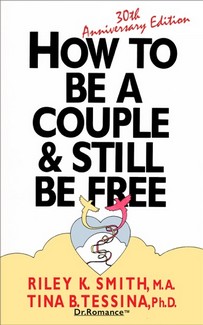
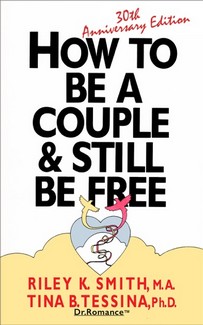
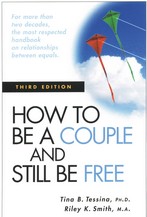
You have probably entered relationships madly in love, convinced that your feelings for each other were so strong your dream would carry you through the tough times, but wound up feeling more like you were living in a nightmare than a dream, struggling with conflicting wants and needs. If you don’t know how to work together effectively to solve the conflict, the resulting frustration, anger and battles make the relationship more and more unpleasant and difficult to sustain. As a therapist, I know that couples need to know how to solve problems together successfully, and to work together as a team rather than struggle. A major part of my life work is helping couples learn to work together to develop a partnership that supports love and intimacy. To reach people beyond my immediate area, I wrote two books on this subject: How to Be a Couple and Still Be Free (with coauthor Riley K. Smith) is a step-by-step guide to help you learn the skills of problem solving and cooperation. Money, Sex and Kids: Stop Squabbling About the Three Things That Can Destroy Your Marriage teaches couples how to solve specific problems using the skills of cooperation.
Couples without teamwork skills fight about money, sex, affection, time, infidelity, in-laws, raising children, housekeeping, or other problems, often repeating the same old arguments, without any resolution, or locked in habitual ways of relating that they think they "should" do, but that create dissatisfaction and struggle between them. Struggles like this are not inevitable.
Learning good relationship skills (communication, cooperation, knowing and saying what you want, overcoming destructive habits, breaking out of rigid patterns that don't work, counteracting unrealistic expectations, and creating new ideas) enables you to:
* Make room in the relationship for individual differences, preferences and tastes.
* Recognize and solve problems to your mutual satisfaction.
* Keep your individual emotional issues from creating partnership problems.
* Solve both individual and relationship problems.
*Identify old relationship patterns that were dysfunctional, addictive or abusive, and to develop healthy alternatives.
* Discuss changes and conflicts and find ways to accommodate them.
* Identify and examine the "traditional relationship" models to see what aspects of them are relevant to your partnership, and what you need to change to develop a new model of partnership that works for you.
With good communication and negotiation skills, any couple can create satisfying, loving intimacy. When you and your partner know how to cooperate, you can build a partnership in which you:
* Give and take equally.
* Are committed to mutual satisfaction.
* Face problems rather than avoiding them.
* Work together toward mutual satisfaction.
* Feel like a team.
* Treat each other's feelings, wants and needs as important.
* Share thoughts and feelings freely.
* Encourage each other and create excitement as well as comfort and security.
* Feel comfortable, satisfied, stimulated, and thus secure in the relationship.
* Have confidence that your relationship will last.
There is a pervasive myth that somehow happy couples just agree on everything automatically all the time. Believing this myth, we enter relationships convinced that whatever problems or differences we have with our partners will be easy to solve. But, in reality, the individuals who make up a partnership will disagree frequently, and often struggle over even minor issues.
In the course of building and sustaining a lifetime relationship, every couple encounters many problems. Different backgrounds and experience, discordant perception of each other and events, unequal rates of education and growth, conflicting needs for self-expression and contact, and differing values and beliefs about relationships complicate and often block attempts at creating partnership together.
Relationship models based on the idea that one person must lead and the other follow, or one "win" and the other "lose" can easily become power struggles, where the partners fight bitterly. Each partner struggles to be in control, or they avoid disagreements altogether because it isn't worth the struggle. Hence they spend a lot of their time either fighting for what they want or feeling deprived.
The belief that someone has to be in charge of the relationship causes couples to compete for power rather than cooperate. Otherwise loving partners can struggle because they believe it’s the way to get their needs met. Between partners in intimate relationships competition becomes stressful, counter-productive and toxic, poisoning the relationship by turning us into adversaries, and undermining the mutual support and encouragement vital to satisfactory relationships.
Differences can be frightening, and make resolving problems and conflicts with our intimate partners tense and difficult. In a relationship intimate enough that we feel a deep bonding or sense of commingled identity, it’s easy to experience disagreements as threatening. Disagreeing seems to indicate we are separate individuals who perceive everything differently, and have different needs and wants, and we fear that we'll be rejected or disapproved of if we are different.
Sometimes relationship problems are only indirectly connected to your partnership: your car breaks down, your kids need to get to school, your boss is difficult to get along with. These issues become partnership problems because you bring their effects, big and small, home (into the relationship) with you. Anger at your unreasonable boss can quickly become a difficult evening with your partner if you bring your frustration home, are irritable, and the two of you wind up arguing unnecessarily.
While this feels unfair and inappropriate, in real life it happens frequently. Unskilled couples easily become tangled in a web of blaming, hurt and anger and, after years of similar unresolved conflicts, can build a backlog of bitterness that can't be healed.
Some problems are directly related to your relationship: you fight about housework, time, money, child care or sex. One or both of you becomes hurt or angry. For couples who don’t know how to cooperate, such issues can escalate into a big problem or accumulate over time. When problems cause friction and never get resolved, they undermine an otherwise loving and viable partnership.
Only recently have psychologists and sociologists begun to discuss the elements of effective decision making. Among other discoveries, they found that decision making (even in business) is more effective when everyone contributes their views of priorities, needs, wants, goals, and their thoughts about possible solutions. This cooperative approach means that both contribute their understanding to the problem (which often makes it clearer) and both feel involved in the process and committed to the success of the solution they agree upon.
In cooperative negotiation, both parties attempting to resolve a conflict or make a decision involving them can negotiate so that both get what they want . By working together, you can learn to solve the problems of the past (I'm afraid we'll fight about money like my first wife and I did); the present (I don't think I'm getting a fair share of the housework) and the future (what will we do if I lose my job?). Instead of being a struggle or something to avoid, solving such problems becomes an opportunity to re-affirm your mutual love and caring, and to strengthen your partnership and teamwork.
© 2009 Tina B. Tessina
Adapted from: Money, Sex and Kids: Stop Squabbling About the Three Things That Can Destroy Your Marriage (Adams Media) ISBN# 978-1-59869-325-6 and "How To Be a Couple and Still Be Free" (New Page)"ISBN #1_56414_549_2
Author Bio:
Tina B. Tessina, Ph.D. http://www.tinatessina.com is a licensed psychotherapist in S. California, with over 30 years experience in counseling individuals and couples and author of 13 books in 17 languages, including It Ends With You: Grow Up and Out of Dysfunction (New Page); How to Be a Couple and Still Be Free (New Page); The Unofficial Guide to Dating Again (Wiley) and The Real 13th Step: Discovering Self-Confidence, Self-Reliance and Independence Beyond the Twelve Step Programs (New Page.) Her newest books, from Adams Press in 2008: Money, Sex and Kids: Stop Fighting About the Three Things That Can Ruin Your Marriage and Commuter Marriage. She publishes "Happiness Tips from Tina", an e_mail newsletter, and the "Dr. Romance Blog" http://drromance.typepad.com/dr_romance_blog/ and has hosted "The Psyche Deli: delectable tidbits for the subconscious" a weekly hour long radio show. Online, she is "Dr. Romance" with columns at Divorce360.com, CougarCandy.com, and Yahoo!Personals, as well as a Redbook Love Network expert. Dr. Tessina guests frequently on radio, and such TV shows as "Oprah", "Larry King Live" and ABC news. Follow her on www.twitter.com/tinatessina.
|