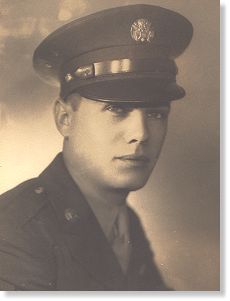
Published by The Daily Beast on December 7, 2016 to commemorate the 75th anniversary of the attack, this article is a reflection on the exclusive interview I had in 2001 with the late George E Elliott, Jr. He was the first person to pick up the Japanese attack wave flying towards Pearl Harbor in the early morning of December 7, 1941.
At 2 a.m. on April 1, 2001, I was sitting at my computer in my Laguna Beach condo working on a website I’ve long since forgotten when an email popped up with nothing in the subject line.
“Do you know who I am?”
“Another April Fool’s joke,” I thought to myself as I moved my cursor up to click the Delete button. Then I glanced down and noticed the sender: George E. Elliott Jr.
I stopped.
Being a devotee of World War II history, I knew exactly who he was. On the early morning of December 7, 1941, George Elliott and Joseph Lockard were manning a radar unit at Kahuku Point on the mountainous north coast of Oahu in Hawaii when they spotted the first wave of Japanese planes flying in to attack Pearl Harbor.
“Why are you asking me this?” I replied.
“I wrote to PearlHarbor.com and they ignored me, but I see that you are the contact for Pearl-Harbor.com.”
His reply made me smile. In 2001, PearlHarbor.com was a huge site built to promote the upcoming movie, Pearl Harbor. Conversely, Pearl-Harbor.com is a small site; a labor of love I’d created that includes various information about the attack, including a complete list of the survivors and casualties from the USS Arizona. At the time, I was busy managing sites such as PalmSprings.com and LagunaBeach.com for the internet network I own with my brother. I was not surprised that some anonymous webmaster at PearlHarbor.com had no idea who he was and ignored him.
"Yes, George, I know who you are. On December 7, 1941 you and Joe Lockard were the first to spot the first wave of Japanese attack planes. I would love to write about it.”
I was unprepared for his response.
“JOE LOCKARD HAD NOTHING TO DO WITH IT. IF YOU DON’T GET YOUR FACTS STRAIGHT I WILL TELL YOU NOTHING. IF YOU WANT MY STORY YOU CANNOT WRITE ANYTHING I DO NOT APPROVE.”
I had hit a nerve and knew I’d have to tread carefully to gain his trust. George was now living in Port Charlotte, Florida. He was bitter and his health was declining, but he saw the excitement about the upcoming movie as his last chance to be heard. His last chance to set the record straight. However, he refused to speak with me on the phone. Meeting him was out of the question. He only trusted what he could read and write. We would communicate strictly by email and he promised to mail me his notes.
Over the coming weeks I began to piece together his story. The radar unit at Kahuku Point had been recently installed and they were to operate it only from 4 a.m.-7a.m. On December 7, they received an order to shut it down early at 6:54 a.m., but George, who had little experience and desired more, kept it running, and at 7:02 a.m. he picked up an enormous blip coming in 137 miles from the north. According to George, Joe expressed no interest in his discovery and was more interested in getting breakfast. Regardless, George insisted that it be reported and Joe agreed that George could telephone the Information Center 50 miles away at Fort Shafter. He left a message with their operator and at 7:20 a.m. the lieutenant on duty called back and told Joe that the blip was a dozen B-17 bombers flying in from San Francisco.
“That was Lieutenant Kermit Tyler, correct?” I asked. Lieutenant Tyler was infamously portrayed in the 1970 movie Tora! Tora! Tora! as disregarding the alert, responding, “Don’t worry about it.”
George was having none of it. “You are not to mention Kermit Tyler’s name. He’s suffered enough.”
I felt it was a ridiculous request. It was common knowledge that Kermit Tyler was the commanding officer on duty that morning at Fort Shafter, and his omission would make my article look incomplete, but that didn’t matter to George. He felt that Tyler had made a simple mistake and was adamant that his recollection of that day’s events would not add to his misery. I had no choice but to leave Kermit Tyler’s name out of the story. After Tyler’s phone call, Joe wanted to shut the radar unit down, but George refused and kept tracking the blip until it disappeared into the surrounding mountains of Oahu at 7:39 a.m.
I began to research Joseph Lockard and learned that he was an experienced radar operator. George had no experience, but he did the plotting and kept a log, and knew this was the largest blip they’d ever seen. The blip was so large that Lockard thought it was a false reading. In fact, George had picked up the first attack wave of 183 Japanese planes that were now using KGMB’s radio transmission from Honolulu as a homing beacon to take them straight into Oahu. I continued scanning newspaper clippings from early 1942 and then I saw it:
“Joe Lockard, The Hero Of Pearl Harbor!”
Ouch. Now I understood why George was so cantankerous about the whole affair. Of the two men, Joe was the experienced radar operator. What could the military say? They could never admit that an inexperienced radar operator had actually picked up the initial Japanese attack force but that his more experienced partner and the commanding officer at Fort Shafter had disregarded the information, especially when it had cost the lives of 2,402 people. But was it all true ? In 2001, both Joseph Lockard and Kermit Tyler were still alive (Lockard died in 2012 and Tyler in 2010). I asked George if he was worried about their reactions.
“No. They know I’m telling the truth.”
George mailed me a manila envelope filled with notes scribbled on sheets of yellow legal pad paper and a sketch he’d drawn of what he’d seen on his radar screen. I caught my breath when I read the words “Japanese planes” written next to a large blip (in 2006, I gave permission for the History Channel to use George’s sketch in their documentary, The Secrets Of Pearl Harbor). His notes also revealed something that, in my opinion, gave some credence to his version of the story. In March 1942, the Associated Press declared Joseph Lockard to be the The Hero Of Pearl Harbor and he was awarded the Distinguished Service Medal. In 1946, after speaking before Congress, George was awarded a lesser medal, the Legion of Merit, but he refused to accept it. The humiliation was too much for him. It would be the last time he would speak publicly about that morning on Kahuku Point until he contacted me in 2001—55 years later.
I finished the article, George approved it, and it was posted on Pearl-Harbor.com. A few months passed and he wrote me that the story had garnered him some publicity. George was asked to do some radio interviews and he was invited to the movie premier for Pearl Harbor.
“How did you like the movie, George?”
“I didn’t like it,” he replied. “They got the radar wrong. You’d think with all of that money they could’ve done better research. It was just a love story with a lot of special effects.”
I watched the movie and he was right. In 1941, radar screens looked like an oscilloscope with vertical lines bouncing up to the target. The radar screen shown in the movie Pearl Harbor was the type used today that features a circular sweep. Regardless, the attention he was receiving made George feel like people were finally listening to his side of the story. He appeared to soften.
“Why don’t you come visit me in Port Charlotte? Are you ever in Florida?”
“Yes, I grew up on the other side of the state in Boynton Beach, and I usually visit my parents for Christmas. The next time I do, I’ll drive over and see you.”
“I would like that,” George replied.
Throughout 2001 and 2002, our internet company was booming and I couldn’t get away to Florida. I would email “Merry Christmas, George!” and he would reply in kind. In 2003, I finally decided to take a break and emailed George that I would be flying in for Christmas and looked forward to seeing him in Port Charlotte. He didn’t respond. A week later I received an email.
“We’re sorry to inform you that George passed away on December 20th.”
Read the original 2001 interview with George E. Elliott Jr. at Pearl-Harbor.com.
|