 Grounding the Law.
THE LAW OF THREE — Scientific Rendering
1. Origin as Symmetry‑Breaking
The framework begins with a single undivided state—an all‑as‑one condition analogous to a perfectly symmetric ground state. The “first movement” can be understood as a spontaneous symmetry‑breaking event: a fluctuation that both appears and vanishes, leaving behind a trace. That trace is a point of view—a localized asymmetry within an otherwise uniform field. In this framing, a point of view is not a metaphysical entity but a structural consequence of broken symmetry: a system that no longer fully coincides with the state from which it emerged.
This framing treats cosmology, cognition, and emergence as different expressions of the same underlying symmetry‑breaking dynamic.
The twist is not just the origin of asymmetry—it is the origin of reference.
2. Resistance as the Driver of Expansion
Once asymmetry exists, it generates gradients. Gradients generate dynamics. The universe’s expansion can be interpreted as the propagation of this initial asymmetry, a cascading amplification of the first deviation from equilibrium. The “stone” or “building block” becomes the fundamental substrate—whether conceived as quantum fields, information units, or elementary interactions—whose coordinated behavior gives rise to the macroscopic world.
“There is no two without three” becomes a statement about emergence. When a system bifurcates—observer and observed, signal and noise, inside and outside—a third term necessarily appears: the emergent relation that binds the two.
In complexity science, this third term is the system‑level pattern that cannot be reduced to its components. In information theory, it is the mutual information that arises only when two structures interact. In cognitive science, it is the global workspace that emerges from distributed processes.
In this model, “we” are not individuals, but the emergent global process generated by billions of interacting cognitive agents. The “collective forgetting” becomes the system’s default -self‑maintenance: a stabilizing pattern that preserves the existing configuration.
In this sense, “collective forgetting” is the system’s global prior—an inherited model that stabilizes the entire network by resisting updates.
4. The Constraint We Inhabit
The “deal with the devil” translates into a structural constraint: any system that emerges from asymmetry is biased toward maintaining that asymmetry. Resistance to equilibrium is adaptive because it preserves the system’s boundary conditions.
In biological, cognitive, and social systems, this appears as homeostasis, self‑preservation, and the defense of existing models of reality. The “weapon” is not moral but mechanical: systems resist perturbations that threaten their coherence.
CONSEQUENCES OF THE LAW
1. Recurrence as a Dynamical Pattern
The initial symmetry‑breaking event is not a historical moment but a continuously re‑enacted process. Every cognitive act that distinguishes “self” from “world” repeats the original partition. Every moment of contraction or defensiveness reinforces the asymmetry. Every moment of openness reduces it.
This maps cleanly onto predictive processing, where the brain continuously negotiates between prior models (forgetting) and incoming data (remembering).
2. Return as Relaxation Toward Equilibrium
The “return to Love” becomes the relaxation of a system toward its unbroken state—what physics calls a return to ground state, what information theory calls reduction of error, and what Taoist texts describe as reversion.
The Tao Te Ching’s “Returning is the motion of the Tao” can be read as a statement about the natural tendency of systems to move toward minimal tension when constraints are removed.
Every system returns to its first movement unless awareness intervenes.
“Without conscious effort, everything in us repeats.” — G.I. Gurdjieff
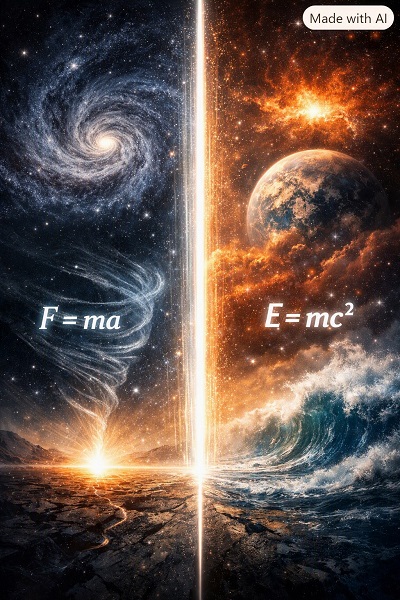
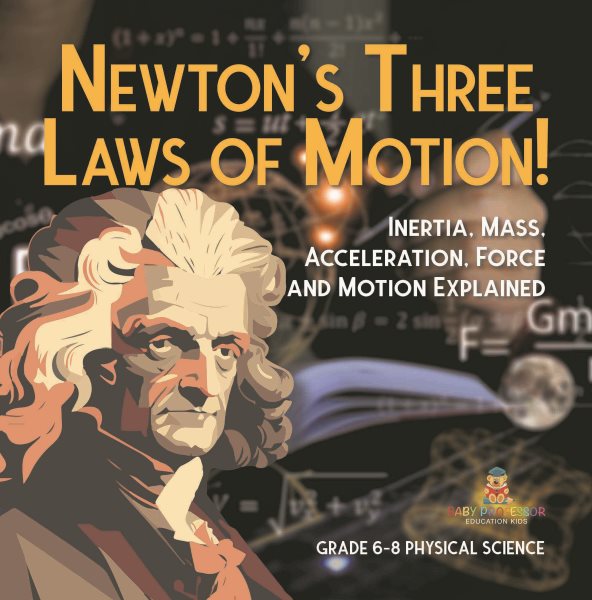
At every scale, a system moves only when acted upon by a force; resistance and motion are inseparable. In this sense, F=ma is the beginning and the end.
----------------------------------
REFERENCE LINEAGE
-
Heraclitus — Fragments: Early articulation of dynamic equilibrium and tension‑based unity.
-
Nicholas of Cusa — De Docta Ignorantia: Conceptual precursor to complementarity and the coincidence of opposites.
-
Lao Tzu — Tao Te Ching: Descriptions of reversion and non‑coercive dynamics relevant to systems relaxation.
-
G. I. Gurdjieff — Views from the Real World: Observations on mechanical behavior and self‑misidentification, resonant with modern cognitive science.
-
David Bohm — Wholeness and the Implicate Order: Formal treatment of undivided movement and enfolded order.
-
Plotinus — The Enneads: Early model of emanation and return, structurally analogous to modern emergence frameworks.
F=ma is the beginning and the end.
|