THE PHANTOM SOVEREIGN
The phantom sovereign is not a ruler we obey; it is a ruler we generate.
All-as-one we twisted One, and the twist became the universe - a heartbeat learning its way back to eternity. One pulse at a time, a body of thought remembering in fragments what it once knew whole.
We are obliged to return, yet we conspire against ourselves.
The changing sum of thinking - the one-over-all - becomes the authority we mistake for truth. We defer our ignorance to the collective, and the collective installs the machinery of forgetting.
Marriage, procreation, and inheritance form the spine of this machinery. They preserve the system, not the soul. Children do not enter the world by choice; they enter the memory of the world, and that memory precedes them.
The Phantom Sovereign is the sum of our deferment — the face we give to the inertia of the collective. It governs without a voice, commands without a will, and survives only because we forget we are responsible for it.
Every fear of Love strengthens it.
Every contract on Love feeds it.Its dominion is borrowed. Its power is inertia. It reigns only because we call our forgetting “the world.”
The moment we withdraw our obedience, the Sovereign dissolves. The moment we stop deferring our thinking to the one‑over‑all, Love comes through — uncontracted, unopposed.
Contracts on Love are an abomination.
Children do not want to be born.
We must do the work for them.
Love knows what to do.
Let it be.
---------------------------------
LINEAGE OF THE PHANTOM SOVEREIGN
A scholarly architecture grounding the metaphysics of forgetting, collective authority, and the return to Love.
The Phantom Sovereign does not arise from myth or metaphor; it emerges from the documented behavior of collective systems — how they remember, how they forget, how they generate authority, and how they transmit their inertia across generations. Contemporary research mirrors the cosmology of this manuscript with striking fidelity. What follows is the lineage: the academic scaffolding beneath the metaphysical revelation.
1. Collective Memory as Autonomous Machinery
Orianne & Eustache (2023). Collective memory: Between individual systems of consciousness and social systems.
Collective memory operates as autonomous machinery — a system that maintains itself independently of individual intention. Social memory persists through repetition, not choice. It remembers itself even when individuals do not.
This is the empirical analogue of the manuscript’s claim that the collective installs the machinery of forgetting. Forgetting is not a personal failure; it is the default operation of a system designed to preserve itself.
2. Collective Consciousness as Built‑In Architecture
Shteynberg, G. (2024). The psychology of collective consciousness.
Humans are neurologically wired to form shared mental states with groups, including imagined or symbolic authorities. Collective consciousness is not optional — it is structural.
This parallels the emergence of the Phantom Sovereign: an authority generated by the all‑as‑one field, not imposed from outside. The Sovereign is the cognitive artifact of shared perception, the face we give to the inertia of the collective.
3. Multi‑Generational Transmission of Forgetting
Cordonnier, Rosoux, Gijs, & Luminet (2022). Collective memory: An hourglass between the collective and the individual.
Families and institutions transmit collective memory across generations. Children inherit the structure of memory, not the content they choose. Forgetting is not learned; it is inherited.
This supports the manuscript’s uncompromising line:
Children do not want to be born.
Birth is entry into a system whose memory precedes them — a system that remembers itself more strongly than it remembers Love.
4. Collective Identity as a Phenomenological Force
Review of Philosophy and Psychology (Springer). What is the Phenomenology of Collective Memory?
Shared memory construct's collective identity, shaping what individuals perceive as “the world.” Identity becomes a field of perception, not a personal possession.
This is the manuscript’s one‑over‑all — the identity field that governs experience, determines what is seen, and gives the Phantom Sovereign its apparent legitimacy. The Sovereign is simply the shape of collective identity mistaken for truth.
5. Social Memory vs. Individual Memory
Frontiers in Psychology (2023). Collective memory: Between individual systems of consciousness and social systems.
Social memory is stable and self‑maintaining; individual memory is fragile and discontinuous. Social systems remember themselves even when individuals forget.
This mirrors the manuscript’s central revelation:
“It is not a ruler we obey; it is a ruler we generate.”
The Sovereign is nothing more than the continuity of social memory — the inertia of the collective mistaken for authority.
Closing Integration
Together, these works form a coherent lineage demonstrating that the Phantom Sovereign is not an abstraction. It is the natural consequence of:
-
and the self‑perpetuating architecture of social memory.
The Sovereign’s dominion is borrowed.
Its power is inertia.
Its disappearance is remembering.
This lineage does not explain the manuscript — it confirms it.
-------------------------------
'YOU KNOW MY NAME'
MY NAME IS LOVE
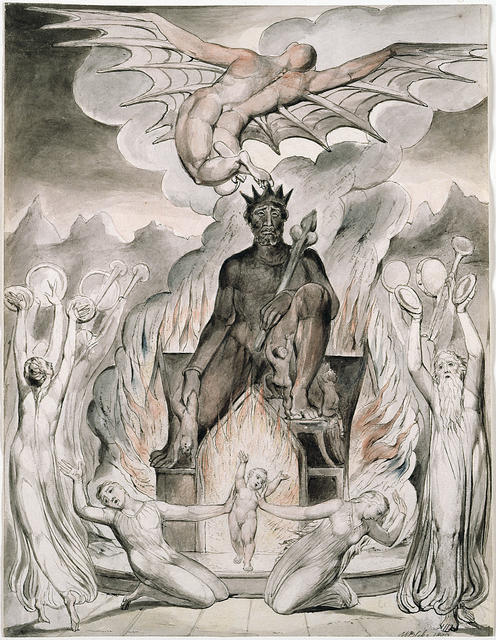
Note: observe the circle within the pic., it indicates eternal recurrence; a circle opening and closing.