I have occasionally listed Stoicism, Epicureanism, Buddhism, Freud, Schopenhauer, and Thoreau as the primary influences on my philosophy. I would like to admit here that I am not an expert on any of those sources, and explain that I don't agree with any of them 100%. It would be more accurate to say that I have taken basic kernels of wisdom from each of them and blended them together to form my own philosophy.
I would say that I am most influenced by Stoicism and Epicureanism, two ancient Greek philosophies that were generally opposed to each other. I think of them as kind of like brothers, in that when you compare them to each other you mainly see their differences, but when you compare them to other philosophies you tend to notice their similarities. I tend to waiver between the two, though over time I've been leaning more toward Stoicism. From Stoicism I get the concept of Apatheia (without passion), the idea that we must learn to accept things which are beyond our control because our emotional reactions to events generally cause us more suffering than the events themselves. From Epicureanism comes the idea that we must learn to choose our pleasures wisely. Epicurus warned against letting ourselves become accustomed to certain pleasures, because we may feel resentment later when we are no longer able to enjoy them. My inclination towardisolation also comes, in part, from Epicureanism.
I especially do not claim to be an expert on Freud, but his basic model of the human psyche (the conflict between the id, the ego, and the superego) has been a major influence on my thinking. It helps me to understand human nature more than anything else I've encountered. Also, his idea that we have two basic instincts (the life instinct which Freud himself labeled as Eros, and the death instinct which his followers labeled as Thanatos) from which spring all of our desires. However, I don't view those instincts in exactly the same way that Freud and his followers did, especially Thanatos. I tend to define them more like the Buddhist definitions of the different types of tanha.
I have noted that your writing is often quite philosophical. As I read your article, I recognized some nearly forgotten philosophical concepts that I read while working on my doctoral dissertation in educational philosophy. My advisor believed that all teachers have a philosophy of education that influences the way they teach. I developed a scale (computerized) to determine what an individual's philosophy is. It was published but never implemented because at that time, the cost of computerizing it was excessive.
I applaud you for learning on your own. I never took a philosophy course myself, but picked up some of the same books that you read and found whereby ideas fit. You didn't mention existentialism, but I am an existentialist, securely in the philosophy of Sartre.
I am an autodidact (a self-taught person). I'm a free thinker and I fancy myself a philosopher, but I must confess that I'm strictly a layman with little formal education, who hasn't made an extensive study of anything. I am relatively intelligent and I do read a lot, a bit from here and a bit from there, from many different sources (sources that support and sources that challenge my beliefs), and I think a lot about the things I read and the behavior I observe, trying to make sense of it all. It's quite possible though that my conclusions are incorrect. Because I recognize the possibility that my beliefs are in error I am constantly reevaluating them, and they evolve over time.
I wish I'd done a better job of explaining Freudian Stoicism, and the difference between the artificial morality of religion (dogmatic, deontologist, reliant on the superego) and the true morality which is discerned by a mature ego that has obtained wisdom (the fruit of the tree of knowledge of good and evil). But at this point, I doubt I'll ever get around to trying again.
A Clarification (Regarding our Primary Instincts)
Sigmund Freud concluded that we have two primary instincts:
1. The Life Instinct (which he referred to as "Eros")
2. The Death Instinct (which his followers named "Thanatos")
Buddhists teach that we have three primary cravings:
1. Craving for Pleasure (Kāma-taṇhā)
2. Craving for Existence (Bhava-taṇhā)
3. Craving for Non-existence (Vibhava-taṇhā)
I now believe that they are both wrong, and that Emily Dickinson
got it right in her poem: "The Heart Asks Pleasure First".
I believe that we have two primary instincts/desires
that are sometimes in conflict:
1. The Desire to Experience Pleasure.
2. The Desire to Avoid Pain and Suffering.
And that the Desires for Life and Death are secondary
instincts that are results of our primary instincts.
1. The desire to live is an integral part of the desire to
experience pleasure, because we cannot experience
pleasure unless we are alive.
2. The desire to die is a conditional result of the desire
to avoid pain and suffering. We desire death when we
believe that it is the only way to escape from pain.
Desire to Avoid Pain + Despair = Desire to Die
The heart asks pleasure first,
And then, excuse from pain;
And then, those little anodynes
That deaden suffering,
And then, to go to sleep;
And then, if it should be
The will of its Inquisitor,
The liberty to die.
Emily Dickinson
Patterning myself after Freud, I have gotten into the habit
of referring to my "Desire for Pleasure" as "Eros", and my
"Desire to Avoid Pain and Suffering" as "Thanatos".
Why do I sometimes refer to "Lethe"?
Lethe was one of the rivers of Hades, where Thanatos resided.
I sometimes use "Waters of Lethe" to represent "those little
anodynes that deaden suffering" instead of death itself.
This combined narrative dialogue and play is about the uncreated, unborn and undying transcendent Self of God-consciousness and Buddha-nature. It describes an odyssey of transcendent Consciousness Awakening and Remembrance.
A scientist/philosopher explores the mysteries of existence in a highly personal quest for answers to life's ultimate questions, forging a bridge between sterile science and spiritual values -- a scholarly work for all who seek wisdom, truth, true fr
Explains the realizations that have given the author the views of living life fully. The life each person dreams about.
You must take a look at yourself before dreams can be reached.
Deciding what is the core of belief.


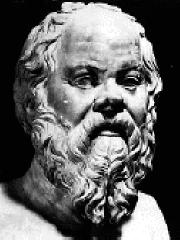


I applaud you for learning on your own. I never took a philosophy course myself, but picked up some of the same books that you read and found whereby ideas fit. You didn't mention existentialism, but I am an existentialist, securely in the philosophy of Sartre.
Ron
I wish I'd done a better job of explaining Freudian Stoicism, and the difference between the artificial morality of religion (dogmatic, deontologist, reliant on the superego) and the true morality which is discerned by a mature ego that has obtained wisdom (the fruit of the tree of knowledge of good and evil). But at this point, I doubt I'll ever get around to trying again.
A Clarification (Regarding our Primary Instincts)
Sigmund Freud concluded that we have two primary instincts:
1. The Life Instinct (which he referred to as "Eros")
2. The Death Instinct (which his followers named "Thanatos")
Buddhists teach that we have three primary cravings:
1. Craving for Pleasure (Kāma-taṇhā)
2. Craving for Existence (Bhava-taṇhā)
3. Craving for Non-existence (Vibhava-taṇhā)
I now believe that they are both wrong, and that Emily Dickinson
got it right in her poem: "The Heart Asks Pleasure First".
I believe that we have two primary instincts/desires
that are sometimes in conflict:
1. The Desire to Experience Pleasure.
2. The Desire to Avoid Pain and Suffering.
And that the Desires for Life and Death are secondary
instincts that are results of our primary instincts.
1. The desire to live is an integral part of the desire to
experience pleasure, because we cannot experience
pleasure unless we are alive.
2. The desire to die is a conditional result of the desire
to avoid pain and suffering. We desire death when we
believe that it is the only way to escape from pain.
Desire to Avoid Pain + Despair = Desire to Die
The heart asks pleasure first,
And then, excuse from pain;
And then, those little anodynes
That deaden suffering,
And then, to go to sleep;
And then, if it should be
The will of its Inquisitor,
The liberty to die.
Emily Dickinson
Patterning myself after Freud, I have gotten into the habit
of referring to my "Desire for Pleasure" as "Eros", and my
"Desire to Avoid Pain and Suffering" as "Thanatos".
Why do I sometimes refer to "Lethe"?
Lethe was one of the rivers of Hades, where Thanatos resided.
I sometimes use "Waters of Lethe" to represent "those little
anodynes that deaden suffering" instead of death itself.