Eating Less: A Secret Hiding in Plain Sight
by John Herlihy
For decades now, America has been on a first‑name basis with weight loss. We’ve tried every fad, every formula, every miracle cure that promised to melt away pounds while we slept, worked, or watched television. It began innocently enough with WeightWatchers in the 1960s — a community‑based, common‑sense approach that at least acknowledged the human being behind the appetite. But since then, the industry has metastasized into a carnival of fads and fangles, each one more breathlessly advertised than the last.
Today, you can’t turn on a television or open YouTube without being assaulted by the latest pharmaceutical marvel: Ozempic, Wegovy, Mounjaro — injections that promise to shrink your appetite, your waistline, and your bank account in one elegant sweep. Add to that the endless parade of apps like Noom, each claiming to “retrain your psychology” while quietly charging you a monthly fee. The creators of these products grow rich; the consumers grow hopeful; and the pounds, more often than not, return home like prodigal children who never learned their lesson.
But beneath all this noise lies a deeper truth — the psychology of self‑image. People don’t want to lose weight simply to fit into smaller pants. They want to lose weight so they can live with themselves. They want to stop seeing the “unruly beast” in the mirror, the one that seems to have taken up residence without permission. They don’t want to see the bulging waistline, the overhang of flesh over their belts, the excess weight hidden behind what look like maternity dresses. They want to feel in control of their bodies, their appetites, their lives, their innate sense of self. And yes, let’s not forget, they want to be healthy — not just in the medical sense, but in the existential sense, living their daily lives without pills, without denial, without pain.
What’s astonishing is that we teach trigonometry in high school — a subject most people will never use — but we don’t teach the basics of nutrition, portion control, or the psychology of appetite. We graduate students who can calculate the sine of an angle but cannot calculate the caloric cost of a double cheeseburger. We send them into adulthood nutritionally illiterate, then wonder why they struggle for the rest of their lives in bodies that are increasingly unhealthy. The diet industry steps in offering solutions that are complicated, expensive, and temporary. But the truth — the secret, if you will — is far simpler than any of these programs dare admit.
Eat less.
That’s it.
Costs nothing to say.
Costs even less to practice.
The price is a heightened sense of self‑awareness, a reasonable routine, a strict discipline to follow that routine, and a promise to yourself that you will always keep. The real problem is not hunger, but portion distortion. We heap mountains of rice and pasta onto our plates without a second thought. We swallow quarter‑pound burgers as if they were modest snacks. We treat buffets as competitive sport — more food for less money, as though the bargain were measured in volume rather than quality, selection, and balance.
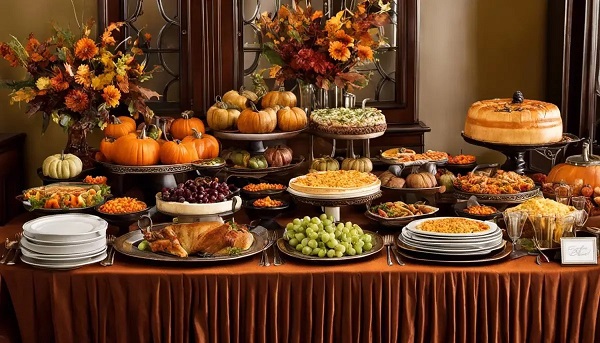
Cruise ships boast of “endless meals,” five‑star hotels trumpet their buffet spreads, and we respond like pilgrims approaching a sacred shrine — drunk not on incense but on the aroma of food. We walk away with plates so overloaded that steaks hang off the edges, dumplings drown in gravy, and breaded shrimp leap to their deaths on the carpet. Why? When we could simply go back for more — or better yet, not go back at all.
The truth is that less food offers a more bountiful image of yourself in the mirror. The size of your portions determines the size of your life. A scoop of rice the size of an ice‑cream ball is enough. A thimble of stir‑fried beef is enough. A few strands of angel‑hair pasta dressed in sesame oil and pine nuts is enough. A stick of celery filled with vegetable cream cheese can be satisfying if you let it.
Use your imagination. Keep it simple. Eat less and less and less — only to discover that it gives back more, much more. The diet industry will never tell you what you need to hear most because there’s no profit in it. But the truth remains: the key to weight loss is not a pill, not an injection, not an app, not a program. It’s a decision. A discipline. A quiet, daily act of self‑respect.
Eat less to live more.











My mother was a great cook. Neighbor kids want to eat at our house. We could eat all we wanted, and I did. But as a kid I remained skinny with all the energy I had as I left the table, never slowing down. Mom would eat the leftovers that she couldn't feed for lunch the next day. Eventually, she became overweight and diabetic.
I left home at 18 to go to college. I was frugal and didn't spend a lot of money even though you could buy six hamburgers for a dollar. I didn't period I'd buy one. Cooking for myself to save money, the right foods you suggest, I kept a 30 1/2 inch waist for 30 years. Some people around me thought I was malnourished. But I was healthy.
But I've always been a clean plate guy. Since I now have others cooking for me and serving me. I often get too much on the plate and eat it all. Even though I can't get out of this wheelchair and exercise like I did. The food is nutritious…I just have to cut the proportions.
I remember a professor who I chastised for parking in the disabled space (parentheses I never did). She came to me one day and fell in need to confess. She said, "I spent $3000 on a weight loss program. Please don't tell my husband." She was grossly overweigh and loved cooking.
Within a year or two she died. When I saw her husband later, he seemed very happy with his new, much younger and slim wife.
My sister, only 5 foot tall, lost 80 pounds by eating only every other day. Alternate fasting.
Ron