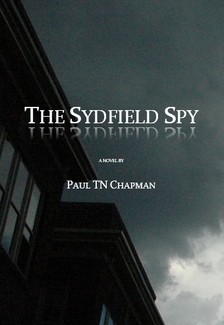
The writing of 'The Sydfield Spy', a new book by PTNC
I have just finished writing ‘The Sydfield Spy’, which is my third novel. It concerns an intelligence officer, Hugo Bromley, who has been kidnapped, tortured, shot, and left for dead in an alley. His cover blown, he must develop a ‘normal’ life while dealing with the remnants of his past. You will read not only of some of his exploits as a spy and assassin, but of his struggles with Post Traumatic Stress Disorder, to which (you may be surprised to learn) spies are just as susceptible as anyone else. The book should be released on Kindle and in paperback by the end of this month.
I like spies, and I thought writing a spy book would be fun. When I was in my adolescence in the 1960’s, spies in fiction were the rage. I have fond memories of Napoleon Solo and Illya Kuryakin, and I’m still in love with Emma Peel. I thought it would be fun to write about espionage, which was my primary reason for writing the book.
My second reason was to describe life with Post Traumatic Stress Disorder. Despite everything that’s been written about PTSD, people remain incredibly clueless about an intensely chaotic and terror-fraught condition. Making PTSD a central element of the book gave me an opportunity to tell what it’s really like. As a person with physically and mentally disabling conditions, other people and their assumptions have always caused me more problems than the conditions themselves. This book addresses that.
Hugo Bromley has a privileged background, an daring past, and a realistic present. Many of the characters who surround him support him as he works to develop something he’s never had before--a normal life in a world not of spies. He has some startling secrets which contribute to his difficulties. Of course, there are villains in the cast of characters--where would an espionage novel be without them?
I never was a spy, and an assassin only in fiction, so what I wrote about Hugo Bromley’s exploits are pure invention, although I was helped along the way by Clayton J Callahan’s book, ‘Armed Professions A Writer’s Guide’. I drew from many of my own PTSD experiences, so you can be sure those elements are realistic.
It’s been a long and exciting journey, and I’m excited to share it with my readers. I hope you will enjoy it.
Paul TN Chapman
ptnc.books.gmail.com
————————————————————————–
If you enjoyed reading this, please take a look at my eBooks and paperbacks on Amazon.com:
http://amzn.to/1Su1ufx
|




I have been following, unfortunately, rather late, The Americans. It is set in the 60-70s with a Russian spy couple posing as travel agents in Washington DC. The extreme violence, lying, secrecy and mixed emotions of the couple and what they have to do makes the story very realistic and probably very similar to what Soviet spies have actually gone through. Chilling to think might have really happened.
As I read, I began thinking that my mole in my American Mole trilogy, operating in deep cover and service to the United States, suffered PTSD during down times in his long, 20 year service over the loss of loved ones.
I hadn't thought of myself as having PTSD until reading this article as well. But I did suffer years of depression after my paralysis because of the loss of friends (actually acquaintances) who couldn't connect with me the way I was after the way they did before. Also, all the misconceptions about what I was capable of by employers and superiors who were quite ignorant of my abilities and seemed not to want to learn.
Will be looking forward to the posting of The Sydfield Spy here soon.
Ron