|

Kindle Edition
Amazon
paultnchapman.com
Category:
Action/Thriller
ISBN-10: 1521945551
Type: Fiction
Pages: 484
Copyright: August 2017
ISBN-13: 9781521945551
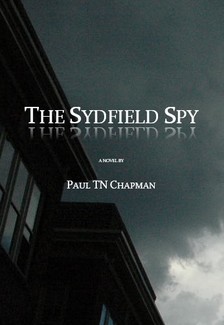
A former spy must establish a normal life while struggling with PTSD. There are elements in his life that want him to fail lethally.
Hugo Bromley is the last of an old and very wealthy family. He is a spy and (unknown to almost all of his colleagues) an assassin. He is kidnapped, tortured, shot, and left for dead. A television newsreader discovers his bleeding body in a rainy alley, and destroys Hugo’s espionage career by revealing his identity to the world.
Wounded in body and mind, Hugo returns to the family estate, Bromley Manor, to pursue a ‘normal life’--but what is ‘normal’ for someone whose work was always below the radar, and whose identity was whatever his Control wanted it to be?
Surrounded by new companions, Hugo confronts his past, and wrestles daily with Post Traumatic Stress Disorder. Between flashbacks and memories of previous missions, Hugo’s strengths and limits are tested by critical situations-- a break-in at the Hall, and a massive flood.
In climactic finale, traumatic scenes are repeated, and Hugo’s life once again hangs in the balance.
https://www.youtube.com/watch?v=SqZZxdsIESo
Excerpt
1 IN A DARK ALLEY
He hung over an abyss.
He did not know if he were asleep and dreaming, or awake in Hell. There was no perspective—up was down, left was right, darkness was brilliant and light was blinding. He thought he must have been suspended here for some time—lifetimes, epochs, ćons perhaps. He had no body, no sensation, but sporadically, he writhed, and felt the touch of wet warmth against his chin.
He heard terrified screaming—agonized, horrific shrieking. Sometimes it seemed to come from him.
He craved being held, yet feared being touched. He wanted this to stop, but was afraid that if it did, there would be nothing afterward. If there were nothing, he might be dead.
Along with the terrified shrieking from God knew where, there were whispers, over and over again.
You are not good enough. You are a coward. You let us down. You are worthless. You are a disgrace. You will never amount to anything. You are stupid. You must reinvent yourself completely. You are despised. You are unacceptable. You are contemptable. You are a disgrace. You are deficient. You are a failure.
We hate you.
Every word was a lash to the bone of his heart. He knew they were right, whoever they were, even though he was sure they were wrong. They had not convinced him; they simply had hounded him into surrender and acceptance.
There were changing smells: antiseptic, blood, used bandages, and waste. Rarely, there was the scent of church incense, or the delightful, faint fragrance of flowers. Those were snatched away and replaced with the stench of stale sweat, rotting bodies and unspeakable fluids.
With each odour came a scene. Distant flowers—his mother, sweet and lovely, when he was a boy. Incense from the Sunday morning Masses the family attended together. Sweat from the afternoons he and his friends played sports on the fields of the old school. Blood from a gunshot wound. Bloody, pus-drenched, festering bandages from injuries in the field. Hospitals, morgues, dead bodies old and new….
How long had he been here, floating bodiless in the Void? How could he be bodiless if his body hurt so much? He thought he felt sweat trickle from his brow and sting his eyes, but he had no face, no form.
…in emptiness, the five essences of sentient beings do not exist: there is no form, no sensation, no perception, no volition, no consciousness. There is no eye, no ear, no nose, no tongue, no body and no mind.
Was he having a spark of enlightenment? or a blaze of madness? He could feel nothing, but he was in pain. His numbness was excruciating. He could see nothing but the darkness that blinded him. There was nothing around him, yet the substance of emptiness smothered him. If there were indeed a Heaven, then Hell was indistinguishable. He did not know if he were alive or dead, or if a giant had ground his bones to make his bread.
Or perhaps he’d fallen down a rabbit hell?
In this suspended death, he suddenly heard explosive sounds. He searched his memory, sifting eternities until he realized he had heard those sounds before.
They were gunshots.
He soiled himself.
After many gunshots, possibly in a new eternity, he felt hands firmly but kindly grip him and lift him. There were sounds both loud and soft, but he could not make out words. A hand touched his face—he jerked his head away and tried to scramble an escape.
His mind filled with black.
His mind filled with light—he was dressed. His hair was damp. There was no part of his body that was not affected by trauma.
There were more gunshots, and he sensed someone had fallen beside him. His legs were like rubber; he tried to thrust himself from the floor. Life seemed to be returning to his limbs, but with agonising sluggishness. He tried again to lift himself from the floor, and put his hand on a metallic object that seemed familiar.
It was a weapon.
It was his weapon, a Walther P4.
Insanely, he scrambled awkwardly, crab-like, to the wall with his weapon in his hand, to a window, over the sill, and fell….
The alley was dark and wet. It had poured heavily half an hour ago, and the smell of rain lingered in the air. The aroma mingled with the reek of garbage that filled the rusty, filthy dumpsters. On the pavement was a mixture of motor oil, rain water, and bits of trash blown in from the street.
Most of the street lamps were out, at some time shattered by someone throwing stones. The one lamp that still worked was located at the far end of the alley, casting a pale light on a form lying in the middle of a puddle. The silhouette and shadow extended toward the street, and were muddled in darkness.
Drops fell from the fire escape near the form. An incredible stink filled the passage.
Pain, agonizing pain. It consumed him, burnt him. His chest was on fire, sticky, wet fire. His leg felt like a volcano. He stared into the night, if it were night, scanning for stars, and saw only dark, threatening, louring clouds.
Half a block away, a man was talking on a mobile telephone as he walked along the street.
‘I don’t care how much camera time she wants, I’m the principal news reader and the focus should be on me!’ he snapped to someone on the other end. ‘If she thinks this is some sexist ploy to discriminate against her, show her the results of the last ratings pole. Her highest demographic is with males ages 18-30, and you know what that means.’ He listened for a moment, and continued, ‘Yeah, I know cleavage sells, and if that’s what she wants to be famous for, screaming sexism won’t help her case….’
The news reader came to the mouth of the alley. Turning his head casually, he spied dark shape in the middle of the large puddle. At first, he thought it was trash. He was about to speak again when the shape groaned and moved.
The speaker said a rude word. ‘I’ll call you back in a minute,’ he told the person on the other end. ‘I think something’s up.’
Pocketing his mobile, he cautiously walked toward the shape. As he approached, he heard more groaning, and reached again for his phone, which had a flashlight feature, and shone light over the figure. In the middle of the puddle lay a man covered in blood. The journalist repeated his rude word and jumped back.
First, he called Emergency Services. The operator instructed him stay with the victim, but not to touch him. Of course, he would anyway.
He disconnected and was debating whether to remove his raincoat and cover the recumbent figure, when the man suddenly opened his eyes wide, looked directly at him, and said distinctly, ‘Security Services.’ Then his eyes rolled back into his head and he lost consciousness again.
The journalist called his office. ‘It’s Scott Torrance again. Send me a crew. I’ve found an injured man lying half-dead in an alley.’ He gave his location. ‘I think the Security Services may be involved, and I think we have our lead story for the 11 o’clock news!’
Within minutes, the alley was teeming with police and ambulance people. The EMTs said the man had been shot three times that they could see. He’d lost a great deal of blood and should be transported to hospital immediately. They hoisted him onto a gurney and wheeled him toward the ambulance.
Scott Torrance was being questioned by a rookie police officer named Wardlow. Although the medical personnel were in a hurry, they seemed to be taking their time about it.
Impatiently, Torrance gave his name and contact information, miffed that the officer didn’t recognize him from the television news. He described the scene when he came upon it, and repeated everything he’d done from discovering the body to the arrival of the police. Of course, he omitted his call to his people. Finally, he said, ‘Shouldn’t someone go with the victim? I’ve been shot myself,’ he lied, ‘and I know how it will be when he wakes up. He’ll be confused and disoriented. He shouldn’t be left alone. Let me go with him!’
Officer Wardlow thought for a moment and finally growled, ‘Yeah, whatever.’ He closed his notebook and walked toward the ambulance. He gestured toward the journalist, ‘He’s going with you,’ then spun on his heel and walked away to move the Press away from the scene. How did they get here so fast?
Scott Torrance motioned his crew to follow the vehicle, and climbed into the ambulance.
Once inside, he squatted next to the injured man and said, ‘Hi buddy! What the hell happened to you?’
They barely made the 11 o’clock news. Torrance was returned to the station by his film crew, damp, dishevelled, and smelling faintly of antiseptic and blood. He had just enough time for the makeup person to pass a brush over his face, to change his shirt and tie, and rush to his seat in the news room.
‘Good evening,’ he said calmly, looking directly at the camera. ‘I’m Scott Torrance. Our opening story: A man apparently connected with the Security Services was found by this reporter in an alley in the Easthall area this evening.’ Telephoto images of the victim being loaded into the ambulance flashed on the screen. ‘He had been shot multiple times, and is currently at Saint Luke’s Hospital, where surgeons are fighting valiantly to save his life….’
By midnight, members of the Security Services were at the crime scene, getting in the way of civilian professionals. Police investigators and forensic scientists were tersely interrogated. Another team mounted an identical assault on emergency department personnel at Saint Luke’s. Forensic evidence (what little there was) was confiscated on grounds of national security. Members of the press who lingered were sequestered and kept at a safe distance.
They didn’t know about Scott Torrance yet.
The local precinct office was not unscathed.
‘What I really want to know,’ barked a slender man in a thin-brimmed Fedora, ‘was how the hell this happened!’ He had wrathfully descended on the police office, and they were made to feel his rage.
‘We don’t know, sir,’ answered one of the police officers. ‘We won’t know anything until the victim,’ he referred to his notebook, ‘Hugo Bromley, wakes up.’
‘I know who the hell he is,’ roared the man in the fedora hat. ‘What I want to know is how the story ended up on night-time news!’ He had the unmistakeable personality and accent of a New Yorker.
A detective in a rumpled suit said, ‘As near as we can figure out, Scott Torrance, the man who found the victim, convinced Wardlow over there,’ he pointed to the young officer, now standing in a corner looking embarrassed and feeling stupid, ‘that the victim should not be unattended—’
‘He said he had been shot once,’ interrupted Wardlow, ‘and that the victim shouldn’t be alone. It seemed reasonable. I thought they’d bonded while they were waiting for the EMTs to show up.’
‘And,’ continued the plain clothes officer, ‘the EMTs thought Torrance was with the police, or at least that he was okay to accompany the victim because Wardlow had said so. They said he went through the guy’s pockets, asked him tons of questions, and wrote it all down in his notebook. He was very official about it.’ The officer looked abashed. ‘They assumed he was a cop.’
‘I don’t suppose anyone thought to ask Torrance for an ID?’ sneered the man in the fedora hat. ‘Or maybe recognized him from television?’
‘They were sort of busy,’ the detective said defensively, ‘and we don’t see a lot of TV here.’
Fedora Hat turned around and jammed his hands deep in his coat pockets. ‘I can’t believe what a mess you made of this! Is this how you preserve a crime scene? Just let the Media walk all over it?’
‘It was the Media who found the victim,’ Wardlow said hotly.
Fedora Hat kicked a wastebasket halfway across the room. He stared at the resulting mess for a moment, then asked in a calmer voice, ‘All right. What do we know from the crime scene?’
‘We know the victim—his name was Bromley—oh, sorry, you knew that—Bromley was shot three times, once in the thigh, and twice in the chest. Any one of the bullet wounds could have been—could be—sorry—fatal. He lost a lot of blood, and there was so much of it that it obscured the ground around him. No clues that we’ve been able to discover so far. And of course, between Torrance and the EMTs, the footprint evidence is pretty much a loss. The Crime Scene crew will go over it again in the morning.’
‘Didn’t need a Crime Scene crew to learn that,’ grumbled Fedora Hat.
‘It’s still early, give us a chance! The problem is the rain—it’s been raining heavily, on and off, all evening. Rain always screws up a scene. The area has been tented, so we may still discover something. Right now, we are guessing Bromley was shot in the alley, not just dumped there.’
‘Well, with the amount of blood you describe, I think it safe to say he was shot where he was found.’
‘Do we know why?’ asked another officer.
‘That would be classified information, if we did,’ replied Fedora Hat. He passed a handkerchief across his forehead and said, ‘Get all the information you can on that bastard journalist. That’s one head that will roll!’ With that he stomped toward the door, paused long enough to utter an extremely rude word of his own and exited.
After he left, Wardlow turned to the detective. ‘That was the Security Services?’ he asked.
‘Yeah, couldn’t you tell?’ said the detective contemptuously. ‘They’re diplomatic in the Security Service! Real genteel!’
|