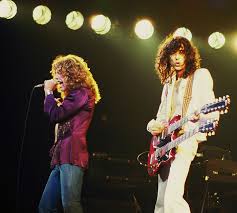
Revelations that a favourite song from your youth was plagiarised is a bit like being told that there is a doubt over your children’s paternity; shock, horror, disbelief and denial quickly follow. When that song happens to be arguably the most iconic rock song of all time, the ensuing hysterical outcry on social media is entirely predictable.
The announcement in 2016 that Led Zeppelin founders, Jimmy Page and Robert Plant, would face trial in the US in a copyright row over the song 'Stairway to Heaven' has caused an almighty metaphorical weeping and wailing in the virtual world.
Despite the jury returning a verdict of 'not guilty' in June 2016, much of what has been written and said about the case is so full of misinformation and factual inaccuracies, almost certainly down to a lack of knowledge of context and background that it is worth having a look at the back story in more detail.
So, the question is – did Page and Plant plagiarise the music for ‘Stairway to Heaven’? The jury said the intro was 'not intrinsically similar' to Spirit's 1967 song 'Taurus'. But they rejected the defence that Zeppelin would not have been familiar with 'Taurus' stating that they would have 'had access to it'.
So it is possible that, in some ethereal way, 'Taurus' could have influenced the creation of one of the most famous rock songs of all time.
First, though what exactly was the court case all about? Simply put, the plaintiff claims that significant parts of ‘Stairway to Heaven’ were a direct copy of ‘Taurus’, an instrumental piece by American psychedelic band – Spirit – written in 1967 by the band’s late guitarist Randy Wolfe, known professionally as Randy California. The plaintiff in the case was Michael Skidmore, a trustee for Randy Wolfe while the defendants were Jimmy Page and Robert Plant, the accredited composers of the song.
Contrary to what some wrote on social media, this has been rumbling on for some time – in truth, probably since ‘Stairway’ first came out in 1971 – but legally the original suit was filed in 2014 and on April 12th 2016 Judge Gary Klausner of California ruled that the case should proceed to jury trial stating that “While it is true that a descending chromatic four-chord progression is a common convention that abounds in the music industry, the similarities here transcend this core structure.”
Listen to 'Taurus' and you can hear that it is similar, but not quite the same. Also, it would be hard to argue that this short piece influenced the whole song. Spirit were undoubtedly a hugely creative band, possibly ahead of their time as amply illustrated on their 1970 album ‘Twelve Dreams of Dr. Sardonicus’ – a paean to concept albums and a must-have for teenage hippie musicians in the Seventies (guilty as charged!). That said, they weren’t Led Zeppelin and never came close to sharing the influence of the English band. However, Zeppelin supported Spirit a couple of times on their first US tour. They were said to have been attentive audience members during the American band’s sets, taking up prominent positions in the front row. Page almost certainly would have heard ‘Taurus’ during these gigs.
None of this should ever detract from Page’s contribution to the contemporary music canon. While clearly best known for his work with Led Zeppelin, his career actually began in the early ‘60’s as a session musician. He featured on hits for artists as diverse as The Who, The Kinks, Marianne Faithful, The Rolling Stones, John Mayall, Chris Farlowe, Them (Van Morrison), Eric Clapton and Joe Cocker. He eventually joined The Yardbirds in 1966. It was when they disintegrated in 1968 that Page brought in Robert Plant, drummer John Bonham and bassist and keyboard player John Paul Jones to fulfil some contracted gigs in Scandinavia. Calling themselves The New Yardbirds, the band would soon morph into Led Zeppelin, releasing their eponymous debut album in early ’69 and the rest, as they say, is history. And it certainly was historical in retrospect – during my time as a music radio producer and presenter racking up thousands of hours of radio airtime, I have extolled Led Zeppelin many times as the founding fathers of what we now know as heavy metal.
How did they achieve this?
To understand that, first we must look at what was happening in the UK music scene in the early sixties. Leading the way were The Beatles and The Rolling Stones who were both heavily influenced by and experimenting with, African American blues music and used it to create new styles of pop music that was heavily guitar driven with prominent syncopated bass guitar and drums and, possibly most revolutionary of all, group members being songwriters. This moved away from the ‘Tin Pan Alley’ model of professional writers sitting in rooms churning out hits that were then allocated to appropriate artists by their record companies or publishers. The Beatles and Stones effectively shifted the creative power to the artists themselves. They were quickly followed by the likes of The Kinks, The Who, The Small Faces, The Hollies and a number of others. Toward the end of the decade they would be joined by the likes of Deep Purple and Pink Floyd.
Whilst not a member of any these bands, Jimmy Page as we have seen, was highly active as a session musician at this seminal time for the British music scene. And, being born in 1944, he was very much a contemporary of some of the key players from that era – Paul McCartney (b. 1942); John Lennon (1940), Keith Richards (1943), Mick Jagger (1943), Pete Townshend (1945),Eric Clapton (1945) and David Gilmore (1946).
By the time Page had joined up with Robert Plant John Paul Jones and John Bonham to form Led Zeppelin, he wasn’t only dipping freely into the repertoire of US bluesmen, he also incorporated elements of psychedelia, English folk and his own and others’ coruscating guitar riffs. All of which was backed by Bonham’s powerful drumming, elaborated by Jones’ musical versatility and fronted by Plant’s primeval wail.
The Beatles and Stones originally led the so-called ‘British invasion’ of the USA as they took over the Billboard charts and steamrollered their way into American popular culture, thus paving the way for many more British bands including Led Zep to cross the Atlantic. Many years later, I spent a month in California making a series of programmes for BBC World Service looking at the genesis of American rock music on the West Coast. I spoke with and interviewed dozens of US rock acts and, almost to a man and woman, they cited their earliest influences and inspirations as The Beatles and Led Zeppelin as opposed to anyone from their own country. So it was the cross-fertilisation of musical styles and influences flip-flopping across the Atlantic that has led us, more or less to where we are today – certainly in terms of rock music and all its sub-categories.
Page clearly was influenced by American music in his formative years, specifically the blues, and has gone on to influence many more with his music, but does this make him a plagiarist? As previously stated, Page would have likely heard the song ‘Taurus’ when they supported Spirit and it has also been revealed that he owns a copy of the album containing the song, although he denies knowing of its existence among his extensive collection. Pete Townshend, guitarist and songwriter of The Who, once explained in an interview that when he’s writing he will often take another song to use as a template. Could it be that Page takes a similar approach? The fact that The Who’s songs sound so startlingly original even today is testament to the fact that this approach to songwriting need not result in plagiarism. However, it could explain why sometimes, when you listen to a song for the first time, it reminds you of something else. In practice, this method could work in a number of different ways. The songwriter has an idea and he knows he wants his finished song to be a bit like a song by band x, so he starts jamming along to the song by band x on his preferred instrument (normally piano or guitar) and sees what happens. He might actually use the structure of the song by band x to allow him to write his lyrics within the strictures laid down by band x, then he can start to develop his own music, finding a chord structure and a melody to lay over it. He might take a riff or, as with ‘Stairway’ and ‘Taurus’, a particularly striking chord sequence and look to develop that into something original.
There are myriad examples of one song sounding very much like another and I’m sure you are already thinking of some that you know. A very clear instance is Warren Zevon’s ‘Werewolves of London’ which came out in 1978 a mere four years after Lynyrd Skynyrd’s anthem ‘Sweet Home Alabama’ which it so closely resembles, utilising the same D – C – G chord sequence. Another that always strikes me but is not often cited is ‘Let Me Entertain You’ by Robbie Williams, so deeply reminiscent of ‘Superstar’ from the Tim Rice, Andrew Lloyd Webber musical ‘Jesus Christ Superstar’. What, you don’t see it? Play one and try singing the words to the other along with it…there you go. Fit perfectly don’t they?
Sometimes it can even be parts of songs. I’m sure that Slash’s final guitar solo at the end of Guns n Roses ‘Sweet Child ‘o’ Mine’ – the bit with the wah-wah pedal would not have sounded quite the same had he not been such a fan of Eric Clapton’s seminal solo on Cream’s ‘White Room’.
My own personal favourite bears a strong correlation to the Zeppelin/ Spirit case as it also involves a well-loved iconic song in ‘Hotel California’. The first time I heard this on an exclusive preview programme by a London radio station, I instantly recognised the distinctive chord sequence from the Jethro Tull song ‘We Used to Know’; different key, time signature and rhythm, but unmistakeably the same sequence. Similarities also exist on the vocal melody line and, on top of that, ‘We Used to Know’ also ends with a protracted guitar solo by the excellent Martin Barre in the same way that ‘Hotel California’ finishes with a memorable guitar duet between Joe Walsh and Don Felder. Mirroring the situation between Spirit and Zeppelin, The Eagles had supported Jethro Tull on an American tour in the early Seventies. If you’re unfamiliar with either you can compare them here. Many years later, I interviewed Ian Anderson of Jethro Tull, composer of ‘We Used to Know’, and he was philosophical about it all. “There’s certainly no bitterness or any sense of plagiarism attached to my view on it,” he said, “although I do sometimes allude, in a joking way, to accepting it as a kind of tribute.”
On occasion, the apple does not fall too far from the tree when a songwriter seeks inspiration from another song and it all ends up in Court. One of the most famous cases involves George Harrison and his hit ‘My Sweet Lord’ when he was found to have plagiarised Ronnie Mack’s song ‘He’s So Fine’ – a hit for the Chiffons. Harrison always maintained that any similarity came about subconsciously but you would have thought that one of his acolytes or ‘yes-men’ could have interceded at the recording stage…“Oi George, don’t you think this sounds a bit like…?”
Back to Led Zeppelin and their songwriting, it has emerged over the years that Page actually has considerable previous when it comes to wearing his influences on his sleeve. While many British bands took their inspiration from African American blues music to create a new type of popular music, Page was actually lifting entire riffs to create Zeppelin songs and, occasionally lyrics would follow. Invariably, these songs would be credited as Page/ Plant compositions so, at the very least, they obviously felt that sharing riffs, chord sequences and occasional lyrics was perfectly ethical. It doesn’t detract from the brilliance of Zeppelin’s playing or the unique dynamic between the four members that created one of the world’s top ever bands, but maybe a little shared credit would not have gone amiss.
To conclude, music imitates, borrows, influences and, within genres, swaps riffs, words, themes and, yes, chord sequences. There are so many different facets to a song beyond a basic chord pattern – melody, structure, arrangement and of course, lyrics. ‘Stairway’ and ‘Taurus’ are clearly two different songs/ pieces of music. Page didn’t seek to recreate ‘Taurus’ and call it something different, he was very deliberately creating something altogether different and on a grand scale. Was one influenced by the other? Most probably, but is that obvious plagiarism?
Nick Hirst was Head of Music for BBC Radio 2 and is the author of the conspiracy thriller – ‘The Shape of Rain’ available on Amazon Kindle.
|




With all the beautiful work out there to read and listen to, it's hard not to be influenced by someone else's original work.
Thank you for such a thorough analysis of the Led Zeppelin/Spirit case. You have a much better ear for rock music that I. I simply have enjoyed it, danced to it, and sang along, very badly, over the years.
Ron
Little To Long Off The Wall
But interesting Tho Done...
I'm In To Music Lyrics Guitar...
TRASK...