Creative Writing Versus Critical Thinking by Paul Francis Mc Cann
Rated "G" by the Author.
Last
edited: Saturday, July 15, 2017
Posted: Saturday, July 15, 2017
Creative Writing Versus Critical Thinking - By Paul McCann
University should be a warm welcoming place with encouragement from teachers who appreciate creativity amid the mechanical approach to study and submission of assignments from students .
I believe the input of students intellectual property should be recognized as a valid source of acceptable information that can increase currents within the mainstream flow of scholarly articles accessible on the internet . In addition to this creative writers , photographers , musicians , scriptwriters may arrive at conclusions that are both interesting and informative .
Study for me is like a being stranded at a port in Cyberspace where I should feel free to go sailing in and out anytime day or night to browse or share ideas and get feedback about my original material instead of having my material thrown into a black hole and cast out from academia by teachers who are following an instructed pathway towards achievement , furthermore when I share my creative talent in a subjective way for me that takes on a new perspective and should be accepted as part of an assignment without having to provide reference in submission . If teachers at University were to show an interest in creative works by reading or listening and commenting constructively rather than discouraging creative written articles it would enable a better link of communication between students and teachers where real understanding could begin .
In the process of sharing my original work with submitted articles there is an essence of letting go of any ownership of that work. Using poetic license as a vehicle on the streets of academia should apply no restrictions or blockages .
Collaboration with other students for example, mixing my work with other students work ,could be another wonderful thing that happens with poetic license and creative writing . New creations that are not being controlled by one person could finish up as intellectual masterpieces that would be added to the list of acceptable information and papers of a time where talent has a voice rather than driven by a mechanism produced within the walls of academia .
In conclusion Universities are places where people have a voice that needs to be shared and accepted by others with their ideas and works placed side by side along with scholarly written articles . Students who walk and talk in a creative way need to be recognized in what they do . What a wonderful thing it would be when their activity with study can become part of a creative stream within the consciousness of our educational institutions .
I recommended that creativity would be accepted and not rejected when submitted in departments of Ed.
When ever people collaborate or share a word or two ,
a friendship begins in creativity , how do you do ?
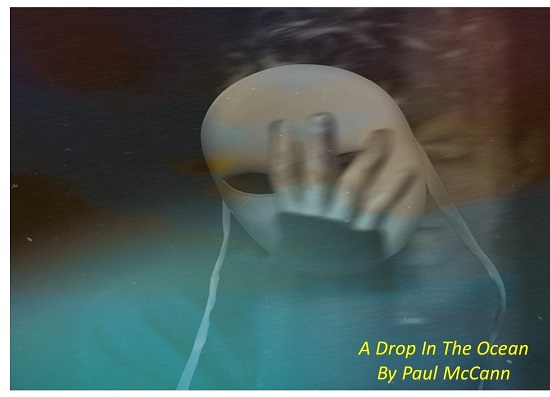
I cast my thoughts and dreams adrift in an ocean that is free .
and in return some others there are sending their dreams to me .
There’s a value in doing that in an educational way,
and teachers should welcome the things that creative writers say .
To be frank, I believe the trouble that you see with your creative ideas not being accepted is not the ideas, which I find to be quite good, but your presentation. Your grammar and writing is not up to University standard. It took me a long time to learn how to write well. Many years of courses in English that focused on the mechanics of writing and not on its creativity or ideas. You seem to be lacking in those basics, and that is what is holding you back.
It was only during my doctorate that I was able to share my ideas and even teach them during seminars where I presented papers by the use of flipchart presentations as well as the written version because speaking from a flipchart with photos and conceptual drawings was much more powerful in presenting. Later, I used overhead transparencies or slides (some taken from my flipcharts) for these presentations. When PowerPoint came along, I embraced it and started making all of my presentations on PowerPoint. But I always backed these presentations up with a well edited manuscript of the article or creative idea.
I have found that many universities have moved over to the monetary model of teaching techniques that will earn money for the student (vocational school) rather than teaching philosophy (the lowest paid higher education professors) creativity or critical thinking. Professors have become very narrow robots focusing on a single discipline with disregard for relationships to others. A recent movement for multidisciplinary study and teaching basics or classics is trying to overcome this capitalization of higher education.
The Harlem Renaissance remains exciting, inspiring, and irresistible in the first half of the 21st Century for the same reason that the many people who lived it found it exciting, inspiring, and irresistible in the first half of the 20th Century. De
At last, a middle school version of Simple Steps to Sentence with all new practice exercises, tests, writing connection pages, and answers. Everything you need to teach your students the easy way to analyze sentences. Just print a page at a time, or
A quick and easy method for analyzing the parts of a sentence and learning English grammar. Now available as an eBook in PDF format. All study notes, exercises and tests are reproducible blackline masters that teachers can take directly to the copy m








It was only during my doctorate that I was able to share my ideas and even teach them during seminars where I presented papers by the use of flipchart presentations as well as the written version because speaking from a flipchart with photos and conceptual drawings was much more powerful in presenting. Later, I used overhead transparencies or slides (some taken from my flipcharts) for these presentations. When PowerPoint came along, I embraced it and started making all of my presentations on PowerPoint. But I always backed these presentations up with a well edited manuscript of the article or creative idea.
I have found that many universities have moved over to the monetary model of teaching techniques that will earn money for the student (vocational school) rather than teaching philosophy (the lowest paid higher education professors) creativity or critical thinking. Professors have become very narrow robots focusing on a single discipline with disregard for relationships to others. A recent movement for multidisciplinary study and teaching basics or classics is trying to overcome this capitalization of higher education.
Ron