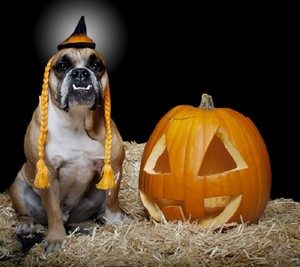
 This is Their Second Worst Holiday
Although many of us humans – both adult and child – really enjoy Halloween, it’s not a very good time for our pets. In fact, after the Fourth of July, it’s probably the next worst Holiday for them.
Therefore, The American Society for The Prevention of Cruelty to Animals (ASPCA) recommends a few common-sense cautions that will help keep your pets safe and stress-free this time of year.
And if you suspect that your pet has ingested any of the potentially dangerous substances listed below, please call your veterinarian immediately or the ASPCA Animal Poison Control Center at (888) 426-4435.
No Treats: That bowl of Halloween candy is for trick-or-treaters, not for Scruffy and Fluffy.
Chocolate in all forms—especially dark or baking chocolate—can be very dangerous for dogs and cats. Symptoms of significant chocolate ingestion may include vomiting, diarrhea, hyperactivity, increased thirst, urination, and heart rate—and even seizures.
Candies containing the artificial sweetener Xylitol can be poisonous to dogs. Even small amounts of xylitol sweetener can cause a sudden drop in blood sugar, which leads to depression, lack of coordination, and seizures. In cases of significantly low blood sugar, liver failure has been known to occur.
Raisins can cause a toxic reaction in pets ranging from vomiting to kidney failure.
Ingesting tin foil and cellophane candy wrappers can pose a choking hazard or cause intestinal blockage.
Popular Halloween plants such as pumpkins and decorative corn are considered to be relatively non-toxic, yet they can produce gastrointestinal upset should pets ingest them. Intestinal blockage could even occur if large pieces are swallowed.
Keep wires and cords from electric lights and other decorations out of the reach of your pets. If chewed, your pet could experience damage to his or her mouth from shards of glass or plastic, or receive a possibly life-threatening electrical shock.
A carved pumpkin certainly is festive, but exercise extreme caution if you choose to add a candle. Pets can easily knock a lit pumpkin over and cause a fire. Curious kittens especially run the risk of getting burned or singed by candle flames.
Dress-up can be a big mess-up for some pets. Please don't put your dog or cat in a costume unless you know that he or she loves it (some pets are real hams). But for pets that prefer only their ‘birthday suits,’ wearing a costume can cause them undue stress.
If you do dress up your pet, make sure the costume isn't annoying or unsafe. It shouldn’t constrict the animal's movement or hearing, or impede his or her ability to breathe, bark, or meow. Also try on costumes before the big night. If your pet seems distressed, allergic, or shows abnormal behavior, consider letting him or her go 'au naturel' or just donning a festive bandana.
All but the most social dogs and cats should be kept in a separate room away from the front door during peak trick-or-treat hours. Strangers can be frightening and stressful for pets, especially strangers in creepy costumes.
When opening the door for trick-or-treaters, take extra care that your cat or dog doesn't dart outside - like the Fourth of July, many pets are lost on Halloween.
And finally, use Pet IDs. Always make sure that your dog or cat has proper identification. If for any reason your pet does become lost this Halloween, a collar, tags, and microchip will greatly increase the chances that he or she will be safely returned to you.
|










Ron