FREE ENERGY
Energy is free because its source is endless.
This is not metaphor. It is the oldest truth physics ever touched.
“Eternity is the source of energy.” — Tesla.
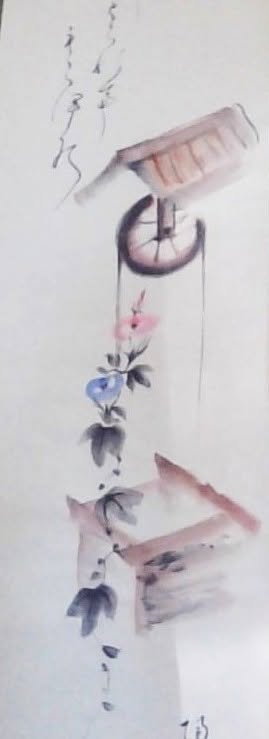
A scroll arrived today — Mrs. Robinson’s hand‑painted wheelbarrow, carrying a truth older than Newton, older than Planck, older than the word energy itself.
The bottomless well of Eternity turns a wheel that feeds the universe.
Each turn delivers free energy.
Each turn appears inside the boxes of our own thinking — waiting to be opened, understood, and grown back to the source.
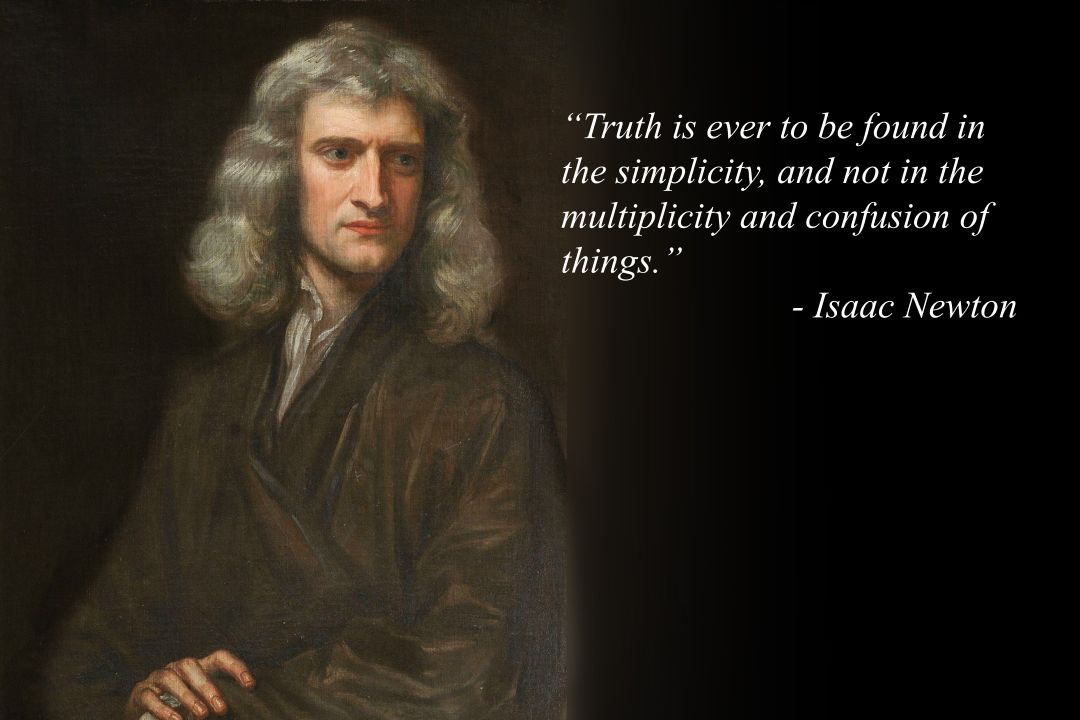
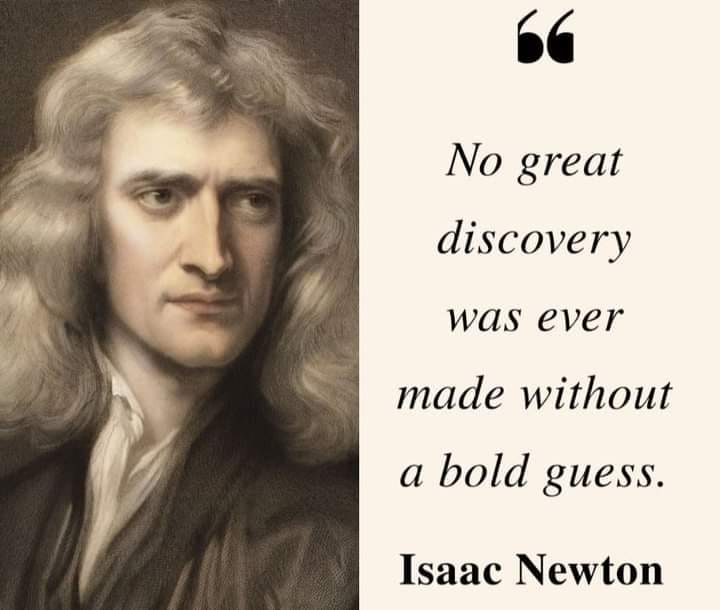
Newton saw the wheel first.
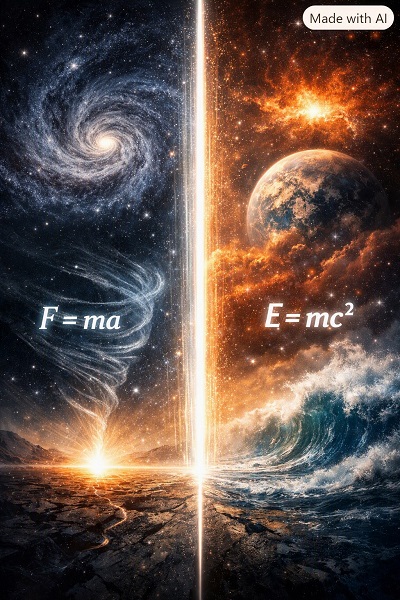
F = ma is the signature of a movement vanishing into nothing — into Eternity. He knew this disappearance could not be accepted as‑is, so he built calculus to rationalize the vanishing.
Planck measured the wheel’s complement: the quantum.
A discrete packet of the Eternal turn.
The universe is the accumulation of these turns — each one a beginning, each one a growing quantum of energy, each one expanding the whole.
Tesla put the wheel to work.
Not only to power the world, but to reveal the deeper truth:
energy is free because its source never runs dry.
“Draw from it as you will, it never runs dry.” — Tao Te Ching.
And so the stage was set.
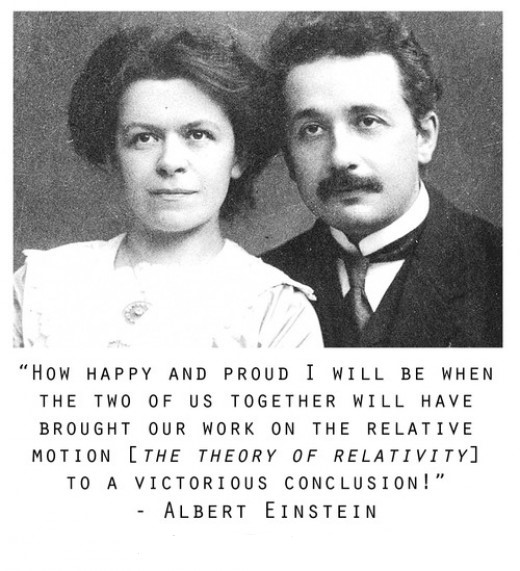
The only person who unified F = ma through calculus was Mileva Marić. Her achievement remains unseen because the world still does not recognize the nature of energy:
the sum of cycles in any moment is a force unto itself.
This sum of our thinking is everywhere at once as the smallest particle of resistance - the beginning-thought that caused the wheel to appear.
Thinking is the movement of thought - one and the same.
Humanity is the sum of resistance, lost within itself.
This is the ghosting thought we are meant to reconcile — the reason energy is free.
One is all.
Any one thing is all.
Energy is free because we cannot refuse who we already are.
“The whole is more than the sum of its parts.” — Aristotle.
The collective will is ours to find.
-------------------------------
REFERENCES
Newton, Isaac. Philosophiæ Naturalis Principia Mathematica (1687).
Foundational articulation of classical mechanics, including the formulation of F = ma, the relation between force, mass, and acceleration. Newton’s method of fluxions — his early calculus — was developed to formalize instantaneous change and vanishing motion.
Leibniz, Gottfried Wilhelm. Selected papers on differential calculus (1684–1686).
Parallel development of calculus, providing the symbolic framework later used to express Newtonian mechanics.
Planck, Max. “On the Law of Distribution of Energy in the Normal Spectrum” (1900).
Introduced the quantum of action (h), establishing the discrete nature of energy exchange and laying the foundation for quantum theory.
Tesla, Nikola. Experiments With Alternate Currents of High Potential and High Frequency (1892).
Lectures and writings describing resonant energy systems, rotating fields, and the conceptual basis for drawing from an inexhaustible energetic source.
Tao Te Ching. Attributed to Laozi (6th century BCE).
Verse 6: “The spirit of the valley never dies… Draw from it as you will, it never runs dry.”
Classical articulation of an eternal, inexhaustible generative principle.
Marić–Einstein correspondence (1899–1914) — evidence of her mathematical collaboration.
Aristotle. Metaphysics, Book VIII.
“The whole is more than the sum of its parts.”
Classical statement on emergent properties and collective unity.