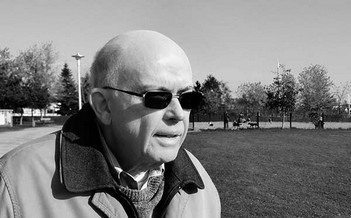
Richard French, click
here to update your pages on AuthorsDen.
Blogs by Richard French
Memory, Fiction, and Healing 11/17/2014 4:38:28 PM
I've never read a novel by the English writer Mark Rutherford, who lived from 1831 to 1913, but I once bought an anthology of English prose and read three paragraphs about memory from a journal he kept. I recalled the experience of reading them and thought he said that as time passes we do not remember sequences of events but isolated incidents that we can stitch together to form a narrative.
I checked the text yesterday for the first time in I don't know how long and discovered that Rutherford didn't say anything like that at all. In fact, he wrote about the injustice of our memories and gave himself as an example. He wrote about a friend he hadn't seen for a long time and that he remembered his limitations not his good points. From his own hardness of heart, Rutherford admitted, he recalled his friend as hard. He said. that unless we see a person frequently our estimates of that person "are apt to alter insensibly and to become untrue."
Rutherford didn't say that our memories come to us in isolated incidents rather than chains of events. So my experience with what he wrote -- or lack of it -- illustrates his point: that if we don't refresh our memories our recollections will become untrue.
This brought two thoughts about story-telling to my mind.
First, I suppose that many people who write fiction have had my experience. Most of my stories are complete fabrications and those that aren't come from long ago American history. I don't usually base characters on people I've known, but things from the past creep in, half-pictures, shadows from archives that no one will ever see but myself. As I work along, it often happens that words someone said or a tone of voice or a gesture and so on come to my mind, and these go into my story to give them authenticity and to bring me an "Ah-ha" minute. My faulty memory has its shining moments.
Second, a good novel, one that moves along and draws us in, does for us what imperfect memories can't do. They shows us complete situations and allows us to know people from different angles. When it comes to people we know -- at work and in communities we belong to or even our friends and members of our family, we often guess their motives and intentions, their thoughts and their feelings, usually from spotty knowledge or even prejudice. A novel by contrast brings us into a sequence of events we can assess and presents characters we can know well at least while we're reading it. After that, our tendency to forget and to alter takes over.
To put it another way, because a good novel offers a sense of fullness and completion, it can brings us healing or at least relief from the impact the jostling world and our imperfect selves have on our minds and our memories.