AuthorsDen.com   Join | Login    
Where Authors and Readers come together!

SIGNED BOOKS    AUTHORS    BOOKS    SAMPLE CHAPTERS    AUDIOBOOKS    eBOOKS    STORIES    ARTICLES    POETRY    BLOGS    NEWS    VIDEOS    SUCCESS    TESTIMONIALS

Featured Authors:  Michael Charles Messineo, iBryon Smith, iBetty Jo Tucker, iAlvin Romer, iGlenda Bixler, iDavid Schwinghammer, iSergio Serrano, Ph.D., iDonald Beaulieu, iJ and C Wordsmiths, iJill Eisnaugle, i

  Home > Education/Training > Poetry        Popular: Books, Stories, Articles, Poetry        Authors: A B C D E F G H I J K L M N O P Q R S T U V W X Y Z     

Alexander Goldstein

 Follow Me  

· Contact Me
· Books
· Articles
· Poetry
· News
· Stories
· Messages
· 1,081 Titles
· 2,910 Reviews
· Save to My Library
· Share with Friends!
·
Member Since: Jun, 2010

Alexander Goldstein, click here to update your pages on AuthorsDen.


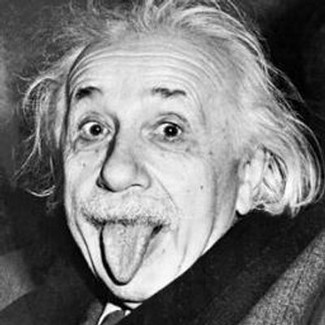
What's Behind the Tongue?
by Alexander Goldstein → (All Poetry by Alexander Goldstein)
Monday, March 12, 2018    Rated "G" by the Author.
Share   Print  Save   Follow   Share on Facebook

according to TCM (Traditional Chinese Medicine), our tongue is the external organ to represent the heart/mind in the outer world.


Poem Artwork

The language that it is caused
Results of taking it as it goes,
But it would end as it began,
With all the countless things.

The parlance of its activities
Can't have a real existence--
If it has, it cannot be uttered
To appear as if it had not.

Its name is a pure metaphor
Used exclusively and only so
For the purpose of description
Of its commenced point, that's it.

To say that it causes or does nothing
Is but to speak of one phase of things,
And has nothing to do with
Some true objectives like you and me.

Therefore, the theory of relativity
Has been born by the sagely minded guy
Who has shown to the entire world
That Mind is behind the tongue, not before.  

Want to review or comment on this poem?


Need a FREE Reader Membership?


 Reviews of "What's Behind the Tongue?"
Reviewed by Michael Schafer
Reviewed on March 13, 2018
As John said, think before you speak. Loose lips sink ships. Sometimes my tongue gets in the way of my eye teeth, and I can't see what I'm saying.

Reviewed by John Herlihy
Reviewed on March 12, 2018
I guess the familiar adage "Think before you speak" applies here. Easier said than done. That's why I pretty much keep quiet, just thinking all the time, and writing so I don't have to speak.

Reviewed by Susanne Leist
Reviewed on March 12, 2018
I had to read the poem a few times to grasp its meaning. The mind should go behind the tongue, meaning we should think first before we speak. This is always wise to do.


New Poetry by Alexander Goldstein
Popular Poetry (Education/Training)
  1.  Teacher (kenning)
  2.  Geraniums
  3.  Communication
  4.  Democracy
  5.  POEMS
  6.  Bookstores
  7.  Sadomasochism at Harvard
  8.  Retired Teacher
  9.  The Hokey Pokey
  10.  Why did you kill my Mum?
  11.  A letter to the racist
  12.  FREE !
  13.  Barnyard Lesson
  14.  Stuck
  15.  Becoming Enlightened
  16.  move
  17.  CROSSWORDS
  18.  Professorial
  19.  Mental Health
  20.  Finish the Thought
Free Book Review Program
Select a book to read and review today!

Simple Steps to Sentence Sense Packet of New Exercises, by Charlene Tess

Do you teach more than one grade level? If so, you may be ready for some NEW Reproducible Exercises, Tests, and Writing Connection Pages to use with Simple Steps to Sentence Sense for High School by Charlene Tess  
Member BookAds

The Wisdom of W. E. B. Du Bois (Philosophical Library Series) by Aberjhani

In his many novels, poetry, histories, editorials, plays, and letters, W. E. B. Du Bois poured so much of his blindingly incandescent soul into his writings that no single volume could ever contain all of his words or works. In fact, had not the his  
Member BookAds

2nd Edition Encyclopedia of the Harlem Renaissance (eBook) by Aberjhani

This valuable educational tool for students and teachers not only entertains with engaging stories on the lives and events which comprised the Harlem Renaissance of the 1920s. It also provides important case studies of diversity, multiculturalism, an  
Member BookAds