“Cant Dog”, and the Burning of Words own Olive Branch.
This experimental metric poem, started life, as a single verse repartee, to a rather pompous and tagmemic individual, a “Turco” for want of a better name. (Why, do they always pick on me to unload their bile?) whilst I, waiting on a reply, it developed into a pentameter sonnet of sorts.
Not entirely satisfied with the sonnetised outcome and still waiting on an answer from the reguardant academic, I then repaired into my own variation of an Anglicised Standart Habbie.
In retrospect and as a concession to the fact that I was not entirely sure that his academic and grammatical expertise took him far enough to understand dialectal Doric Scots, or the more familiar lowland Lallan, or even a touch of the Irish, I refrained from indulging myself fully...
I doubt if such ingenuousness, will ever catch on; however, there again, one can do but try; there is no shame in trying.
Only academics appear to condemn it so. Their square meter of carpet is all they have to stand on; one cannot be seen to invade their space without the prevailing holocaust of retribution. Let the carrion crows of grammar pick at their commas, what else, are they fit for, one might ask.
For those who may be wondering, a cant dog is a tool made for turning logs. Another much used tool the peavey, is basically a cant hook with a pointed end.
Cant dog’s distrait o’ his ain pedant mind,
fit needs gyre o’ wits druthers ain, tae find.
Where praxis opts there, frae overt opine:
wi’ tool an’ ’aw.
Forlorn simulacrum in grievance, it so appear,
in ire’s ain claw.
Yet tae yin’s maw, it deems nae sich a fear.
Fit grieves we when, season’s green bosky burn
tae hear log’s hiss, an’ enfilade it turn,
as life laments’ its own kenned sojourn,
wi’ otiose cries.
Frail ego it incites an artless etymon,
where, truth an’ lies trow in true symbion:
o’er ither’s pries.
Fer yet, we’ve seen life’s own extant regret
Its ain dictates of sich, we strives tae forget:
Fer whit o’ better fate, wid their demise beget,
or seek propone.
Fer it be true , verbality burns quite well
in poetry’s ain, dissentious makin’s o’ Hell:
tho’ nae alone;
Tae raise its parody o’ prolixity’s bane,
thae Deil his sel, wid sich joie de amain.
Fer when we by ill plotted dreams recall:
they were in fact, in truth worth bugger all.
Fer they who fly, wax wings o’er poetry’s hall
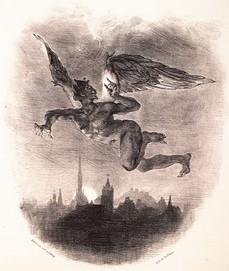
hae yet tae meet Apollyon.
Wha wafts oor verse o’ mony alar shame:
‘Til thae are gleaned, o’ aw’, its falsest claim.
An’ guides us tae his black an’ fearsome pit,
o’ poetry’s mire;
an’ let’s thae wirds, oor very hand hae writ:
fa’ on, its obsequies o’ fire.


 Share
Share Print
Print Save
Save Follow




Blessings,
Christine
And you were very adept at using these same tools for your poem although my difficulty with the Scottish brogue made it hard for me to discern your meaning without making some kind of translation. I gather that the learned critics have worked this piece over a bit from your explanation and what I understand of the fiery language at the end.
Ron
Regis
else Ide giv' it a trie as this is flippin' good! luved it I did.