Through inexorable cycles of misery and pain, of joy and redemption, the human spirit surges through unending days and nights of mortal life, magnificent yet pitiful in its futile quest for the peace of absolute truth, the rest of eternal life or death.
In rare moments of courage, when we force ourselves to wake to the unbearable truth, we realise that we are both alive and dead, and that our brightest joys are but the burning of the withered leaves of innocence, our bitter torments nothing more than the whispering of death’s transient shade through the dark demesne of mortality.
Had we the choice, would we really endure the eternal Phoenix-like series of spiritual deaths and resurrections that comprise our lives? Or would we choose the gift of darkness, and cease in bloody death, impaled upon the dual cusp of unbearable joy and torment, casting aside both our joy and our anguish?
These thoughts I have reflected into the Haiku of the Phoenix…
Suffering or not, are we not caught in the eternity of being and becoming, or as you put it death (as in inertness or stasis), and life, (change due to becoming). The problem arises when many choose to remain dead, even when in the becoming mode. I think Buddha was wrong (how's that for impudence!). I think the Wheel of Awagawan is eternal (as in I’m a living god). I.e.: we have no choice.
Keith,
Your comments ahead of your poem prove you are one to be consumed in thought over deep and spiritual topics. Of course, having read your short stories, I know this to be true. A very tricky question you pose. I've often fantasized about being immortal; the benefits and the drawbacks. I think watching those you care about die would be similar to those "spiritual deaths and resurrections that comprimise our lives". There is no escape from the cycle. Even after death, I believe we will watch others who live and die - experiencing those feelings once more. However, the cylce serves a purpose. We are strengthened, hopefully we are wiser, and we see things anew after each 'death'. Dramatic imagery in this poem! One of your talents is stopping a reader in his/her tracks and forcing him/her to think about what he/she believes. I have come to know that 99% of your work has duality; there is meaning beneath the meaning. Bravo~
Sheila
To answer your question - to give my personal answer, the one that I feel close to now - I do prefer the cycle of spiritual deaths and resurrections. It would certainly be pointless if it was a repetition of exactly the same pattern. As far as I'm concerned, it is always a different aspect of me that is challenged and learns from the process. I do feel the improvement as a whole.
I think you put so much in these verses, much deeper and jagged than the usual haiku... Where are the reviewers? Wake up!
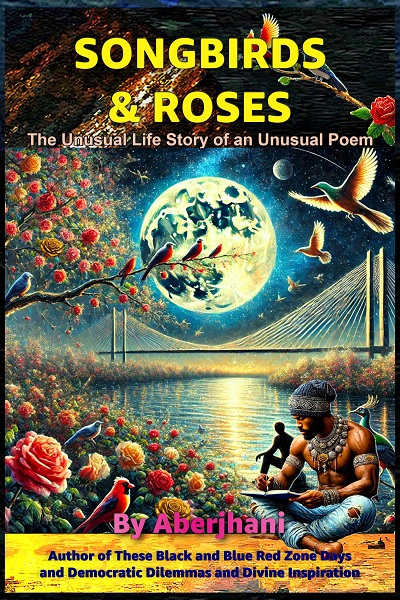
The captivating music of birds and the enchanting beauty of roses have, each in their own right, inspired people around the world for as long as anyone can remember. How the two combine with the challenges faced by a struggling writer in Georgia to c
The captivating music of birds and the enchanting beauty of roses have, each in their own right, inspired people around the world for as long as anyone can remember. How the two combine with the challenges faced by a struggling writer in Georgia to c


 Share
Share Print
Print Save
Save Follow






I like this one, Keith.
J'nia
Exceptional . . .!!
Take care,
Lance
Your comments ahead of your poem prove you are one to be consumed in thought over deep and spiritual topics. Of course, having read your short stories, I know this to be true. A very tricky question you pose. I've often fantasized about being immortal; the benefits and the drawbacks. I think watching those you care about die would be similar to those "spiritual deaths and resurrections that comprimise our lives". There is no escape from the cycle. Even after death, I believe we will watch others who live and die - experiencing those feelings once more. However, the cylce serves a purpose. We are strengthened, hopefully we are wiser, and we see things anew after each 'death'. Dramatic imagery in this poem! One of your talents is stopping a reader in his/her tracks and forcing him/her to think about what he/she believes. I have come to know that 99% of your work has duality; there is meaning beneath the meaning. Bravo~
Sheila
I think you put so much in these verses, much deeper and jagged than the usual haiku... Where are the reviewers? Wake up!
Startling work Keith.
Axilea