Boundless Love
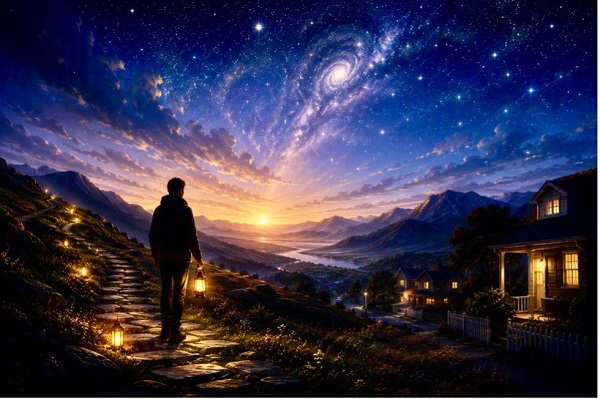
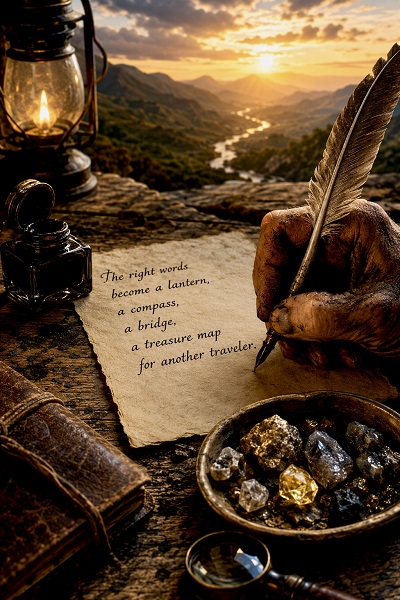
What if love is not a lantern held toward another,
but the fire itself, burning beneath the ribs of existence?
Not something given,
not something earned,
but a golden river pouring through every wound and root,
through moss drinking rain from stone,
through mountains wearing clouds like silk scarves,
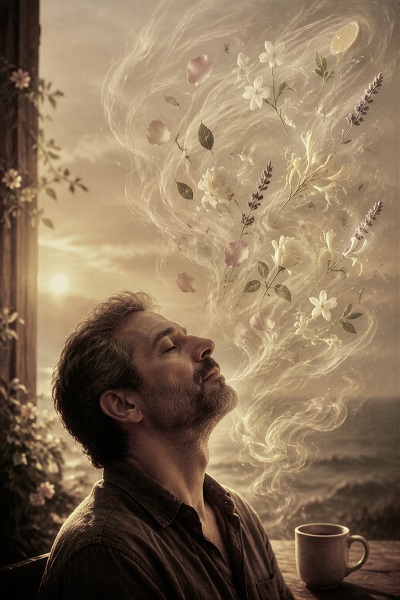
through the unseen fragrance of jasmine arriving before its bloom.
To be love is to kiss the horizon with awareness,
to taste eternity in a drop of dew,
to place a trembling hand upon the pulse of the invisible.
Yet…
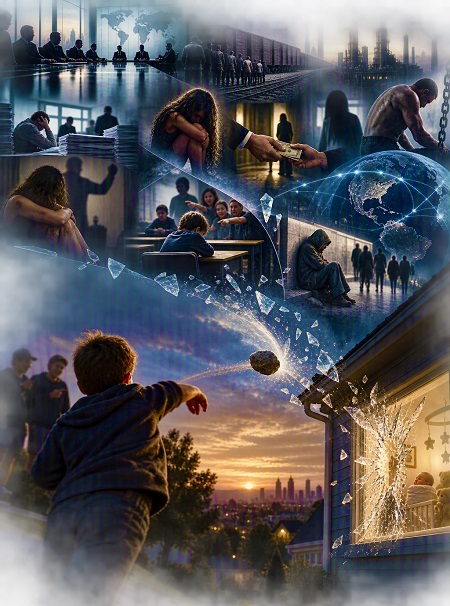
We wander like grains in a sandstorm,
mistaking dust for destiny,
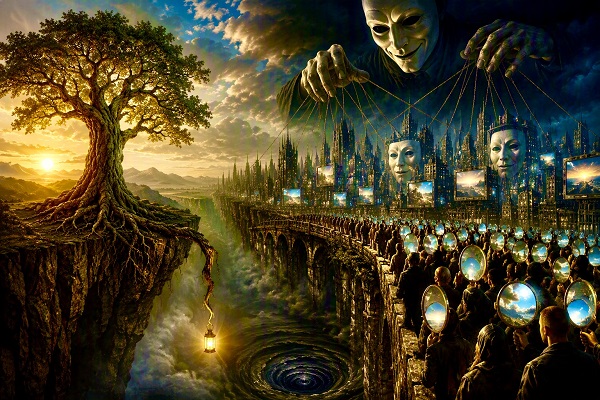
chasing reflections in shattered mirrors.
All the while,
love waits,
vast as an ocean teaching every wave to belong.
It rises through the cedar,
glimmers in a spider's jeweled web,
sings from the throat of rivers,
and spills from the stars like molten silver across the night.
The more we surrender,
the more fiercely it arrives,
until every leaf becomes a scripture of tenderness,
every breath an act of devotion,
every living thing a doorway through which infinity rushes,
barefoot and radiant.
Then comes the astonishment:
love no longer moves through us,
we become its movement.
We are the rain entering thirsty earth,
the sun loosening winter's grip on frozen orchards,
the tide lifting shattered shells toward light.
And there, in what seems an ordinary moment,
an elderly gardener kneels beside a tree
split nearly in half by lightning.
Year after year, without certainty,
the elderly gardener binds the wound,
waters the roots,
speaks gratitude into damaged bark,
and shelters the scar from harsh winds.
Seasons pass.
What should have died sends forth green shoots,
then branches heavy with blossoms,
white as fallen stars.
Only later do we learn
the tending was healing both lives;
doctors could not explain how the gardener's failing heart
grew stronger as the tree recovered.
In the shared exchange of devotion,
sap rose, blood quickened,
and two wounded beings quietly returned to wholeness.
Then we understand what infinity has been whispering all a long:
love can restore what reason pronounces lost,
and sometimes the hand that heals
is healed first.


 Share
Share Print
Print Save
Save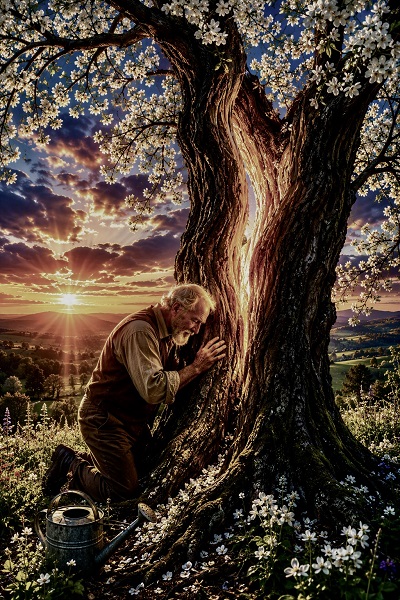

Your poem carries an unmistakable truth — that love doesn’t just mend what’s broken, it transforms the one who offers it. The image of the wounded tree and the healing hand feels both tender and elemental. A beautiful reminder that restoration often moves in both directions, from one to another.