The most celebrated Tamil classical literary work structured "philosophically" on the architectural plan of the Manduka Mandala palatial temple of the Gupta Period, 4th Century C.E.
Villanelle: No man can on his own escape written fate, for THIRU-VALLUVAR
For Thiru-Valluvar, the “nameless” author of the THIRUK-KURAL (the most celebrated oeuvre in Tamil Literature with a history dating from some centuries before the C.E.)
[Note: In my previous posts, especially on Canto 38, I had expounded
on the man and his work in relation to Hindu philosophical aims in life
which I shall not belabour here in order to make space for other thoughts on his oeuvre. Without going into too much detail here (which is the province of the academic essay), let me lay out in brief what I think the poet attempted to do or succeeded in doing in order to make his work survive the times in which he lived. The fact that the author remains a "nebulous" figure till this day owes much to the conditions in which he lived cannot be gainsaid: if his work of perennial value did not motivate his contemporaries to record and celebrate the author’s life and circumstances for successive generations - despite the Indian penchant for neglecting details of authorship - it must have been due quite possibly to other reasons less congratulatory to be recounted here again, so here goes.
According to Hindu aims, the life of man should traverse four stages: love (kama), wealth (artha), virtue (dharma) and renunciation (moksha).
The Thiruk-Kural, by contrast, has only three divisions: dharma (araththuppaal: Cantos 1 to 38), artha (porudpaal: Cantos 39 to 108) and kama (kamaththuppaal: Cantos 109 to 133). In my earlier posts, I had argued that there was. no need for a fourth book on the theme of “moksha” or “vidu” since the author had in several cantos and other diverse couplets dealt, in particular, with this subject. Yet I need not have pursued this line of reasoning for the sake of my present argument.
As I had stated in previous posts, Cantos 35, 36, 37 all lead up to and reinforce Canto 38 on “Fate” (uul) and that the latter canto nullifies all that has been propounded in the rest of the oeuvre. This is self-evident since the author attributes everything that happens to one’s life to pre-destination in this canto, and therefore the three previous cantos have to be associated with it as being part of a disconnect with the whole. Likewise, the first canto on “Submission to God’s Grace” (kadavul vaalththu), being the only specific address to the Supreme Being, must also be grouped with the four other foregoing cantos. In other words, FIVE cantos have not their rightful place in a work of ethics centred on rightful conduct in human behaviour and interaction with the sexes, the family, the community and the State.
This leaves us with 128 cantos, i.e. 133 minus 5. If we divide 128 by 2, we get 64, the crucial number which gives us the 64 hexagrams of the classical Canon of Change, the Yi Jing or the 64 squares of the chessboard and, THIS IS OUR POINT, the 64 PADAS (squares of meditation for the pilgrim) provided in the architectural plan and construction of the basic HINDU TEMPLE. What about the extra 64 not apparently taken into consideration. Well, the PALACE TYPE OF TEMPLE, the MANDUKA MANDALA duplicates the 64 geometric pattern.
This is exactly what THIRU-VALLUVAR had planned and executed in his work. The THIRUK-KURAL’s cantos fit mathematically and thematically into the architectural plan of temples which were propagated in the GUPTA PERIOD, from the 4th Century C.E.
The Hindu Temple (64-grid x 2 = 128)
....................{{The Thiruk-Kural}}
I - Grabh-Griya (Empty pada at PURUSHA Centre) : Canto 1 (Purusha)
..................{{Kadavul Vaalththu)}}
II - Brahma (4 x 2 = 8 padas): MOKSHA Cantos 35, 36, 37 & 38
..............{{(Renunciation to Fate)}}
III - Devika (12 x 2 = 24 padas): DHARMA Cantos 2 to 34
.....................{{(Araththuppaal)}}
IV - Manusha (20 x 2 = 40 padas): ARTHA Cantos 39 to 108
.........................{{(Porudpaal)}}
V - Paisachika (28 x 2 = 56 padas): KAMA Cantos 109 to 133
...................{{(Kaamaththuppaal)}}
Total n° of padas: 64 x 2=128
Total for Thiruk-Kural=128 + 5=133
Vastu-Sastra and Vastu-Vidya Sanskrit manuals for the building of palatial type temples were in circulation by the 6th Century C.E., so one possible conjecture is that Thiru-Valluvar’s lifetime might date from the Gupta Period, but this is of secondary importance, for the moment.
Enough to say that, if, as I think, he was a marked man, subject to some sort of “repression”, then the planning and execution of his work on the structure of temple architecture in accordance with its geometric and philosophic principles, attests to the “conjecture” that Thiru-Valluvar had successfully managed to subvert oppressive authoritarian rule - as far as he was concerned - in his time. The proof lies in my discovering the hidden fundamental structure of his poem.
T. Wignesan.]
Villanelle: No man can on his own escape written fate
No man can on his own escape written fate
Most times in our lives we need help to survive
Unlike most creatures we adapt far too late
All men fall into a slot which we call fate
A place a time heritage parents revive
No man can on his own escape written fate
Ev’ry step we take leads to some open gate
What lies beyond unseen will sting us alive
Unlike most creatures we adapt far too late
Nothing trips us up as the next man’s dark hate
Fate always finds those who will ill us contrive
No man can on his own escape written fate
No stratagem can forestall oncoming fate
Unless man foregoes all urges quicken drive
Unlike most creatures we adapt far too late
Dead men who move through life spectators innate
Each his life overhaul to let others thrive
No man can on his own escape written fate
Unlike most creatures we adapt far too late
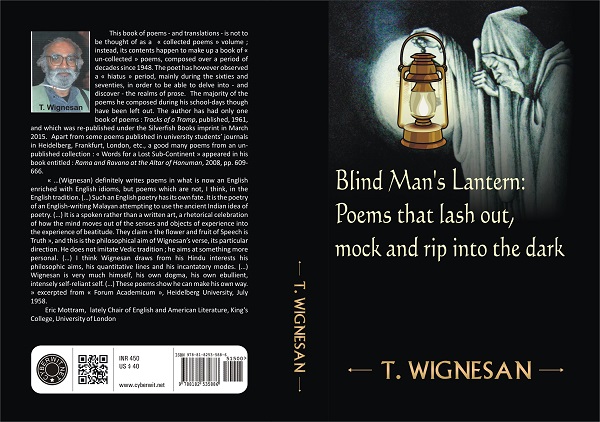
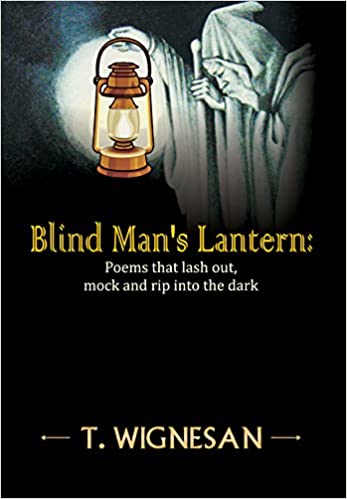
Salutations, Senor Don Ron ! I don't blame you for putting the "cart before the horse". A question of designing tables: one for the Temple structure and another for the Thiru-k-Kural. I have in the meantime tried to separate the "parallell" structures (please see). Once I find the file for the book cover, things would be clearer, I hope.
You are right, of course, on the strictures of Fate, but if you considered the concept in the light of "parallell worlds/universes", you'll see how the poem makes more sense then; in any case that's what I can hope in the circumstances. Happy re-reading, Ron.
Interesting information about how the Hindu temple was designed by a marked man through his writings.
Your poem seems quite determinist, as though our fate is predetermined and we have no other choice but to go through the gates we are offered based on our origin. To a certain extent, that is true. But there are always exceptions to that rule from time to time that change the landscape considerably.


 Share
Share Print
Print Save
Save Follow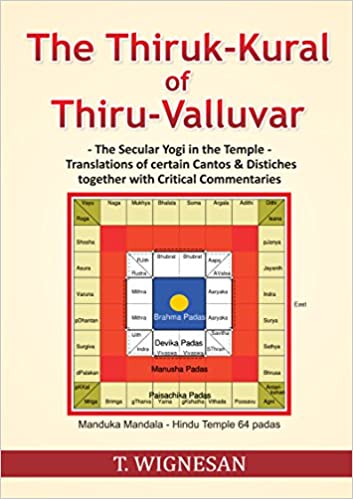




You are right, of course, on the strictures of Fate, but if you considered the concept in the light of "parallell worlds/universes", you'll see how the poem makes more sense then; in any case that's what I can hope in the circumstances. Happy re-reading, Ron.
Your poem seems quite determinist, as though our fate is predetermined and we have no other choice but to go through the gates we are offered based on our origin. To a certain extent, that is true. But there are always exceptions to that rule from time to time that change the landscape considerably.
Ron