Eric Mottram: In Memoriam...1924-1995, he pulled himself up by his own boot-straps...with a little help from American academics like Professor Spiller
Monseigneur Ron, looks like I missed this comment of yours, so I feel I should add a word or two to make up for your sense of concern for others. Yes, Eric was a man way out of the ordinary, and yet he was appreciated mostly in the United States. He was the recipient of the American Learned Society's Award in 1965, that is for a year lecturing and meeting up with poets, writers and academics from coast to coast - though he was not required to do any teaching - and he returned later to teach at Kent State University in 1968.
Just before he passed away, I started a campaign to have him nominated for the Nobel Prize in Literature, and the secretary of the Nobel Committee informed me - without hesitation - that the nomination was recorded for the very year in which he passed away. Nominations are fixed and finalised in the month of January, so you see how unlucky he was !
Yet, he was a man of drastic contradictions, and any Chinese face-reader would place him in a special category: his Fa-ling lines were the "Flying Serpent entering the Mouth" !
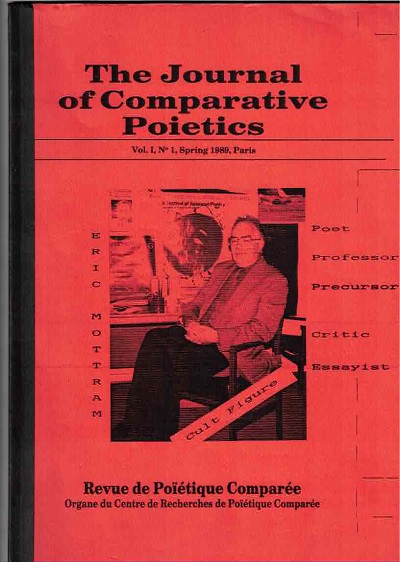
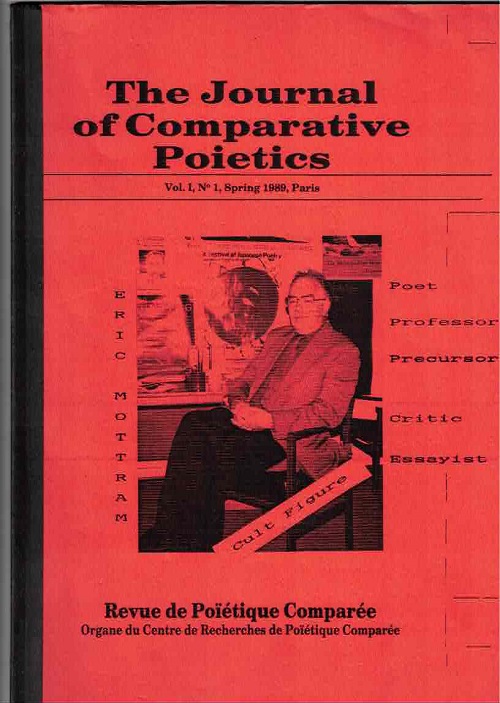
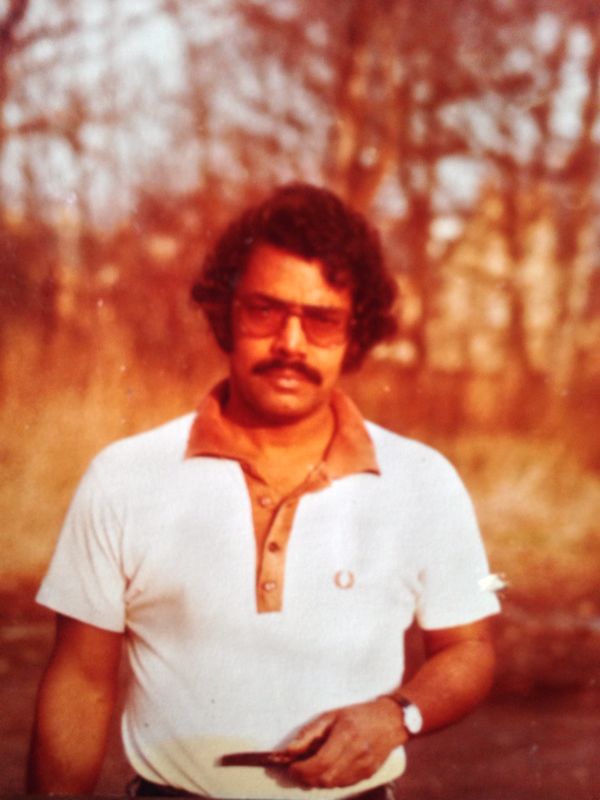
Pic of Eric Mottram at www.oexplorodor.com.br
Rule One by Eric Mottram: 'Stop writing LITERATURE, you garrulous Indian!' from T. Wignesan
………………….For Michael Hrebeniak's jazz saxophone
[This memorial poem was published in " Radical Poetics " (Inventory of Possibilities), Issue One (London), Spring 1997, n.p., edited by one of Eric Mottram's former students at King's College, University of London and who now teaches at Cambridge University. Mottram for whom a special Chair (Professor of English and American Literature) was created in 1983 passed away on January 17, 1995, the year when, finally, the Nobel Literature Committee's attention was focussed on him. He left behind an enormous corpus: some thirty-five books of poems and some fifteen books of criticism. He was unanimously recognized as one of the leading authorities on American Literature and United States Studies. His teaching career extended over half a century and over nearly half the world. He obtained a double-first for his Cambridge English Tripos after serving out the War in a mine-sweeper in the North Sea and the Bay of Bengal. He was the recipient of absolutely no prize whatsoever, for the Establishment everywhere - barring the American literary and cultural underground - gladly shunned him.]
…………………………..I
a life of toil for the man in the centre
a hub in the peripheral tireless wheel
…………..where he go then where he go this working man
…………..he go on waking people working at waking man
...........................II
no words cling now no words meant in blame
the tongue he lash the words they now tame
no shock of blast open laughter rock the hall
everyman there say there sure were a man
a man no fear cowed in communion to other
made for no gods made for no demons either
all men he know best when he see just once
no second thought resurrect the man if bad
so go tell the magi no trek in sight in sky
here a man be born here he so sure die
other no like see one so bright stand up high
other no like feel like sky fall low into ocean
what make 'm i say with feeling so just
is sure he different he force hisself work
work work work work an' again work
he work nite an' nite so 50-hour in day
……………where he go then where he go this working man
……………he go on waking people working at waking man
where you go from word born here now
turn and twist all whoring the alphabet
...............................III
'don't write anything you can get published'
so publish only what you can't call your own
writing like reading's a public coital act
so showing your work is exhibitionism
'why don't you send your stuff around
keeping it to yourself's sheer masturbation'
reading-watching-listening's just voyeurism
so sending wares around is prostitutionism
……………where he go then where he go this working man
……………he go on waking people working at waking man
...................................IV
he it was in minesweeper capture aurora borealis
message from extrasensory enter into he word
in Bengal waters alone he hear No-man cry
only in deepdown psyche water drip drip dry
then on land he no see reason to the fight
so he let he wrists spill he guts to the fill
then he take the world on all by he torn self
he spare no skin in dug-Malayan-jungle-out
what he do what he think he do he no tell
everybody meet man an' no see albatross hang
he no tell story like ol' mariner in dream
he go wake people from dumb dead trance
many many people high up no like this act
some call him stuckup other just 'im damn
……………where he go then where he go this working man
……………he go on waking people working at waking man
is all he do then what kind of working this
is big work man 'cause most body dead sleep
……………where he go then where he go this working man
……………he go on waking people working at waking man
Resources (EM coined this " usage " for references and background information)
When I first met Eric in the summer of 1957, in London, at Wang Gung-wu's flat in Shepherd's Bush [Wang a former colleague of Eric's in Singapore - becoming later the Vice-Chancellor of the University of Hong Kong - is now the Director of the East Asia Institute of the National University of Singapore], he had already read most of the manuscript of my first collection: Tracks of a Tramp, and more. He came late for dinner and was so vociferous and ebullient, I had hardly time to think. Now and then he stopped short to shoot a few questions at me, mostly about my educational background, and, finding there was none to speak of in literature, riled me for not having joined Raffles College of the University of Malaya in Singapore where he taught from 1953 to 1955. By the time he had finished raging over my poems, I thought I might be able to see him in a more relaxed mood after dinner [he arrived in the midst of a delicious Chinese dinner prepared by Margaret, Gung-wu's wife, a former student of his], but, instead, he gulped the soup down amidst appreciative munching-crunching sounds, jumped up and excused himself for another appointment. I was feeling quite frustrated for I couldn't even get a word in sideways, but just before he left, he asked Gung-wu to give me his address [for my sleeping quarters then were huddled in the midst of some trees in Hyde Park] but told me not to take any notice of what he had to say about my poems. Both Gung-wu and Margaret tried to console me like the fabulous hosts they were after Eric had left, but I didn't let out the fact that I was secretly delighted: I had at last met a vigorously straight-talking person who knew a hell of a lot about writing and literature [the first I had heard of 'poems are made with words, not ideas', echoing Paul Valιry] and was not afraid to voice his views, even to a stranger.
Some time later, in the mid-sixties, when I had been published and Eric was then ghosting the American literature columns of the Times Literary Supplement, Eric gave me the best advice I've ever listened to in our mιtier. He said very offhand-like one day, and his demeanour meant every word he pronounced ponderously: 'Don't write anything you can get published!' with the result I've only managed to publish about ten percent of what I've been writing since then.
In the early nineties, Eric seemed to me to soften his anti-Establishment stance. He urged me to publish. He appeared as if he would make certain concessions, and it took me some time to realize that he may have changed course for strategic reasons: you can't fight the Enemy where no one hears of the victory!
Monseigneur Ron, looks like I missed this comment of yours, so I feel I should add a word or two to make up for your sense of concern for others. Yes, Eric was a man way out of the ordinary, and yet he was appreciated mostly in the United States. He was the recipient of the American Learned Society's Award in 1965, that is for a year lecturing and meeting up with poets, writers and academics from coast to coast - though he was not required to do any teaching - and he returned later to tech at Kent State University in 1968.
Just before he passed away, I started a campaign to have him nominated for the Nobel Prize in Literature, and the secretary of the Nobel Committee informed me - without hesitation - that the nomination was recorded for the very year in which he passed away. Nominations are fixed and finalised in the month of January, so you see how unlucky he was !
Yet, he was a man of drastic contradictions, and any Chinese face-reader would place him in a special category: his Fa-ling lines were the "Flying Serpent entering the Mouth" ! Thanks. TW
Thank you for posting this poem in English. Yes, Eric Mottram was a writer and poet of another kind. I read a lot of sense in that poem with its strange format and continual reference to "he" (the author?) to emphasize that this was very personal.
And your 1995 recollection of the meeting with Eric and how you were crushed and disappointed only to learn that he had an interest in you as a poet and was willing to mentor you.
She never felt safe at home as a young girl, and didn't understand why when she finally escaped she wasn't safe in the big wide world either ...effectively jumping out of the frying pan into the fire!


 Share
Share Print
Print Save
Save Follow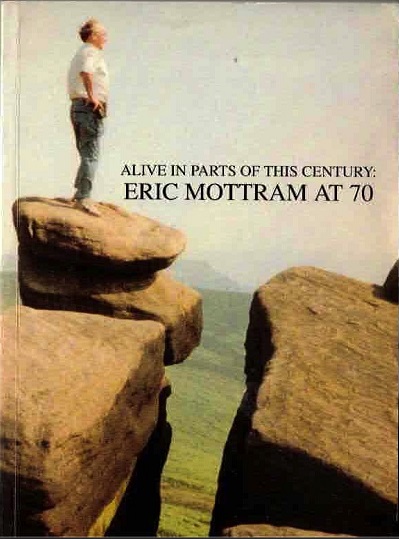







Just before he passed away, I started a campaign to have him nominated for the Nobel Prize in Literature, and the secretary of the Nobel Committee informed me - without hesitation - that the nomination was recorded for the very year in which he passed away. Nominations are fixed and finalised in the month of January, so you see how unlucky he was !
Yet, he was a man of drastic contradictions, and any Chinese face-reader would place him in a special category: his Fa-ling lines were the "Flying Serpent entering the Mouth" ! Thanks. TW
And your 1995 recollection of the meeting with Eric and how you were crushed and disappointed only to learn that he had an interest in you as a poet and was willing to mentor you.
Ron