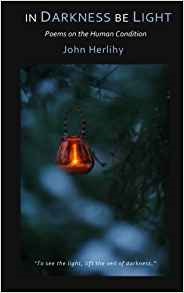
Excerpt from my book WISDOM’S JOURNEY. This segment describes my experience as a young grammar school child singing as a soloist in the boy’s choir at our local church outside of Boston.
Singing Solo
by John Herlihy
As a modest young child, and much to my dismay, the nuns who saw to my education singled me out from the pack because they discovered I had a sweet boy soprano voice. It was not something that I was proud of and I had a natural aversion to singing in the presence of others; even though when I was alone, I sang to my heart’s content, happy to have a voice that could express the inexpressible melodies in my heart. I loved the sober elegance of the sacred church songs that accompany the liturgy, the Christmas songs long familiar to everyone, and the classic (and well-known) Ave Maria of Schubert and Gounod that every tenor attempts to render with majesty and verve. Something indescribably holy and otherworldly in these melodies appealed to my simple, innocent mind and lifted me out of the routine of my everyday world.
The small suburban town where I grew up outside of Boston had a church named St. Agnes. I remember the massive stone stairs that led up into the spacious nave of the church. On Sunday morning, however, I always entered through the sacristy disguised as a virtual angel bedecked in my purple gown and white surplice. I was one of a hundred children in the boy’s choir that had a certain reputation for excellent in the area; people came from miles around on a Sunday morning to hear the sacred songs of the boy’s choir that accompanied the popular 10:30 High Mass. Much to my chagrin, I was singled out from this group for two reasons, firstly because I was the shortest of the entire group and therefore led the line as we filed into the nave of the church and took our places in the passageway behind the main altar. Secondly, I had been selected as the premier soloist for the choir, the boy selected to stand out from the pack and deliver the important solo parts during the Mass. I sang such sacred songs as the Schubert’s well known Ave Maria (Hail Mary full of grace) and the sober and majestic Panis Angelicus (The Bread of Heaven). The prospect of stepping out from the shadows of the high altar and the restless group of boys who had the luxury of singing in anonymity struck my tender young heart with a unique combination of terror and sublimity, yet in spite of the fear my pounding heart betrayed, I stepped out every Sunday morning during the course of the liturgy and sang, as if in a trance, a variety of sacred songs for that particular celebration of the Mass. This was prayer at its most enchanting and sublime moment, giving voice to the pious entreaties and intimate expressions of love that reach by natural inclination for the heavens.
Amid the ethereal shadows of the altar, dressed in the traditional vestments of the boy’s choir, the air filled with the aromatic flavors of burning candles and heavily scented church incense that wafted their arabesques of smoke through the latticework and arches, I remember the experience as the externalization of my soul through the sound of my innocent voice. I was no longer myself as a body, a person, or even a thinking animal; I had somehow transcended the normal course of events to meet the demands of the moment, the voice becoming and being an active presence with its own truth and its own form of praise, unburdened by physical form and soaring into places on high not normally accessible to people on earth. Birdlike and from the cavern of my small fluttering chest, there emerged a melody that I could only recognize as some God-given gift which I had not earned but was mine to employ and enjoy. Out of some deep well in my being, I poured forth all the raw emotion of my youthful spiritual being, together with my confused desire for God into the music of the composer, the sound of my voice riding the melody as if it were riding an unruly tiger, wild, thrilling, and uplifting beyond belief. The song emerged from my depths as a voice from Heaven rather than from the breath and vocal cords of a terrorized child. This was prayer at its sweetest and most profound moment, emerging through the pure voice of innocence and passing through the ears and hearts of the faithful as it made its way through the rafters and trellises of the church, through the open door and out into the sky, where all song melodies unite with the celestial rhythms of the spheres and ultimately mingle with the voices of the angels to be listened to by the cohorts that roam the empyrean of Heaven.
As I commit these thoughts and images to paper, I listen to the echo of a child’s voice and reminisce on the experience of beatitude that in these restless and heavy times is difficult to imagine and almost impossible to recreate, except through savoring the fragrance of a distant time and place when a young child’s prayerful song was no doubt listened to and heard.
The soaring, transcending experience you described so vividly from your perspective of a soloist in the boy's choir was very moving. I imagine the congregation also had an uplifting experience listening to you. Yet, I understand the profound difference in being the source of the creation as it emanates from your soul, just as the words you configured into a story came from a distant time and place of innocence.
You write of an otherworldly experience that I'm sure that the congregation felt uplifted by. I've always found that the human voice is a powerful instrument for emotion. And, it seemed to help you to overcome your fear.
I'm sure glad I wasn't forced into the Catholic Church like some of my relatives. However, I do recall being a member of a choir a time or two in school. I, too, was deathly afraid of being a soloist, but probably would have done alright except that my voice was always too weak and didn't protect well.
Young Sasha, a little bear orphaned as a cub, finds new friendships as he struggles to realize his potential. But as he does so, danger awaits in the jaws of an evil wolf * the much feared * Rasputin. In his time of need, can Sasha overcome his fears