Drug runners, murderers, and the FBI all on trial for the same crimes.
On the run from both United States authorities and Columbian drug lords, Pete hatched a plan. If the FBI wouldn't take him into protective custody, maybe they would arrest him. Murder and drug running were serious international crimes, but there was no way he would make a deal, and his arrest and statements had to be public enough so that Medellin co-conspirators would believe themselves safe, too. He might have a few friends, but would any of them risk showing themselves? And when a Florida grand jury has indicted the Federal Bureau of Investigation on racketeering (RICO) charges, who knew what might happen.
SIR, YOU ARE FREE TO GO (an excerpt
from the short story GUNSMOKE-part
of WAR STORIES FOR MY GRANDCHILDREN)
by
JANSEN ESTRUP
All night Pete rode Puget Sound's ferries but the sound of powerful engines and the smell of brackish water did not calm his fear. It was a cold, alien sea, too wet, too dark and too heavy. At Nine A.M. sharp, from a pay-phone in Bremerton, he dialed the east coast number. Tired, his heart pounded mercilessly. But he had worried for nothing. After only one ring a cheery, confident voice answered.
Of course the lawyer said ‘yes', even though he had no way of pre-determining the outcome of his own maneuvering. He did pretty well, in fact, mostly because no warrants had actually been issued, thus Pete was not technically a fugitive - not from the ‘law'. Everybody understood, however, that cartels had a different code. Mallard and a deputy sheriff met Pete as he deplaned at the Bradenton-Sarasota Airport and a judge promptly released him on a quarter of a million dollars bail. Almost immediately federal authorities in Tallahassee demanded his transfer and they didn't give a damn about his agreements with county yokels. They did give him a cell to himself, but it had no windows.
The next day, murder charges were dropped and a federal judge honored his bail. He was out, renting an apartment with several others who'd been charged as part of the smuggling operation. He made no effort to befriend any of them. As always, he shared nothing of himself, not feelings or thoughts or intentions.
Weeks later Pete appeared along with eight others in a freshly renovated courtroom. Newspapers described it as a circus, legal representatives crowded at the table, defendants arrayed along a windowed wall as if they were a second jury (absent a few members), and the gallery was jammed with reporters and ‘interested' parties, some of them angry enough to take the law into their own hands. Whenever the judge called counsel to the bench it looked, in one reporter's words, ‘like a football huddle'.
The smell of fresh paint and adrenalin made Pete slightly nauseated, but he was grateful for the sunlit window and fresh, sometimes chilly air. He had refused to wear a tie, but, as a concession to jury prejudices, agreed to a trim of his beard and hair. He sat quietly, watching in an open shirt and dark sport coat. Back to a wall, he felt he had a fighting chance. Now, if he could only lay his hands on the jawbone of an ass.
The trial inched on, prosecutors grilling carefully rehearsed witnesses, all of them testifying in exchange for some level of immunity. Defense attorneys tried to make that an issue, pointing out that witnesses often lied to protect themselves, but deep down, Pete thought, there was no drama in any of it, no passion. It felt staged to him, a publicity stunt.
When the state's best witness, a surly young cracker who'd been with the shore party, identified every one of the defendants except Pete, he felt buoyant as a net-line of new corks. Maybe Mallard was right. He might get out of this one after all.
Government attorneys spent days with their witnesses and so did a lineup of defense lawyers, all except Pete's. Mallard huddled frequently with those at his table, but never once cross-examined a witness. Like a little general, he seemed to be directing the battle from behind the lines.
When the prosecution team rested its case, Mallard stood up immediately and asked Judge Stafford to dismiss charges against his client. Not one shred of physical evidence, not one word of testimony had linked Pete to the crime, not the scene or the so-called chain of conspirators. "In fact," said Mallard, except for having his name in the indictment, "it hasn't been mentioned at all."
A mistake? An oversight by prosecutors? None of the Federal lawyers registered a complaint or objection.
Without a pause, Judge Stafford agreed, and granted more than Mallard had requested. In a voice reserved for the most serious judgements, he ordered the jury to acquit Pete. Not simply released for lack of evidence (evidence might turn up later), he was acquitted and could never be charged again. To the stunned defendant he said, "Sir, you are free to go."
Pete had gotten what he wanted - nothing, and given what he'd promised - also nothing. Neither he nor his lawyer waited around for the rest of the trial. Afterward they became friends and helped write a book about the deadly fiasco.
Later, some wondered just how close Mallard and Judge Stafford had been, for according to Tallahassee traffic records, Judge Stafford had been cited for speeding just the night before his decision. He had been driving Mallard's bright red Corvette.
And what had happened to the fact that 20K of the original 30,000 pounds of pot had been recovered from Pete's scuttled trawler Gunsmoke, probably the most substantial evidence in the whole case? Had it fallen through the cracks or had it been an intentional ‘oversight'?
Nobody seemed to know, or care.
Afterword
Most of those charged with smuggling were found guilty but received suspended sentences when they agreed to testify in the murder trial down in Bay County. Three men had been charged with killing two teen-aged sisters and two ex-convicts. The first two trials were held within three weeks of each other and higher courts later ruled they were rife with irregularities.
The lookout, Walter Steinhorst, was tried first. He admitted killing one of the men in self defense. In the early hours of a bitterly cold morning, a vehicle had driven up to his post and the driver stuck a shotgun barrel out the window at him. Startled and afraid, he'd pulled out his pistol and shot the man, killing him instantly. Another man, Charles Hughes, had killed the others, execution style. But the jury thought Steinhorst, who claimed he was only a ‘lookout' (prosecutors called him ‘the ringleader'), responsible for all of the killings and sentenced him to death. After all, he admitted being present when the others were murdered. More than twenty years later Steinhorst, old, crippled by strokes and unable to speak, died of natural causes on Florida's death row.
The second trial convicted David Goodwin, a recent college graduate with a wife and two children to support. Unable to find a job, he had jumped a the chance to make some fast easy money. Besides passing messages between the drug smugglers, the only thing he had done (and that, he said, because he was terrified of Steinhorst and Hughes) was get some rope. He had been 125 miles away from the second murder scene. The jury gave him 25 years to life. Politics prevented him from getting a new sentencing trial or clemency. He served every day of the 25 years and was labeled by all a model prisoner.
Charles Hughes, said to have been the most cold blooded of killers, was on the FBI's Most Wanted List for three years. By the time he came to trial, tempers had cooled in Bay County and a new prosecutor had been elected. And also, as they say, he had a better lawyer. The deal he made got him just 15 years and he served only five.
The FBI Agent who'd set up the whole thing was one of several who received both citations and censure. Unconstitutional, courts said, was the manner in which the Bureau ran their ‘stings'. The Sandy Creek case, like others, was so embarrassing to the Ford and Carter Administrations that the FBI was pulled out of narcotics matters. In its place the Drug Enforcement Agency was given complete authority in the drug war.
Besides those convicted of murder, none of the thirteen smugglers had any record, not in Florida anyway, of prior or subsequent criminal activity.
Justice Denied, by Morgan Stinemetz, tells the whole story of the Sandy Creek murders. As of May, 2002, it is pending publication.
Confinement, even of the shortest, least restrictive period, gave Pete a whole new outlook on his life. Circumstance, call it luck or even providence, had set him free and for the rest of his life he did nothing to jeopardize that freedom.
He went back to Cortez with a new vision - a boat which would symbolize the way he would become, one which never need lay its course based upon the need for fuel (money) or food (he'd take that from the sea) or even water. A commercial craft if he felt the urge, it could engage tourists who wished to fish legitimately, but it would have no cargo holds, no booms, nets or outriggers. He was done with shrimp and human cargo, drugs and munitions and other contraband. Mostly, it was his getaway machine - getaway and stayaway.
Designing her was fun. He gave her a racing yacht's keel, low cabins amidships and a wide bulbous wheel house on the afterdeck. On her bows protruded a railed prow extension, a pulpit much longer than most. Sometimes on the Gulf with shortened sail she resembled a child's rude drawing of a great albino swordfish fighting an invisible hook. Her mast was strong and rather short, for she was not a racer, but the rigging could hold enough canvas to move the sleek hull at better than six knots. That was plenty. Pete had vowed never to be in a hurry again.
Building the vessel was fun, too.
He hand-crafted the 50 foot hull of fero-cement and coated it with a space-age polymer to minimize need of repair or painting. It was expensive but worms and barnacles did not like the stuff and that cut way down on maintenance costs. She did have the usual safety gear, radar, radios, powered mostly by several photo-voltaic panels and deep cycle batteries, and for maneuvering in narrow channels, harbors and the like, a small marine engine. A very large rudder made her quick and agile.
She could be sailed by a single crewman, but Pete envisioned a larger crew at least part of the time. His latest girlfriend and her son would sail with him. An actual family. He seemed ready for one, at last, even though he had named his new boat Odyssey.
He sailed frequently and for long periods, preferring the clear warm waters off Yucatan, Belize and Honduras. Perhaps, when the mood struck him, he imagined himself one of those ancient Mayan sailors who plied the Caribbean and Gulf, and even traded far up the Mississippi River system and down south to the Amazon.
Ashore he stayed clear of the bars for the most part and did not drink much at home. Sometimes people found him lounging around Land's End, posed like a Samoan king enthroned on a great wicker chair, garbed in bare feet and a flowery mumu. Tourists thought him part of the local color and he did not disappoint them. He told stories which were light as often as they were dark and occasionally took a party out for tarpon or larger game fish.
In the ‘off' season he began, almost idly, to clear trash and debris from a small nearby island called Jewfish Key. Before long he organized a group to purchase it, to restore its natural beauty and function, to see fiddler and horseshoe crabs again in the mangroves, herons and pelicans, mullet and dolphins in the surrounding shallows. He enjoyed such places. He always had, and now he began to feel a part of them. And then he and three others built a dock, a narrow road and four houses on it. He called it home for the rest of his life.
He was living there when lightning struck Odyssey one night and burned it, not to the waterline - the hull was scarcely damaged - but it was gutted. Everything wooden was lost, but the hull and engine were sound and so he rebuilt it, this time with a new wrinkle on an extremely old mast and sail idea he called the balanced rig. Chinese had used it for centuries and Inca admirals had adapted it to sail their great rafts against the wind and across the Pacific.
At irregular intervals he even tried to repair the lifelong rift between him and his family. Several times he phoned his brother, who had retired to a remote California mountain cabin. Their talks remained strained, awkward and ultimately nothing more than shallow, quasi-polite conversation. He visited his mother often, making the short voyage across to Yucatan, but their relationship could not seem to bridge the years when she had been a brutal, neglectful mother and he an enraged, rebellious son. His sister, despite (or perhaps because of) her years of training and psychiatric practice, could not bring herself to trust him, or even to relax when he was around. Theirs was a continuing hostile, debilitating interdependence.
Even so, he learned to keep his temper in check, to enjoy the moment, to appreciate his friends and those who had, at so great expense, learned to love him. His monolithic silence permitted them to spin all manner of myths and imagine great virtues which were not there.
His life went on, sometimes happily, but he was never an introspective man and so one might doubt that any of the great issues which plagued him were ever resolved. Possibly, they had not even been recognized.
And then one October day, a couple of years after he'd spread his mother's ashes over the pyramid at Chichen-itza, he stood alone on the Jewfish Key dock. It was near noon and he'd just helped a friend move a heavy load. The day was bright and crystal, the waters of Midnight Pass were the clearest turquoise, turning dark blue as they swept into the depths of the bay. Beyond the blinding white bridge the Gulf stretched invitingly, hazy green blurring to sky blue. It was beautiful.
He snapped open a beer and felt a fine spray on his hot face. It made him queasy, light-headed and the beer can dropped from his rigid fingers. He looked at his hand, stunned. Abruptly he sank to the timbers and through the numbness he shuddered as a terrible pain spread deep in his chest. He fell back against a bench, clutching nothing except a feeble urge to laugh.
He was only a couple of weeks short of his fiftieth birthday.
"Everything wooden was lost" Thank God its a renewable resource. You write well, Jan, and I delight in your imagery and detail. May I say that the legacy you leave to your grandchildren is honorable, and, in its time, will certainly bless them all. Amen. Maybe not a Truman Capote, but a fine, one-of-a-kind, Jansen Estrup. Enjoyed this.
Peace to you... rlc
Thanks for the notes. Some chop jobs work, others do not. Experimentation does not always teach much, either. The mix of headline and intimate knowledge may work in the longer version. I'm certainly not skillful at 'creative journalism' but did enjoy dabbling in it. Hearing much of the story second hand left me some room for imagination, but the gist of the tale came out of newspaper clippings and conversations with Pete. The protagonist was very frugal, but also sold his services dearly on both (or should I say many) sides of the law as he burned his candle at both ends. The official cause of death was natural causes (heart). Thanks again for the feedback. I'll try to make it easier next time, although I'm sure I'll never be a Truman Capote.
Aside from a few memorable lines from time to time, this one escapes me. At first it seems to read like a news story that may or may not have been true. And then the protagonist, after escaping conviction, seems able to retire with no serious means of employment except seafaring, as though, perhaps, he had cashed in on that load of marijuana that was missing?
The ending left me wondering… Did he die of natural causes, or was he poisoned.
Unfortunately, at my age my attention span for reading is two pages, for TV is 20 minutes, and for sex is two minutes max. I never get to read your postings. Sex gets in the way...
Prime-Time Crime Time (600 pages) is a collection of 35 fictional crime/detective stories and the work is author Jay Dubya's 43rd published hardcover/paperback book.
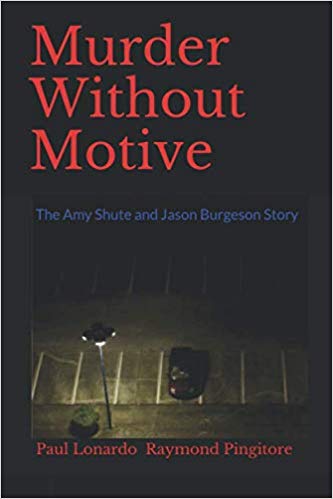
In June, 2000, two college students — Amy Shute and Jason Burgeson — were approached by a group of men. Forced into the backseat and driven to a remote location, they were murdered in cold blood.
Following this brutal double homicide, Johnston, RI D
PI novel set in Manhattan during the 1980s when art galleries and model agencies were the two most glamorous businesses in the world. Dangerously well written.
Read Chapter 1 here: https://www.lit4u.com/art-and-beauty-chapter-1/
Literary Titan