The state of Federalism was threatened, the fate of the man who pulled down the tyranny is yet to be known.
It was a hot afternoon, the first year after the protesters marched in their thousands of their initial peaceful protest against the Fascist movement. Fajuyi lay on his sick bed, life slowly ebbing away from him. He had successfully brought down the dictatorship that threatened the lives of a people that enjoyed peace and freedom. Before the civil war, Abeokuta had been the pride of all and sundry. The people lived in peace and harmony under the Federalism system of government. Abeokuta – a Yoruba name meaning “under the rock,” is the name of an ancient city which was prone to wars between its pioneers; Oduduwa, Obatala and Sango; and the Oba of the Benin kingdom. However, the three warriors successfully overthrown the Benin kingdom in 1954 and jointly faced the Oyo Alaafin which was the greatest and largest territory of all. Marking off the beginning of the Federalist estate in 1957. The Egba people were few in number at that time, and had crude weapons, but they had been lucky to have discovered the now famous tourism centre, Olumo rock, which then, served both as a defensive and offensive weapon of warfare in the successfully dominance of the Oyo Alaafin, the Benin kingdom and five other territories from the Nupe, Ijaw, Tiv, Fulani and the Urhobos, to secure a place in the south western region of Nigeria and established the Federalist state, the first of its kind in the history of the African nations. A system of government with a central body. Each territory under Abeokuta generated income from its resources independently from its natural resources and remitted 20% of its total income to the central body which was presided over by Obatala, Oduduwa and Sango.
Obatala who controlled the Benin kingdom had initiated a revolt against the central body, in a bid to segregate himself from the Federalist state and establish his own kingdom so he could have all the oil and timber generated for export which was second to none in the African continent. This led to the civil war in 1967 which claimed several lives including that of the leader of the revolt himself - Obatala and property forcing the formation of the unitary system of government by Sango and Oduduwa, in which all the resources of the seven kingdoms merged into one and was governed firstly by Oduduwa in 1972 and subsequently taken over by Sango in 1976. The movement for a division by the Benin kingdom had been curbed at that time. All resources now had a common purse. But the Benin kingdom had felt cheated, as the Egba kingdom had its income generation largely from the kingdom and they enjoyed the least development from the Federal government which was now made into three arms: the judiciary, legislature and the executives with twenty – one political parties formed – three from each territory. Obatala and Sango died and corruption had eaten into the system. The unitary system had been one sided. The five territories which represented the north are aching for power which had not been accorded them since Sango died. Salaam Sanogo, leader of the party All People’s Movement for the Fulani’s and the Hausas, rigged his way to the provincial governors seat in 1981 buying the hearts and votes of the people. He ruled the people, by establishing a new party named the Fascist People's Movement.
A government which focused only on the oil gotten from the Benin kingdom as it’s source of revenue generation. Inflation rate skyrocketed in the state. Oil workers were abducted. The kingdom groaned under the tyranny of Sanogo. No one dared face his regime. Not after he ordered the execution of Sango's son who made peaceful protest against him in 1985. But this afternoon, 12th September, 1991... A decade after Salaam took over power in his fascist terror, the people came out in their masses to plead their cause and persuade Sanogo to relinquish power. Obatala's son had made provisions for war. And he was ready. He had known that the people’s protests would be met with disdain. The Chevrolet swooped up the Fascist party headquarters, where the people awaited the conclusion. “If Sanogo agreed to step down within 72 hours in writing, then there would be peace... But if not, then prepare for war!” yelled Fajuyi. The people chorused a “step down Sanogo chant” The military personnel at the headquarters had set their guns, waiting for the order. The podium was mounted and the bulky frame of the dictator poured out of his bullet proofed black Chevrolet. Speakers blared as he mounted the podium. “its so sad to be faced by a set of ingrates as followers. People of Egba, you have forgotten so quick, the treachery of the father of your leader of your protest today. And yet you let him beguile you into the thought that he has your interest at heart. “Silence Sanogo. Even if Fajuyi doesn’t have our interest at heart, we believe you are worse than a traitor and all we want is for you to give up power in the next 72hours which is already counting or else...” the man turned to his massive followers, “prepare for war!” A deafening, cracking sound filled the massive air around the protesters. A minute silence doused the thick fog of dust aroused by the gunshot, the man, Opele, the man of the people lay dead in the pool of his own blood. Sparking off the brutal war. Lives were wasted, houses burned, Salaam Sanogo was killed. And now at the new dawn of glory, glory won by Fajuyi, he was abandoned at the Hospital. He watched victims of the bloody war die. Three days ago he watched Opele’s son die as flickers of him in the war, mighty and valiant flash through his mind. Yesterday it was Obafemi the man who had supplied the weapons that gave the victory. And today, as the images of the war reappeared, he taught it was his turn to leave. The doctor came in, he wanted to stand up, but the festered wound of his amputated leg pulled him back. “Fajuyi, Momodu is gone.” He wanted to cry but he only moaned “when will it be my turn. Oh! Momodu my friend, I desire to be with you.”
Thanks for the history, although it was a bit hard to follow was so many things happening.
At some point I'm not sure whether this is a true story or fiction. I guess I will find out, eventually. You state that the story is fiction at the onset. But a lot of the description seems to focus on fact.
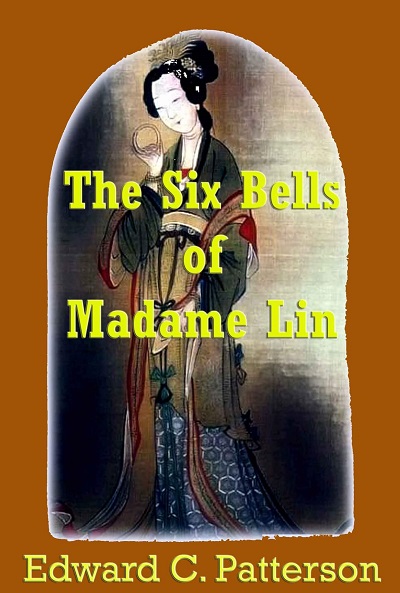
The Six Bells of Madame Lin is the first book in The Witch of Marigold Hall Trilogy, a fictionalized account of the struggles of Lin Mang, a blind woman who manages to navigate the world during the Mongol conquest of China in the 13th Century. Withou
Available Now! Rated 5 ***** by readers and listeners.
Sweet Revenge is a romantic tale of a spirited woman and a lusty bloke. However, can they both fight against their bitterness for each other to free up their passions?