Advice on using strange names and odd words when writing fiction.
There are a couple of very annoying pieces of advice making the rounds to
writers these days.
For some reason, the thought is that all names must be easy to pronounce and read.
That they must be bland and common. And that all characters must talk with bland
and boring language.
Any writer that dares not to follow the advice is in for a good talking to and will
receive a lecture about how publisher and editors won't accept their work. Or they
will be told that readers will hit the first strange name, or piece of dialect,
and stop reading.
While I understand that there are probably some publishers and editors that might
have a problem and that some readers might go cross-eyed with the stranger names,
or dialog that is heavy with dialect, I have to argue that the advice is wrong.
Imagine this scenario.
You wake up in the middle of the night to flashing lights just outside your window.
You throw on a bath-robe, dash outside and are startled to see, hanging above your
backyard lawn, a large alien space-ship. Your mouth hangs open as a gaunt creature
with four heads and ten arms crawls out of the ship and starts across your lawn.
Before you have a chance to move, the creature stops and says, "Hi. My name's
Jim. Can you tell me how to get to Mars?"
I'll wait while you stop laughing.
The above scenario is stupid because, with the exception of bad comedy movies, the
likelihood of a creature from another planet being called by a common earth name
and speaking common English is pretty low.
Now we'll change the setting and instead of a flashing space ship, what's sitting outside
your house is a wrecker towing a beat-up car. The driver is a muscular man with a dirty
work shirt and greasy jeans. He walks up to you and say 'Howdy. Ma' name's Josiah. Ah'm lookin' fer Billy-Bob Horton. Kin ya tell me how ta find 'em?"
This second scenario is no different from the first. We have a character who isn't from
the common area. He speaks distinctly and has a name that's probably not real common
but the advice will be heaped upon the poor writer to do away with the dialect. That the
reader can use their intelligence to fill it in and to make the words readable. The writer
will also be told, kindly of course, that their readers would rather have the character
use a common name, so they can identify with it.
To which I say: poppy-cock. All writers are also readers. I'm sure some have a problem with the dialect and odd names, but most probably don't. Not when they're reading. But wait till they start giving advice to other writers!
As far as editors or publishers rejecting a piece, that too is nonsense. If it were true , there'd be no published books or stories in magazines with odd names and characters speaking with dialects. But there are. Lots of them.
If the story is well written and the dialect is well done then the story will definitely be stronger. But a writer had better make sure the dialect is well done or the reader (editor) will put the story down after the first few words of dialect.
A character's name simply has to fit.
Reviewed by Kwame Mutulu
7/10/2007
The reader will always read. Give thanks for the truly committed.
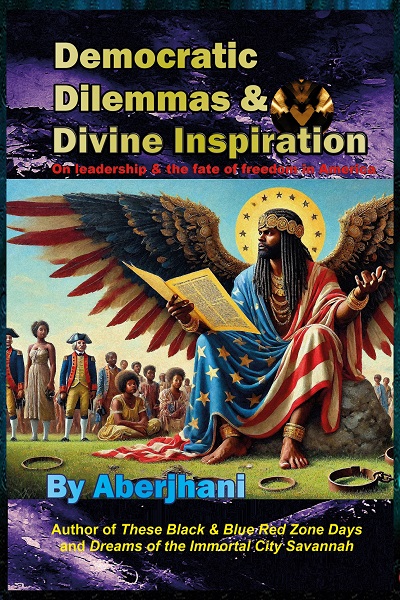
Democratic Dilemmas and Divine Inspiration examines the significance or relevance of the idea that the U.S. Constitution was, as many believe, divinely inspired. How much did that belief matter to founders of the nation and how much does it matter no