Going to jail is one thing; however prison is another as they both are to different places. This is just a short story taken from Ch. Seven in the book.
Well I finally made it here to The Penitentiary—Penn, The Pennhouse, The Joint, The Big House, The Twilight Zone as some would call it, Central California Women’s Facility—CCWF, California’s first largest women’s facility was built in October 1990 on 640 acres and had an operating budget of a little over 70 million back in 1993-95 when I was in, now operates at 82 million and 54% more inmates than what the prison was intended to house. Sounds a bit crowded doesn’t it? This was going to be the place I would call my home for almost the next 4 years—3 years 8 months to be exact, which is what I was sentenced to. Was I ready? Indeed no. But there was no turning back. Trust me if I could, I would have.
I recall pulling up seeing bob wire fences, a tower and officers with guns. My God, what should I expect? What types of people are here? Who do I meet? Will I get along? Will I survive? Will I die? Those were just some of my thoughts as I was sitting on that big bus shackled like a hard core criminal waiting to step off and make the final trade of a commodity—the transition from jail to prison. I was thinking all of these thoughts and then some as I took a good look at this place.
Finally we pulled up in front of the receiving and release—R&R area. Forty women—hungry, tired, sad and depressed; however there were some that were so excited because they had homies here and some also had family. This was their territory they were old-timers, women with old prison numbers who have never given the State back that number they issue to you as an identifier when you come here. Some of these women had numbers which we were issued years prior to CCWF opening. Many of these old-timers were transferred from California Institute for Women—CIW, another women’s Penn and have been holding onto these numbers for years.
You no longer have a name, as you’re a number first.To see these women still coming through the system saddens me. How do they stop this abuse to themselves? That would mean staying crime free for at least a year and unfortunately they couldn’t do that. They play right into a system that is setup to trap you and it graciously does if you let it.
Some of these women smelled so awful because everyone was not as fortunate as others to have received a new change of clothes from their families to change into as they were leaving to prison. Reality is some don’t have family or friends. SBI didn’t wash your clothes they just bagged them with your name and jail number, placed them in a duffel bag and hung them as if they were running a dry cleaning service. They hung up funky clothes until you left for prison, home or this earth. Imagine the smell of clothes that are not washed for a few days. Pretty bad huh? Now imagine a few months—horrific you think? Words can’t describe. The longer you wait to go to prison the longer your clothes sit, unwashed, developing a daily funk. Now I’m a queen when it comes to wearing perfume. I really love it. Most often I spray a little on my outfit, wear it once, hang it up and wear it few weeks later to smell that same perfume smelling fresh. I had a bad suit on when I was arrested and taken into custody and I didn’t want to wear the same clothes I was arrested in to prison as I knew they wouldn’t be fresh from being stored in a bag for months. Some women don’t come in with fresh clothes on so they go out to prison with what they wore when they were arrested which are funky, dirty, smelling, rotten clothes. I can remember that some of the women’s clothes were so old, small and stained it was enough to make a dog sick but after a seven-hour ride from Los Angeles to Madera you became accustomed to the odor. You adapted. What else could you do? Keep going to what they called a bathroom, which I called a porter potty. Being shackled to other women and trying to use that toilet made you even sicker or what was I thinking, I should have just asked the deputy to pull over and let me out.
Finally it’s time to get off the bus—time to get uncuffed—time to pay close attention or they’ll make your life a living hell they tell you. My God, it’s time to go behind the walls with women in prison.
The terror and repulsion of the situation you found yourself in is beyond my imagination. I'm getting quite and imagination here. Guts, raw guts is what it took to stomach this and you must have been quaking inside the whole time, too. God Bless for making something out of your life. Liz
I think that this is an interesting subject. However, there are a few things that I noticed- The author never tells exactly why she was imprisoned. The reader naturally wants to know this information and it is frustrating when you realize that it hasn't been explained. Grammatically, there are some places where the sentences need punctuation. For example: "This was their territory they were old-timers, women with old prison..." After the word "territory" either a period is needed and begin a new sentence, or a semi-colon.
Also, after words like "however" and "finally" a comma always should follow. The use of the word "which" is used more than once when it should be "that." There are also awkward sentences that not only lack punctuation, but are not written well. Example: "Being shackled to other women...made you even sicker or what was I thinking..."
A detailed study of the origins of the New Alienation. The author labels it normative or postmodern ennui and traces its rise to cultural power over the last two centuries.
Modern labour theories and practice. Covers issues like employment, unemployment, migration, brain drain, entrepreneurship, workaholism, and trade unions.
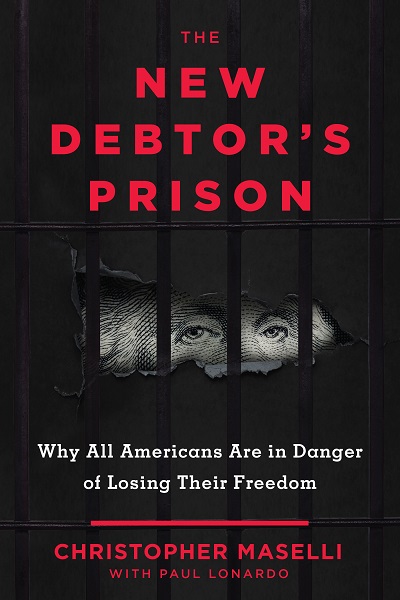
While Debtors prisons no longer exist, many people continue to be persecuted for crimes related to poverty or inability to repay money owed to municipalities. This practice remains in an injustice that needs to be rectified.