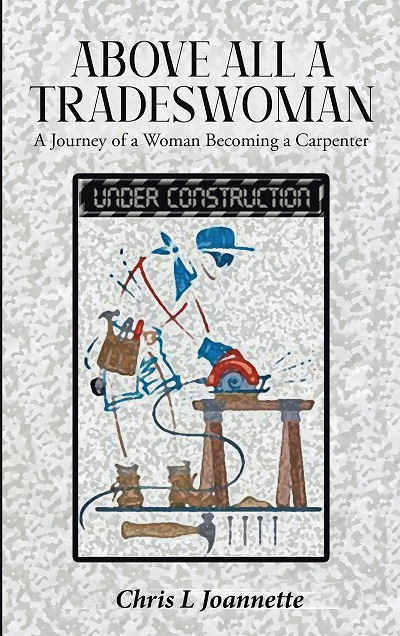
Statement written by the International Brotherhood of Carpenters & Joiners of America 2002
Sisters in the Brotherhood (SIB), the goal of Sisters in the Brotherhood is to create a network of active members that provides avenues for women to eliminate barriers to their success and to promote an increase in the number and diversity of women in the UBC. We advocate for member involvement to strengthen the union and for the unity and retention of all members.
Affirmative Action In The 21st Century Building Trades
Our unions are harmed to the very core when a member is harassed or discriminated against by other members, supervisors, or co-workers. If union members cannot count on another member or their leadership, then who can they count on?
Employers continue to divide the women on the jobsites by dividing all workers based on gender, race, religion, sexual preference, and nationality. Employers continue to pander to minority quotas and not give the proper training needed for women to be retained in their chosen trade or profession for retention to be realized. Executive Officers and local union members continue to keep women away from meetings by intimidation and by not welcoming them when they try to attend meetings.
Women are unable to assertively stand up to the men at their locals because they lack the education needed to have the same power their “brothers” have had for decades...knowledge of their labor union member rights and how the unions work (politics).
Yet blaming the lack of education and proper training required in their chosen trade on women’s lack of assertiveness is like blaming sexual harassment on women’s lack of snappy comebacks. The real problem is not that women do not ask for more – it is that employers pay, train, and support women far less than they are mandated to do in the existing laws, constitutions and bargaining agreements within the different building trade union contracts.
Our union hall is the only place where our voices have a chance to be heard, and our voices will never be heard if we stay away. Of course, there is also the terrible word “politics” we do not want to get involved with that! But without the education of politics and how they work in the unions, our voices cannot be heard and legislation that would benefit our equity and equality will not be passed or supported by our elected legislators.
Or maybe we do not vote at all!
Could this be because we continue to be apathetic towards the politics in our nation and our unions? This is one of the major issues concerning women’s lack of gain in society.
No, employers still do not want to pay us a union scale or train us in the various trades of our choice. There is no retention because apprenticeships continue to enroll us with no support system in place. They continue to hire us to fill their quotas, and we say nothing! Signatory contractors in our unions have had a plan to fill their minority quotas since 1975. Unions are making concessions to new signatory employers who are willing to hire women and people of color in our trades at a lower union scale or where we will not have the ability to graduate to journeymen! Most women do not ask, we just do...we have been conditioned to do this from birth...
It is not all our fault...proper education in the bargaining agreements, the constitution among other union training needed will allow us the power to negotiate and fight for our rights at the union halls and in the government.
A problem exists when women work on union jobsites where we have no voice in our training, employment, pay scale, bargaining agreements and support required from our unions and employers because of the small number of women in each trade. Women in various unions are fighting for equality...but the numbers are not enough to make a difference. We must get positions within our unions to have a true voice on change.
Until we grow our numbers in each trade, our voices will remain unheard. The unions will continue pandering to our requests with “Arcadian Doublespeak.”
Unions pander to women’s efforts for suggested changes for improvement. They place it on paper for everyone to see their good faith effort. They tell us what we want to hear, then turn around and do nothing...
To get the training we need and gain the power that our counterparts have had for decades. We must educate ourselves to labor history, labor management relations, organizing, and assertiveness techniques and social justice legislation in our government to have our voices heard.
We must organize now! We must work together to increase the number of women in all unions. We need to continue fighting for the rights we still do not have today...and bring that power back to our chosen trade unions.
The hope of all trade women’s organiztions is to impose a newly invigorated labor movement by tradeswomen throughout this the United States and Canada. This might be a utopian delusion; but when the success of the many organizations is realized by representatives in the unions and the overall government, women will then be truly equal in the workforce.
Women in the building trades have already organized themselves on the East and West coasts. The organizations are reinventing the wheel. They are part of the national movement already started and will be part of history in the making. These women will be able to hold their heads high because they stepped up to be counted in the union trades.
What is important to all of us must be spoken and shared, even at the risk of being misunderstood. We must not allow our fears to interfere with our passion for social justice and human rights. Sitting at home doing nothing will not change our lives!
By joining together as one, the unions and government will have to listen!
Organizing Women in the Building Trades
The National Labor Relations Board states that some unions prohibit dissemination of facts about labor law and salary, and the secrecy continues. Since less than two percent of the building trades workers are women in today’s building trade unions...it is obvious that these working women are suffering economically because the majority of them have not been retained by their unions after their apprenticeship training. It is a known fact that union members have always enjoyed higher wages if they succeed in their training. Women have been allowed to join the union construction trades since 1975. The unions have been unable to retain women in their chosen trades ever since. The numbers of women in trade work remains stagnate at two percent participation across the nation.
Support must come from the top down, not from the bottom up. Unity among workers and opposition to discrimination are important parts of our proud union heritage. Stopping discrimination in hiring practices is a part of that tradition. If union contractors and employers believe workers can be divided by gender, race, national origin, religion, sexual preference, physical condition, or any other factor they continue to exploit these differences. When workers show contractors and management that they will defend all workers’ rights and insist on basic respect for all, unions will be stronger when confronting other issues as well. Only when they stand together can workers win better contracts, fight for effective legislation, and organize for their future.
It is imperative, while fulfilling our goals, that we stay within the existing agreements and constitutions set forth by our unions and take aggressive steps to more effectively address the critical needs of now thousands of unorganized women and make our unions more responsive to the needs of ALL women.
The primary purpose of all women's organizations is to unify all union women in the building trades and determine our common problems and concerns and develop action programs within the framework of our unions to deal effectively with these objectives. The educational needs of women will be evaluated to strengthen our knowledge of union member rights, assertiveness training and negotiation abilities within our individual unions.
In meeting these goals, women’s organizations should follow the Department of Labor Union Member Rights, individual union agreements, and the constitutions within the various unions. This may be had to do, since only union members get By-Laws to their specific trade.
Political Action and Legislation
It is imperative that union tradeswomen become educated and active participants in the political and legislative processes of the government and unions. This will allow us to understand what is at stake. Tradeswomen must move towards full time employment. We must become part of the negotiation process within the unions for pay and shorter work weeks without loss of pay. Trades women must discuss ways to improve benefits geared towards us, including maternity leave and partner benefits. We must also help to improve pension benefits, health and safety coverage, and to expand educational opportunities within the labor bargaining agreements. Trades women must provide mass action for the final ratification of the Equal Rights Amendment (ERA) and guarantee collective bargaining rights, the right to strike, and an extension of truly protective legislation for all workers.
Women in all male dominated trades must join together and participate.
This message is meant to educate, encourage and urge women in the building trades to participate in their union’s political action and volunteer organizing committees. It will encourage participation in elections of progressive political candidates within their neighborhoods and townships and encourage women to nominate and run for official positions within their unions and actively participate in changes that need to occur to strengthen women’s rights.
Women must demand member and union officer support at their locals and through their administration. This includes health, education, environmental and human equal rights at every union hall and this must carry over into the county, state and national government before our lives will change.
I hope this information has been helpful to you. Please pass on to other women in the trades.
Link: https://www.authorsden.com/visit/author.asp?AuthorID=70536
Author Contact:
Chris L. Joannette, 45-year, retired union carpenter
Phone 1-438-835-5827 (Canada)
Email: aqcchris.gmail.com
In meeting these goals, women’s