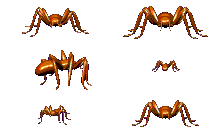
We now have a sense of how these death traps are an apt metaphor for women's addictions
Every now and again, a kind gentle woman comes along and you wonder about her life, former and present ... mostly at night. Today it seems like there is something different about the way she moves, like she has calm dignity. Maybe now she belongs. She has left the assaults of civilization, excessive alcohol, and the chaos of drugs ... street or pharmaceutical. At last, she has found her own country hamlet, a place to leave behind pain and sorrow, and to have a good journey, sobriety, peaceful living, and a well-kept soul ... or at least we'd like to think so of all these things. She must keep herself balanced to be out of the throes of relapse. We don't like to see her backslide.
The zen here is an attempt to get women to look at the world in spider time, where there is no time for addictions or chemical dependencies. They reweave their webs up to five times a day! Just to survive! Spiders must weave webs to catch their prey to survive. Contrary, women must dust the cobwebs, tear them down to keep themselves free from the predations of others and out of the wicked traps of substance abuse.
Let's look at sobriety through the hub of a spiderweb. First, we will need a double layer of old socks stuffed with cornstarch. Then we need to go find a spiderweb. Spiderwebs are everywhere. If you can't find one, it will be there soon ... because spiders love to travel and when they do, they climb up to a high point and spin out silk thread from their hind end.
The spiderweb is built mostly by the females. The males abandon web-building when they reach maturity. Females need the protein from insect prey to produce eggs, so they weave webs all throughout life.
We've walked out in a patch of garden where nothing looks to be happening, tapping the sock of cornstarch softly until the white powder dusts the surface. The spiderwebs appear out of nowhere, the dusting powder brings them out. This is how we see the world in spider time. We get a little powder on the web and we can see which lines are connected to which plants without disturbing it one bit. We now have a sense of how these death traps are an apt metaphor for women's addictions.
In the beginning, about 400 million years ago, spiders used silk mainly to weave a hiding place, with a trip wire out front to detect insects. Back then, the spider was reclusive and wingless, until many years later when insects evolved wings. Now, they spin webs to allure prey, not become prey.
Women use alcohol and drugs in the same way to weave a hiding place. Booze and pills and all other drugs are the trip wires ... trip wires that detect only women's weaknesses. She's walking into her own trap. Theory is that a spider doesn't get stuck in its own web because it has an oil coating on its feet. This should tell women with addictions to reach for the bottle of palm oil instead to rub on her feet when she is feeling weak so she can walk the next step to sobriety.
Orb webs are made by bridging the space between two objects by laying down a dragline, then creating a simple star. Then the web's outer edges are laid, followed by weaving like wheel spokes from hub to frame. Watching and studying a spider spin an orb web takes us on a journey to the climbing walls found at the malls, health clubs, and gyms.
Outfitted with climbing gear, a climbing harness, Jumar ascenders, a slingful of metal clips over the shoulder called carbingers, and a rope bag in place of a silk gland over the other shoulder, we are going to build our own orb web, live in spider time for an afternoon.
We climb one wall and tie our first line. Then we look across 15 feet of open space to the point where we will be anchoring the other end. A spider bridges this span the same way it makes a parachute, by lifting its hind leg and spinning a length of silf from its silk gland.
Now we tie our line to a bolt hangar and climb back down and climb up the other wall where we pull our spanning line taut, then shinny back out the spanning line, trailing rope behind us. The idea is to leave this rope slack and let the middle of it drop down to become the hub of the web.
We do it as much as we can with our eyes closed. A spider can do this blindfolded. They know what is happening around them largely by touch. They rely on an many as 3,000 vibration sensors called slit sensilla, most of them on their spindly legs.
Just like a spider, we rappel down from the hub and stretch a spoke of rope to the bottom of the web, keeping the whole thing under tension. We are working hard, spinning sweat. After a half an hour, our first spokes are in place. A spider can weave an orb web effortlessly completing a web with 30 spokes.
We have to link up all our intersections with carabiners and bulky knots. A spider does the same thing with a quick dab of fibrous glue, reaching back with a hind leg and pulling silk from a spigot connected to the silk gland. This shears the silk so one set of pleats tucks neatly into another, forming hydrogen bonds and makes a solid thread.
After four climbing hours, we complete our framework of only nine spokes. We have yet to weave the real killing surface of the web, a thread that spirals from the hub out to the edge and crosses the spokes. A spider builds two of these spirals for every orb web. The first one is just a temporary scaffold to stand on. As the spider moves around the web, it eats up sections of scaffold it no longer needs and recycles the silk.
Dangling from our web we've built, after five tiring hours, we have finished. It is lumpy and off-centered, but we're proud of our orb web model. You see, there is no time for addictions in spider time.
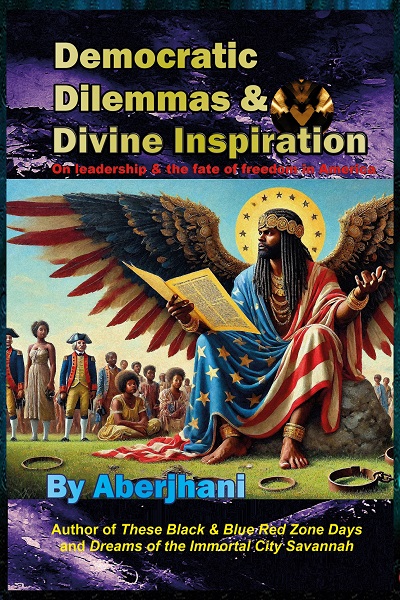
Democratic Dilemmas and Divine Inspiration examines the significance or relevance of the idea that the U.S. Constitution was, as many believe, divinely inspired. How much did that belief matter to founders of the nation and how much does it matter no
Democratic Dilemmas and Divine Inspiration examines the significance or relevance of the idea that the U.S. Constitution was, as many believe, divinely inspired. How much did that belief matter to founders of the nation and how much does it matter no
Democratic Dilemmas and Divine Inspiration examines the significance or relevance of the idea that the U.S. Constitution was, as many believe, divinely inspired. How much did that belief matter to founders of the nation and how much does it matter no