One day, at a very small hospital in south Georgia, I was watching tv with the EMT's in their office.
The office was a trailer not 50 yards from the ER door.
The phone rang and it was a nurse from the ICU saying, "Get to the unit STAT!"
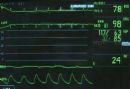
We all headed over to the hospital. When we got to the ICU the nurse showed us a flatline on the monitor.
The patient was a black man about in his fifties, and looked very fit indeed. He was in the ICU because he was detoxing from alcohol, and needed to be watched closely for seizures, or other effects of DT's. The patient was comatose because of medications, and the effects of detoxing. There was no doctor at the hospital so the EMT's and I were running the "Code Blue."
First thing I did was use what we called a "bag mask," to perform what amounts to mouth to mouth ressusitation.
This mask has a short airway in it that extends beyond the patients tounge, and allows the rescuer to "breathe" the patient without actually being in contact.
When I gave the patient the first breath, I noticed some back pressure, almost like he was blowing back.
I looked at the monitor and it was still flatlined, so I thought nothing of it, and continued breathing.
The EMT's began chest compressions, and the "Code" was fully underway.
After a minute or so of breathing and chest compressions, the monitor was still flatlined. We looked at each other and almost simultaniously said,
"Shock em."
We hit him with a low power shock and this guy raised up off the bed saying, "WOOOOOAAAH!!!!"
We thought that a bit strange because the monitor was still flat. But we continued CPR and after another minute we decided to shock him again, with a more powerful jolt. Same reaction, only louder this time. We had never seen this kind of thing before and began looking around.
One of the EMT's checked the patient's right leg and discovered the monitor's lead wire was not connected, hence the flatline. He replaced the disconnected lead and voila, heart rhythm appeared on the scope. Now, we had assumed the nurse checked the lead wires before calling us, so we didn't think to do it, and you all know what happens when we "ASSUME."
The patient survived, and we all learned a lesson that day not to rely completely on machines. Oops!
Assume: makin an a** out of U and Me. :) Love it! Well done, Walt.
(((HUGS))) and love, Karla.
One thing you don't want to hear in a medical setting: oops!
Reviewed by Samantha stewart
7/28/2007
i liked this story it was great when i started to read it i realised that it was about the man had a flat line i was worried if he would live but it was a great story
samantha
Reviewed by d. k
7/28/2007
Whoah!! Holy what a wake up!!! I gather now you will never assume again!! Good thing the gentleman was fit for the shocks!! Oops.....
Good thing he was out of it becuase that really must have made you all feel real strange. I guess next time putting the old ear to the chest might help. cute story. Lady J
Walt it is really really hard to type when you are rolling on the floor. As the daughter, sister, and ex-wife of electricians, I can definitely relate to your electical problem, but I can just imagine what went through the patient's mind as you were all attempting to "SAVE" him. Wonderful Wonderful Wonderful!!!!
Ann
Through interviews with Lauren's doctors, along with those of other physicians, researchers, and clinicians who specialize in lung cancer, readers will have a better understanding of the disease.
With the same passion and honesty Lauren exhibite
This is not a drill. The attack on Pearl. They were the ghost planes of the night, deadly, illusive, sharp-clawed Black Cats. The Memoirs of ARM H.P. Lawrence, a Pearl Harbor survivor, Black Cat, and decorated war veteran.
For a time, I perched myself on a flat rock, comparing my life with the Guyandotte River. Just as its tributaries replenish it daily, changing it in some small—sometimes great—degree, so have the day-to-day occurrences of life changed me. Like the ri


 One day, at a very small hospital in south Georgia, I was watching tv with the EMT's in their office.