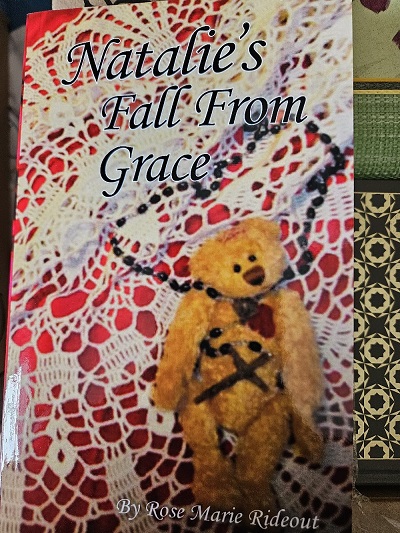
What she did for a living made others think of her as a wicked person. But she was salvation itself to one very important, and yet lonely man.
Chapter One
September 28, 1979 – Shreveport, LA.
Hot, funky jazz was playing on the record player downstairs while the girls were upstairs dressing for the evening. Jesse, the house’s bartender, looked at his wrist-watch. “Four o’clock,” he thought. “Five of ‘em are here already.”
The longtime bartender knew the few customers that had arrived extra early were the kind who didn’t come for “female sport,” they came for the entertainment and so they arrived early to get the best seats. They came to drink and ogle the girls. Too cheap to pay for anything else, they settled for getting high and imagining the rest. Some claimed they got more for their money that way!
Jesse made sure the observers kept buying drinks and didn’t just sit on the stools taking up space for free. Many of the customers spent as much as five dollars in one night at Cat’s place. That amount would have bought them the opportunity to spend an hour a piece upstairs with any two of Cat’s “working girls”—her ordinary working girls, that is. It would not, however, have been enough to pay for any amount of time with “Tee.” For some reason she was always already booked or otherwise occupied. And Tee, Jesse knew, was the real reason they had arrived so early.
Tee was the most popular working girl in Shreveport and had reigned as such for almost a decade. Everybody, for miles around, had at least heard of the enfamous “Tee.” By sitting at the bar and waiting patiently a man could not only enjoy several shots of some really good home-made whiskey, but he would eventually get to see Tee when she came down to dance. And boy, could Tee dance! Watching her bump, grind and twist was enough to bring any man to a point of color of Elderberry wine--resembled polished teak wood and was a beautiful satin covering for all her ample curves. Sometimes she would sing along with the music as she danced, charming Cat’s customers with her talent and charismatic personality. It was nothing for Tee to sit herself down on the lap of one of the house’s patrons, rub his cheek and sing to him as everyone else looked on. In fact, it was what most hoped would happen to them.
Tee had real talent. But it was not just her sensuous style of dancing that made her so popular, it was the excitement she was able to make her audience feel. Best of all, she could make you feel good. Being able to feel good was the purpose of Cat’s place, and so her role there—in Shreveport’s house of ill-repute—was of the utmost importance. Tee’s presence in Cat’s house brought in customers from all around Shreveport. Blacks, whites, Creoles and Canjuns came to see her.
Cat didn’t mind that Tee was so popular. Cat was old enough to be the mother of every girl who worked for her and she was wise enough to recognize what she had in Tee. Everyone loved Tee. Women included. The other girls in the house loved Tee, also. They weren’t jealous of her in the least. To the contrary, they all wanted to be like Tee. After all, she had style and talent. Tee always knew which fashions looked best on her and on the other girls. She was generous with her skill and always took the time to help a “new” girl cultivate her own unique look.
Tee was perhaps the brightest spot in the dismal lives of the colored people who lived in Shreveport. She certainly was the most interesting. Tee went into town every Saturday afternoon to get her hair done and to shop for whatever she needed to make herself look nice at Sunday morning’s church services. When the good colored women saw Tee they would speak, some even held conversations with her. When in town, it was her habit to greet everyone who crossed her path. It was nothing for her to start conversations with strangers and then to include whomever was looking on. Soon, everyone present would be laughing and talking like old acquaintances. They had learned a long time ago that Tee couldn’t be ignored. She wouldn’t let that happen. Tee always did something to make sure she was noticed. She sang out loud during church services, tided “bigtime” and faithfully, and baked goods for the monthly church bake sales just like every other woman who attended Sweet Parish Missionary Baptist. Some believed the stories that Tee was just the entertainment over at Cat’s Place—and not actually a working girl like the others. Some felt she wouldn’t be living in a place like that if she wasn’t a bad sort to begin with. But for most people, it was hard to remember what Tee did for a living because she was just too enjoyable. Her interest in other people was genuine and infectious.
Bubbling with the gift to enjoy life, Tee made every activity she participated in a joyous event. In a world where little else was going on, being able to feel anything special became a matter of great significance. Tee became a very special person in the colored section of Shreveport because of her ability to make people and events seem significant. It is also why she became very significant to a very important and influential white man.
The Beginning
March 5, 1964 – Shreveport, LA.
Her real name was Teola Armondt. She wasn’t born in or around Shreveport, and no one knew where she came from. Tee showed up at Cat’s back door late one March night in 1950. She had simply asked, “Can we speak to the madam of the house?”
Cat had been reluctant to talk with the “little country girl” because she had no need for any new working girls and especially not one whose appearance was as pitiful as Tee’s had been described by the girl who answered the door. It was Cat’s curious nature that lead her to go to see what the girl wanted. The message Tee had sent was that “we” need to talk to her. And yet, it was only Tee standing at the door—looking very young, under nourished and shabby. When Cat asked, “Why you here, gal? Who wants to talk to me?” Tee answered her unabashedly.
“We came to you cause we had no place else to go and I knows it takes work to survive and I figured ya’ll would have plenty that needed doing around here. Being that yo’ house is so big and all.” Then Tee reached into the darkness and pulled a little boy into view. “I gotta work to take care of us,” she said. “I kin work hard. I kin clean and cook. Why, I kin even empty yo’ slop jars. Cause I ain’t too proud to do whatever you needs me to.”
Within an instant, and it only took an instant, something inside of Cat made her want to protect the little country girl and her small pathetic looking companion. Something told Cat the boy was the girl’s child. “Two little chillians out here in the dark,” was the thought that ran through Cat’s mind and into her heart. “Well, come on in. You can stay the night and then we’ll see what’s to be done wit ya in the morning.”
Tee never left after that night. Beginning with the first day, she made herself indispensable. She proved to be a hard worker with several talents. She sewed and darned the girls clothing, baked the best pies anyone had ever tasted, and was a natural organizer—she straightened out the pantry, the linen closet and the tool shed all in the first month of her arrival. And, she proved she could be a bit of a beast when she found her efforts were being devalued. Everyone in the house heard Tee tell lazy Linda, “And if ‘en you can’t figure out which pillowcases go wit which sheets, ask somebody who don’t need glasses. But don’t be pulling ‘em out and jamming ‘em back in again. Them’s been folded and arranged in order. And I means to keep ‘em like that.”
The little boy, Spencer, was indeed Tee’s son and he was almost four years old when they joined Cat’s household. Tee confided in Cat that Spencer had been born exactly nine months after she got married—at fourteen. At first Cat decided Spencer would have to be boarded with another family while Tee worked, but Tee refused to be separated from her son. In her uniquely persuasive way, Tee promised he would never get in the way and he didn’t.
Although Spencer had the run of the house during the day, Tee made sure he remained in their attic bedroom during the evening when Cat’s house was in full operation. Most people didn’t even know a child lived there. But, it wasn’t long before Spencer, like Tee, was very much a part of life at Cat’s Place. He was both a friendly little boy and quick-witted. The girls liked having him around and each took their turn “watching out for him,” and making sure he didn’t pick up “none of those bad habits that go on around here.” Although Cat never voiced her feelings for Tee or Spencer, her actions and treatment of the boy showed she too had strong affections for him.
It was because of Spencer that Cat initiated the policy that her house was closed on Christmas Eve and Christmas Day. “A child’s got to have his Christmas and have it in peace,” she gruffly announced that first Christmas they spent together. It was Cat who bought the first Christmas present Spencer ever received—a bright red wagon. After that, all the girls set aside some of their money each year to make sure Spencer had his Christmas. They even had big sit-down dinners together—“For Spencer’s sake,” Cat had announced.
Three years later, when Tee had gone to Cat to ask if she could be allowed to become “one of the girls,” it was of Spencer that Cat was thinking when she angrily answered, “Hell, naw!” It was the first and only negative confrontation Cat and Tee ever had. Cat argued, just as any mother would have, that she had taken special pains to see to Tee and Spence’s every need—there was no reason for Tee to have to sell herself. “Why, she’d be ruined at twenty,” thought Cat. Tee argued, just as any indulged child would have, that there were things she wanted for herself and her son that she couldn’t have because of her limited income. Cat stood fast in your refusal. “No way,” she stated finally, “It’s bad enough that the boy is being raised in a whorehouse. Yo’ think I’m gonna stand by and let him watch his mama throw away her chances to become a decent woman.”
There was something burning inside of Tee that few people ever noticed. It was certain that Cat didn’t see it. While Tee was a hard worker, she didn’t want to be. She didn’t want a hard life. She loved the fancy clothes the girls wore. She loved the make-up and the music. She craved the popularity that went along with being “one of Cat’s girls.” The attention the men paid the girls was something Tee had never experienced. Tee had no friends before she came to live with Cat, had never even lived in a house with electricity or hot running water. She never owned more than one dress or a pair of shoes at one time. The only thing she ever really had that was nice and new was her son Spence. No one in Tee’s drab, poverty-stricken existence—before she came to live at Cat’s—had ever thought of her as anything other than someone to help out. But, Cat didn’t know that. Tee never told anyone what her life was like before she came to Shreveport. Tee’s desires lead her to take the matter of how she earned her living into her own hands.
Several weeks after Cat and Tee’s big blow up, the evening before Shreveport held its annual Fourth of July celebration, Cat and the girls had a big picnic for all of their favorite clients. The favorite clients were the ones who paid the most for services rendered. Many of the clients were well-respected white citizens, who by an unspoken “gentlemen’s” agreement, kept their involvement with Cat’s girls a secret. Tee helped with the cooking and preparations for the picnic, but no one expected she would attend. She and Spence spent the evening in their attic room sharing a platter of barbequed ribs and potato salad, and occupying their time by playing a game of marbles on the dusty floor. Once Spence had settled down to sleep, however, Tee began to put her carefully thought out plan into action.
She went down into Mildred’s room and borrowed the older girl’s red evening dress. In Cynthia’s room she found make-up in the shades most closely matched to her own. From Audra and Pearlie’s room she borrowed blue satin shoes, long white evening gloves and Audra’s blue feather boa. Once she had her face made up and was dressed, Tee removed the scarf she always wore on her head as she cleaned house. She looked into the mirror to survey her appearance and took note that the finger waves she put in last night were still in tact. No one looking at her would ever guess that she was the same skinny, country-looking girl who had shown up at Cat’s back door three years ago. The young woman in the mirror was a striking beauty! Eating three meals a day had filled out Tee’s youthful figure and rounded it in all the appropriate places. The hair she kept hidden under scarves, to keep it from getting dirt in it as she cleaned, flowed in waves past her shoulders. Her skill at applying makeup on her high cheekbones and around her almond-shaped eyes gave her an exotic appearance. She liked the woman in the mirror. And being satisfied with the visual impact she accomplished, she added the crowning touch—a red, white and blue stripped top hat. She went down the stairs looking like a character in a play, and that was her intent.
As soon as there was a break in the music being played, Tee took a deep breath and ran out of the back door into the middle of the backyard. She raised her top hat up high, waved her feather boa and began to sing “I’m a Yankee Doodle Dandy…I’m a Yankee Doodle Doll.”
And then Jesse who had been tending bar put his bar cloth down, picked up the banjo that he played intermittently during the evening, and offered some musical accompaniment to the song. The whole thing came off like a rehearsed performance, but it wasn’t really. It was just that Jesse had heard Tee’s jazzed up rendition of the song before, and had even helped her work out some of the lyrics. He had no idea she thought to present the song publicly, but feeling as he did about her he couldn’t allow her to make a fool of herself all by herself.
Cat just stood there watching the whole thing, her face as white as a sheet. Not only did she recognize the singer as being Tee, but she was afraid for Tee. There were too many white folks at this picnic—and Cat knew there was nobody more patriotic than a white southern man. She knew they didn’t find niggars making fun of their most patriotic holiday to be funny. Except for the noises that accompany the night and Tee’s full-bodied voice, there was not a sound to be heard. Finally able to move her body, Cat looked around at her guests. The girls, as well as the guests, were all mesmerized by what they were seeing. Because nobody present, nobody anywhere, had ever seen a black Yankee Doodle singing at a picnic!
Moving toward Judge Cadieux, the most important white man present, Cat was wondering what she could say to smooth things over—when Tee started to dance as she sang. It was then that Cat heard Sheriff Hassleman shout out, “Well, work it, gal!” Cat watched as Judge Cadieux started to clap. Tee wasn’t simply dancing, she was bumping and grinding as if she was a stripper in a jip-joint! All Cat could think of was, “Where in the hell did she learn to do that?” There was, however, nothing Cat could say. Everybody was enjoying Tee’s performance very much. When she finished that song, the crowd called for another—and she delivered. By the time Tee sang her last song, which was a fiery number about loss love, she ended it by sitting down on the lap of Judge Cadieux! And he was grinning from ear to ear.
Tee was a hit with the “clients,” much to the amazement of Cat and the girls. Cat was amazed because she had never known one of her girls, or anyone else’s, to pull such a foolhardy stunt and get away with it. The girls were amazed because they didn’t recognize the singer as their little live-in maid. At the end of the evening, Tee walked up to Cat, looked her straight in the eye and sweetly asked, “Do I get the job or what?” Cat couldn’t deny her because she had noticed that during the performance the sale of drinks had doubled and that everyone seemed to be having more fun than she had seen in a long time. If nothing else, Cat was a good business woman. She knew a good thing when she saw one and so she simply responded, “Let’s see if you can top that act tomorrow night.”
Both Cat and Tee were unprepared for what followed. Cat assumed Tee was to become the latest attraction at her house, sort of a one-girl show. Tee hadn’t given the matter a lot of thought. She only knew she was tired of living a life of drudgery and wanted some excitement. But then the gifts started to come.
First there was flowers and candy. The good kind. Then, four days later, there was a silk scarf made by a designer from Paris, France. And although Tee wore it each night during her show, no one stepped forward to claim having sent it. The next week someone sent a gold chain, a delicate length of chain inset with small rhinestones and pearls. A note accompanied the gold chain. It read: “I twinkle and sparkle just like you do, but its glow will never outshine yours.” Pearlie read the note out-loud Tee couldn’t read that well.
Tee, of course, was pleased and flattered by receiving the gifts. She could remember receiving an orange or an apple for Christmas when she was growing up. Once, an aunt sent her a baby doll made from burlap. But never had anyone given Tee anything that could have been called “finery.” The fact that the gifts were coming from an unknown person, an admirer, made the whole thing into an adventure of sorts—with all the girls participating. Tee didn’t hide the fact that the presents were being sent nor did she hide her enjoyment of receiving them. In fact, she wouldn’t even open the presents until all the girls were present. And then, all the girls giggled and squealed with delight. They danced around, teased Tee a lot and made bets as to who and who kind of man sent which gift and what Tee might have to do to earn the gift.
Cat didn’t laugh or enjoy the receipt of the gifts, however. She knew nothing was for free in this life and she wondered when Tee would have to pay the price for the gifts. Cat only knew of one other time when a mysterious patron had sent gifts to a girl living in her house. That girl had been Cat. The gifts she had received some fifteen years ago had served to usher her into a life of prostitution. She figured it must be the same man because he had sent her the same kind of gifts, and in the same order. One more gift, a gift of expensive perfume, and he’d reveal himself. And he did.
By the week’s end, on Friday, a box containing the delicious scent of French perfume came for Tee. Just as Cat suspected he would, Judge Cadieux visited Cat’s place later that evening requesting to speak to Tee in private. It was Tee’s innocence that made her agree to seeing Judge Cadieux privately in an upstairs bedroom. All Cat told Tee was that the Judge was the person who had sent the gifts. Cat never explained that Tee didn’t have to give herself to the Judge. She never explained that the Judge was from a world where it was alright to use girls like her without ever thinking of them as real people and she never told Tee what had transpired between her and the Judge years ago. As a result of not knowing all of this, Tee entered into an on-going relationship with the man.
I went to a strip club once a long time ago. A friend took me there for my birthday. I sensed insecurity and loneliness in the dancers. And the men looked like drones—shelling out wads of cash to women who they thought actually cared for them. A good-looking woman danced close to me later that night and breathed into my nose her hypnotic breath. Then she asked me if I wanted a private dance. I told he no and handed what little cash I had left to another customer and told him to go with her if he wanted. She gave me an evil look as they both walked to her private chamber of lust and lies. I have never gone another club since. After all; temptation resisted is the truest measure of one’s character, don’t you think?
I wrote this novel several years ago, I self published and never had it to sell. I have decided to rewrite it and hope to get it published within a few months for people to be able to buy. I had a few copies and gave them to a few family members and
Zara’s Bois:
When the powers-that-be make the decision to return a selfish party-girl to Earth on three missions of redemption, can romance and mayhem be far behind? One hot and trendy gay nightclub, two bickering angels and three unlikely p
Blending Southern Gothic mystery romance, fantasy, theater, dance, music, and flashes of humor, tells the story of a pair of lovers in two separate time periods who find themselves battling an evil fifty years apart.


 Chapter One
September 28, 1979 – Shreveport, LA.
Hot, funky jazz was playing on the record player downstairs while the girls were upstairs dressing for the evening. Jesse, the house’s bartender, looked at his wrist-watch. “Four o’clock,” he thought. “Five of ‘em are here already.”
The longtime bartender knew the few customers that had arrived extra early were the kind who didn’t come for “female sport,” they came for the entertainment and so they arrived early to get the best seats. They came to drink and ogle the girls. Too cheap to pay for anything else, they settled for getting high and imagining the rest. Some claimed they got more for their money that way!
Jesse made sure the observers kept buying drinks and didn’t just sit on the stools taking up space for free. Many of the customers spent as much as five dollars in one night at Cat’s place. That amount would have bought them the opportunity to spend an hour a piece upstairs with any two of Cat’s “working girls”—her ordinary working girls, that is. It would not, however, have been enough to pay for any amount of time with “Tee.” For some reason she was always already booked or otherwise occupied. And Tee, Jesse knew, was the real reason they had arrived so early.
Tee was the most popular working girl in Shreveport and had reigned as such for almost a decade. Everybody, for miles around, had at least heard of the enfamous “Tee.” By sitting at the bar and waiting patiently a man could not only enjoy several shots of some really good home-made whiskey, but he would eventually get to see Tee when she came down to dance. And boy, could Tee dance! Watching her bump, grind and twist was enough to bring any man to a point of color of Elderberry wine--resembled polished teak wood and was a beautiful satin covering for all her ample curves. Sometimes she would sing along with the music as she danced, charming Cat’s customers with her talent and charismatic personality. It was nothing for Tee to sit herself down on the lap of one of the house’s patrons, rub his cheek and sing to him as everyone else looked on. In fact, it was what most hoped would happen to them.
Tee had real talent. But it was not just her sensuous style of dancing that made her so popular, it was the excitement she was able to make her audience feel. Best of all, she could make you feel good. Being able to feel good was the purpose of Cat’s place, and so her role there—in Shreveport’s house of ill-repute—was of the utmost importance. Tee’s presence in Cat’s house brought in customers from all around Shreveport. Blacks, whites, Creoles and Canjuns came to see her.
Cat didn’t mind that Tee was so popular. Cat was old enough to be the mother of every girl who worked for her and she was wise enough to recognize what she had in Tee. Everyone loved Tee. Women included. The other girls in the house loved Tee, also. They weren’t jealous of her in the least. To the contrary, they all wanted to be like Tee. After all, she had style and talent. Tee always knew which fashions looked best on her and on the other girls. She was generous with her skill and always took the time to help a “new” girl cultivate her own unique look.
Tee was perhaps the brightest spot in the dismal lives of the colored people who lived in Shreveport. She certainly was the most interesting. Tee went into town every Saturday afternoon to get her hair done and to shop for whatever she needed to make herself look nice at Sunday morning’s church services. When the good colored women saw Tee they would speak, some even held conversations with her. When in town, it was her habit to greet everyone who crossed her path. It was nothing for her to start conversations with strangers and then to include whomever was looking on. Soon, everyone present would be laughing and talking like old acquaintances. They had learned a long time ago that Tee couldn’t be ignored. She wouldn’t let that happen. Tee always did something to make sure she was noticed. She sang out loud during church services, tided “bigtime” and faithfully, and baked goods for the monthly church bake sales just like every other woman who attended Sweet Parish Missionary Baptist. Some believed the stories that Tee was just the entertainment over at Cat’s Place—and not actually a working girl like the others. Some felt she wouldn’t be living in a place like that if she wasn’t a bad sort to begin with. But for most people, it was hard to remember what Tee did for a living because she was just too enjoyable. Her interest in other people was genuine and infectious.
Bubbling with the gift to enjoy life, Tee made every activity she participated in a joyous event. In a world where little else was going on, being able to feel anything special became a matter of great significance. Tee became a very special person in the colored section of Shreveport because of her ability to make people and events seem significant. It is also why she became very significant to a very important and influential white man.
The Beginning
March 5, 1964 – Shreveport, LA.
Her real name was Teola Armondt. She wasn’t born in or around Shreveport, and no one knew where she came from. Tee showed up at Cat’s back door late one March night in 1950. She had simply asked, “Can we speak to the madam of the house?”
Cat had been reluctant to talk with the “little country girl” because she had no need for any new working girls and especially not one whose appearance was as pitiful as Tee’s had been described by the girl who answered the door. It was Cat’s curious nature that lead her to go to see what the girl wanted. The message Tee had sent was that “we” need to talk to her. And yet, it was only Tee standing at the door—looking very young, under nourished and shabby. When Cat asked, “Why you here, gal? Who wants to talk to me?” Tee answered her unabashedly.
“We came to you cause we had no place else to go and I knows it takes work to survive and I figured ya’ll would have plenty that needed doing around here. Being that yo’ house is so big and all.” Then Tee reached into the darkness and pulled a little boy into view. “I gotta work to take care of us,” she said. “I kin work hard. I kin clean and cook. Why, I kin even empty yo’ slop jars. Cause I ain’t too proud to do whatever you needs me to.”
Within an instant, and it only took an instant, something inside of Cat made her want to protect the little country girl and her small pathetic looking companion. Something told Cat the boy was the girl’s child. “Two little chillians out here in the dark,” was the thought that ran through Cat’s mind and into her heart. “Well, come on in. You can stay the night and then we’ll see what’s to be done wit ya in the morning.”
Tee never left after that night. Beginning with the first day, she made herself indispensable. She proved to be a hard worker with several talents. She sewed and darned the girls clothing, baked the best pies anyone had ever tasted, and was a natural organizer—she straightened out the pantry, the linen closet and the tool shed all in the first month of her arrival. And, she proved she could be a bit of a beast when she found her efforts were being devalued. Everyone in the house heard Tee tell lazy Linda, “And if ‘en you can’t figure out which pillowcases go wit which sheets, ask somebody who don’t need glasses. But don’t be pulling ‘em out and jamming ‘em back in again. Them’s been folded and arranged in order. And I means to keep ‘em like that.”
The little boy, Spencer, was indeed Tee’s son and he was almost four years old when they joined Cat’s household. Tee confided in Cat that Spencer had been born exactly nine months after she got married—at fourteen. At first Cat decided Spencer would have to be boarded with another family while Tee worked, but Tee refused to be separated from her son. In her uniquely persuasive way, Tee promised he would never get in the way and he didn’t.
Although Spencer had the run of the house during the day, Tee made sure he remained in their attic bedroom during the evening when Cat’s house was in full operation. Most people didn’t even know a child lived there. But, it wasn’t long before Spencer, like Tee, was very much a part of life at Cat’s Place. He was both a friendly little boy and quick-witted. The girls liked having him around and each took their turn “watching out for him,” and making sure he didn’t pick up “none of those bad habits that go on around here.” Although Cat never voiced her feelings for Tee or Spencer, her actions and treatment of the boy showed she too had strong affections for him.
It was because of Spencer that Cat initiated the policy that her house was closed on Christmas Eve and Christmas Day. “A child’s got to have his Christmas and have it in peace,” she gruffly announced that first Christmas they spent together. It was Cat who bought the first Christmas present Spencer ever received—a bright red wagon. After that, all the girls set aside some of their money each year to make sure Spencer had his Christmas. They even had big sit-down dinners together—“For Spencer’s sake,” Cat had announced.
Three years later, when Tee had gone to Cat to ask if she could be allowed to become “one of the girls,” it was of Spencer that Cat was thinking when she angrily answered, “Hell, naw!” It was the first and only negative confrontation Cat and Tee ever had. Cat argued, just as any mother would have, that she had taken special pains to see to Tee and Spence’s every need—there was no reason for Tee to have to sell herself. “Why, she’d be ruined at twenty,” thought Cat. Tee argued, just as any indulged child would have, that there were things she wanted for herself and her son that she couldn’t have because of her limited income. Cat stood fast in your refusal. “No way,” she stated finally, “It’s bad enough that the boy is being raised in a whorehouse. Yo’ think I’m gonna stand by and let him watch his mama throw away her chances to become a decent woman.”
There was something burning inside of Tee that few people ever noticed. It was certain that Cat didn’t see it. While Tee was a hard worker, she didn’t want to be. She didn’t want a hard life. She loved the fancy clothes the girls wore. She loved the make-up and the music. She craved the popularity that went along with being “one of Cat’s girls.” The attention the men paid the girls was something Tee had never experienced. Tee had no friends before she came to live with Cat, had never even lived in a house with electricity or hot running water. She never owned more than one dress or a pair of shoes at one time. The only thing she ever really had that was nice and new was her son Spence. No one in Tee’s drab, poverty-stricken existence—before she came to live at Cat’s—had ever thought of her as anything other than someone to help out. But, Cat didn’t know that. Tee never told anyone what her life was like before she came to Shreveport. Tee’s desires lead her to take the matter of how she earned her living into her own hands.
Several weeks after Cat and Tee’s big blow up, the evening before Shreveport held its annual Fourth of July celebration, Cat and the girls had a big picnic for all of their favorite clients. The favorite clients were the ones who paid the most for services rendered. Many of the clients were well-respected white citizens, who by an unspoken “gentlemen’s” agreement, kept their involvement with Cat’s girls a secret. Tee helped with the cooking and preparations for the picnic, but no one expected she would attend. She and Spence spent the evening in their attic room sharing a platter of barbequed ribs and potato salad, and occupying their time by playing a game of marbles on the dusty floor. Once Spence had settled down to sleep, however, Tee began to put her carefully thought out plan into action.
She went down into Mildred’s room and borrowed the older girl’s red evening dress. In Cynthia’s room she found make-up in the shades most closely matched to her own. From Audra and Pearlie’s room she borrowed blue satin shoes, long white evening gloves and Audra’s blue feather boa. Once she had her face made up and was dressed, Tee removed the scarf she always wore on her head as she cleaned house. She looked into the mirror to survey her appearance and took note that the finger waves she put in last night were still in tact. No one looking at her would ever guess that she was the same skinny, country-looking girl who had shown up at Cat’s back door three years ago. The young woman in the mirror was a striking beauty! Eating three meals a day had filled out Tee’s youthful figure and rounded it in all the appropriate places. The hair she kept hidden under scarves, to keep it from getting dirt in it as she cleaned, flowed in waves past her shoulders. Her skill at applying makeup on her high cheekbones and around her almond-shaped eyes gave her an exotic appearance. She liked the woman in the mirror. And being satisfied with the visual impact she accomplished, she added the crowning touch—a red, white and blue stripped top hat. She went down the stairs looking like a character in a play, and that was her intent.
As soon as there was a break in the music being played, Tee took a deep breath and ran out of the back door into the middle of the backyard. She raised her top hat up high, waved her feather boa and began to sing “I’m a Yankee Doodle Dandy…I’m a Yankee Doodle Doll.”
And then Jesse who had been tending bar put his bar cloth down, picked up the banjo that he played intermittently during the evening, and offered some musical accompaniment to the song. The whole thing came off like a rehearsed performance, but it wasn’t really. It was just that Jesse had heard Tee’s jazzed up rendition of the song before, and had even helped her work out some of the lyrics. He had no idea she thought to present the song publicly, but feeling as he did about her he couldn’t allow her to make a fool of herself all by herself.
Cat just stood there watching the whole thing, her face as white as a sheet. Not only did she recognize the singer as being Tee, but she was afraid for Tee. There were too many white folks at this picnic—and Cat knew there was nobody more patriotic than a white southern man. She knew they didn’t find niggars making fun of their most patriotic holiday to be funny. Except for the noises that accompany the night and Tee’s full-bodied voice, there was not a sound to be heard. Finally able to move her body, Cat looked around at her guests. The girls, as well as the guests, were all mesmerized by what they were seeing. Because nobody present, nobody anywhere, had ever seen a black Yankee Doodle singing at a picnic!
Moving toward Judge Cadieux, the most important white man present, Cat was wondering what she could say to smooth things over—when Tee started to dance as she sang. It was then that Cat heard Sheriff Hassleman shout out, “Well, work it, gal!” Cat watched as Judge Cadieux started to clap. Tee wasn’t simply dancing, she was bumping and grinding as if she was a stripper in a jip-joint! All Cat could think of was, “Where in the hell did she learn to do that?” There was, however, nothing Cat could say. Everybody was enjoying Tee’s performance very much. When she finished that song, the crowd called for another—and she delivered. By the time Tee sang her last song, which was a fiery number about loss love, she ended it by sitting down on the lap of Judge Cadieux! And he was grinning from ear to ear.
Tee was a hit with the “clients,” much to the amazement of Cat and the girls. Cat was amazed because she had never known one of her girls, or anyone else’s, to pull such a foolhardy stunt and get away with it. The girls were amazed because they didn’t recognize the singer as their little live-in maid. At the end of the evening, Tee walked up to Cat, looked her straight in the eye and sweetly asked, “Do I get the job or what?” Cat couldn’t deny her because she had noticed that during the performance the sale of drinks had doubled and that everyone seemed to be having more fun than she had seen in a long time. If nothing else, Cat was a good business woman. She knew a good thing when she saw one and so she simply responded, “Let’s see if you can top that act tomorrow night.”
Both Cat and Tee were unprepared for what followed. Cat assumed Tee was to become the latest attraction at her house, sort of a one-girl show. Tee hadn’t given the matter a lot of thought. She only knew she was tired of living a life of drudgery and wanted some excitement. But then the gifts started to come.
First there was flowers and candy. The good kind. Then, four days later, there was a silk scarf made by a designer from Paris, France. And although Tee wore it each night during her show, no one stepped forward to claim having sent it. The next week someone sent a gold chain, a delicate length of chain inset with small rhinestones and pearls. A note accompanied the gold chain. It read: “I twinkle and sparkle just like you do, but its glow will never outshine yours.” Pearlie read the note out-loud Tee couldn’t read that well.
Tee, of course, was pleased and flattered by receiving the gifts. She could remember receiving an orange or an apple for Christmas when she was growing up. Once, an aunt sent her a baby doll made from burlap. But never had anyone given Tee anything that could have been called “finery.” The fact that the gifts were coming from an unknown person, an admirer, made the whole thing into an adventure of sorts—with all the girls participating. Tee didn’t hide the fact that the presents were being sent nor did she hide her enjoyment of receiving them. In fact, she wouldn’t even open the presents until all the girls were present. And then, all the girls giggled and squealed with delight. They danced around, teased Tee a lot and made bets as to who and who kind of man sent which gift and what Tee might have to do to earn the gift.
Cat didn’t laugh or enjoy the receipt of the gifts, however. She knew nothing was for free in this life and she wondered when Tee would have to pay the price for the gifts. Cat only knew of one other time when a mysterious patron had sent gifts to a girl living in her house. That girl had been Cat. The gifts she had received some fifteen years ago had served to usher her into a life of prostitution. She figured it must be the same man because he had sent her the same kind of gifts, and in the same order. One more gift, a gift of expensive perfume, and he’d reveal himself. And he did.
By the week’s end, on Friday, a box containing the delicious scent of French perfume came for Tee. Just as Cat suspected he would, Judge Cadieux visited Cat’s place later that evening requesting to speak to Tee in private. It was Tee’s innocence that made her agree to seeing Judge Cadieux privately in an upstairs bedroom. All Cat told Tee was that the Judge was the person who had sent the gifts. Cat never explained that Tee didn’t have to give herself to the Judge. She never explained that the Judge was from a world where it was alright to use girls like her without ever thinking of them as real people and she never told Tee what had transpired between her and the Judge years ago. As a result of not knowing all of this, Tee entered into an on-going relationship with the man.
Chapter One
September 28, 1979 – Shreveport, LA.
Hot, funky jazz was playing on the record player downstairs while the girls were upstairs dressing for the evening. Jesse, the house’s bartender, looked at his wrist-watch. “Four o’clock,” he thought. “Five of ‘em are here already.”
The longtime bartender knew the few customers that had arrived extra early were the kind who didn’t come for “female sport,” they came for the entertainment and so they arrived early to get the best seats. They came to drink and ogle the girls. Too cheap to pay for anything else, they settled for getting high and imagining the rest. Some claimed they got more for their money that way!
Jesse made sure the observers kept buying drinks and didn’t just sit on the stools taking up space for free. Many of the customers spent as much as five dollars in one night at Cat’s place. That amount would have bought them the opportunity to spend an hour a piece upstairs with any two of Cat’s “working girls”—her ordinary working girls, that is. It would not, however, have been enough to pay for any amount of time with “Tee.” For some reason she was always already booked or otherwise occupied. And Tee, Jesse knew, was the real reason they had arrived so early.
Tee was the most popular working girl in Shreveport and had reigned as such for almost a decade. Everybody, for miles around, had at least heard of the enfamous “Tee.” By sitting at the bar and waiting patiently a man could not only enjoy several shots of some really good home-made whiskey, but he would eventually get to see Tee when she came down to dance. And boy, could Tee dance! Watching her bump, grind and twist was enough to bring any man to a point of color of Elderberry wine--resembled polished teak wood and was a beautiful satin covering for all her ample curves. Sometimes she would sing along with the music as she danced, charming Cat’s customers with her talent and charismatic personality. It was nothing for Tee to sit herself down on the lap of one of the house’s patrons, rub his cheek and sing to him as everyone else looked on. In fact, it was what most hoped would happen to them.
Tee had real talent. But it was not just her sensuous style of dancing that made her so popular, it was the excitement she was able to make her audience feel. Best of all, she could make you feel good. Being able to feel good was the purpose of Cat’s place, and so her role there—in Shreveport’s house of ill-repute—was of the utmost importance. Tee’s presence in Cat’s house brought in customers from all around Shreveport. Blacks, whites, Creoles and Canjuns came to see her.
Cat didn’t mind that Tee was so popular. Cat was old enough to be the mother of every girl who worked for her and she was wise enough to recognize what she had in Tee. Everyone loved Tee. Women included. The other girls in the house loved Tee, also. They weren’t jealous of her in the least. To the contrary, they all wanted to be like Tee. After all, she had style and talent. Tee always knew which fashions looked best on her and on the other girls. She was generous with her skill and always took the time to help a “new” girl cultivate her own unique look.
Tee was perhaps the brightest spot in the dismal lives of the colored people who lived in Shreveport. She certainly was the most interesting. Tee went into town every Saturday afternoon to get her hair done and to shop for whatever she needed to make herself look nice at Sunday morning’s church services. When the good colored women saw Tee they would speak, some even held conversations with her. When in town, it was her habit to greet everyone who crossed her path. It was nothing for her to start conversations with strangers and then to include whomever was looking on. Soon, everyone present would be laughing and talking like old acquaintances. They had learned a long time ago that Tee couldn’t be ignored. She wouldn’t let that happen. Tee always did something to make sure she was noticed. She sang out loud during church services, tided “bigtime” and faithfully, and baked goods for the monthly church bake sales just like every other woman who attended Sweet Parish Missionary Baptist. Some believed the stories that Tee was just the entertainment over at Cat’s Place—and not actually a working girl like the others. Some felt she wouldn’t be living in a place like that if she wasn’t a bad sort to begin with. But for most people, it was hard to remember what Tee did for a living because she was just too enjoyable. Her interest in other people was genuine and infectious.
Bubbling with the gift to enjoy life, Tee made every activity she participated in a joyous event. In a world where little else was going on, being able to feel anything special became a matter of great significance. Tee became a very special person in the colored section of Shreveport because of her ability to make people and events seem significant. It is also why she became very significant to a very important and influential white man.
The Beginning
March 5, 1964 – Shreveport, LA.
Her real name was Teola Armondt. She wasn’t born in or around Shreveport, and no one knew where she came from. Tee showed up at Cat’s back door late one March night in 1950. She had simply asked, “Can we speak to the madam of the house?”
Cat had been reluctant to talk with the “little country girl” because she had no need for any new working girls and especially not one whose appearance was as pitiful as Tee’s had been described by the girl who answered the door. It was Cat’s curious nature that lead her to go to see what the girl wanted. The message Tee had sent was that “we” need to talk to her. And yet, it was only Tee standing at the door—looking very young, under nourished and shabby. When Cat asked, “Why you here, gal? Who wants to talk to me?” Tee answered her unabashedly.
“We came to you cause we had no place else to go and I knows it takes work to survive and I figured ya’ll would have plenty that needed doing around here. Being that yo’ house is so big and all.” Then Tee reached into the darkness and pulled a little boy into view. “I gotta work to take care of us,” she said. “I kin work hard. I kin clean and cook. Why, I kin even empty yo’ slop jars. Cause I ain’t too proud to do whatever you needs me to.”
Within an instant, and it only took an instant, something inside of Cat made her want to protect the little country girl and her small pathetic looking companion. Something told Cat the boy was the girl’s child. “Two little chillians out here in the dark,” was the thought that ran through Cat’s mind and into her heart. “Well, come on in. You can stay the night and then we’ll see what’s to be done wit ya in the morning.”
Tee never left after that night. Beginning with the first day, she made herself indispensable. She proved to be a hard worker with several talents. She sewed and darned the girls clothing, baked the best pies anyone had ever tasted, and was a natural organizer—she straightened out the pantry, the linen closet and the tool shed all in the first month of her arrival. And, she proved she could be a bit of a beast when she found her efforts were being devalued. Everyone in the house heard Tee tell lazy Linda, “And if ‘en you can’t figure out which pillowcases go wit which sheets, ask somebody who don’t need glasses. But don’t be pulling ‘em out and jamming ‘em back in again. Them’s been folded and arranged in order. And I means to keep ‘em like that.”
The little boy, Spencer, was indeed Tee’s son and he was almost four years old when they joined Cat’s household. Tee confided in Cat that Spencer had been born exactly nine months after she got married—at fourteen. At first Cat decided Spencer would have to be boarded with another family while Tee worked, but Tee refused to be separated from her son. In her uniquely persuasive way, Tee promised he would never get in the way and he didn’t.
Although Spencer had the run of the house during the day, Tee made sure he remained in their attic bedroom during the evening when Cat’s house was in full operation. Most people didn’t even know a child lived there. But, it wasn’t long before Spencer, like Tee, was very much a part of life at Cat’s Place. He was both a friendly little boy and quick-witted. The girls liked having him around and each took their turn “watching out for him,” and making sure he didn’t pick up “none of those bad habits that go on around here.” Although Cat never voiced her feelings for Tee or Spencer, her actions and treatment of the boy showed she too had strong affections for him.
It was because of Spencer that Cat initiated the policy that her house was closed on Christmas Eve and Christmas Day. “A child’s got to have his Christmas and have it in peace,” she gruffly announced that first Christmas they spent together. It was Cat who bought the first Christmas present Spencer ever received—a bright red wagon. After that, all the girls set aside some of their money each year to make sure Spencer had his Christmas. They even had big sit-down dinners together—“For Spencer’s sake,” Cat had announced.
Three years later, when Tee had gone to Cat to ask if she could be allowed to become “one of the girls,” it was of Spencer that Cat was thinking when she angrily answered, “Hell, naw!” It was the first and only negative confrontation Cat and Tee ever had. Cat argued, just as any mother would have, that she had taken special pains to see to Tee and Spence’s every need—there was no reason for Tee to have to sell herself. “Why, she’d be ruined at twenty,” thought Cat. Tee argued, just as any indulged child would have, that there were things she wanted for herself and her son that she couldn’t have because of her limited income. Cat stood fast in your refusal. “No way,” she stated finally, “It’s bad enough that the boy is being raised in a whorehouse. Yo’ think I’m gonna stand by and let him watch his mama throw away her chances to become a decent woman.”
There was something burning inside of Tee that few people ever noticed. It was certain that Cat didn’t see it. While Tee was a hard worker, she didn’t want to be. She didn’t want a hard life. She loved the fancy clothes the girls wore. She loved the make-up and the music. She craved the popularity that went along with being “one of Cat’s girls.” The attention the men paid the girls was something Tee had never experienced. Tee had no friends before she came to live with Cat, had never even lived in a house with electricity or hot running water. She never owned more than one dress or a pair of shoes at one time. The only thing she ever really had that was nice and new was her son Spence. No one in Tee’s drab, poverty-stricken existence—before she came to live at Cat’s—had ever thought of her as anything other than someone to help out. But, Cat didn’t know that. Tee never told anyone what her life was like before she came to Shreveport. Tee’s desires lead her to take the matter of how she earned her living into her own hands.
Several weeks after Cat and Tee’s big blow up, the evening before Shreveport held its annual Fourth of July celebration, Cat and the girls had a big picnic for all of their favorite clients. The favorite clients were the ones who paid the most for services rendered. Many of the clients were well-respected white citizens, who by an unspoken “gentlemen’s” agreement, kept their involvement with Cat’s girls a secret. Tee helped with the cooking and preparations for the picnic, but no one expected she would attend. She and Spence spent the evening in their attic room sharing a platter of barbequed ribs and potato salad, and occupying their time by playing a game of marbles on the dusty floor. Once Spence had settled down to sleep, however, Tee began to put her carefully thought out plan into action.
She went down into Mildred’s room and borrowed the older girl’s red evening dress. In Cynthia’s room she found make-up in the shades most closely matched to her own. From Audra and Pearlie’s room she borrowed blue satin shoes, long white evening gloves and Audra’s blue feather boa. Once she had her face made up and was dressed, Tee removed the scarf she always wore on her head as she cleaned house. She looked into the mirror to survey her appearance and took note that the finger waves she put in last night were still in tact. No one looking at her would ever guess that she was the same skinny, country-looking girl who had shown up at Cat’s back door three years ago. The young woman in the mirror was a striking beauty! Eating three meals a day had filled out Tee’s youthful figure and rounded it in all the appropriate places. The hair she kept hidden under scarves, to keep it from getting dirt in it as she cleaned, flowed in waves past her shoulders. Her skill at applying makeup on her high cheekbones and around her almond-shaped eyes gave her an exotic appearance. She liked the woman in the mirror. And being satisfied with the visual impact she accomplished, she added the crowning touch—a red, white and blue stripped top hat. She went down the stairs looking like a character in a play, and that was her intent.
As soon as there was a break in the music being played, Tee took a deep breath and ran out of the back door into the middle of the backyard. She raised her top hat up high, waved her feather boa and began to sing “I’m a Yankee Doodle Dandy…I’m a Yankee Doodle Doll.”
And then Jesse who had been tending bar put his bar cloth down, picked up the banjo that he played intermittently during the evening, and offered some musical accompaniment to the song. The whole thing came off like a rehearsed performance, but it wasn’t really. It was just that Jesse had heard Tee’s jazzed up rendition of the song before, and had even helped her work out some of the lyrics. He had no idea she thought to present the song publicly, but feeling as he did about her he couldn’t allow her to make a fool of herself all by herself.
Cat just stood there watching the whole thing, her face as white as a sheet. Not only did she recognize the singer as being Tee, but she was afraid for Tee. There were too many white folks at this picnic—and Cat knew there was nobody more patriotic than a white southern man. She knew they didn’t find niggars making fun of their most patriotic holiday to be funny. Except for the noises that accompany the night and Tee’s full-bodied voice, there was not a sound to be heard. Finally able to move her body, Cat looked around at her guests. The girls, as well as the guests, were all mesmerized by what they were seeing. Because nobody present, nobody anywhere, had ever seen a black Yankee Doodle singing at a picnic!
Moving toward Judge Cadieux, the most important white man present, Cat was wondering what she could say to smooth things over—when Tee started to dance as she sang. It was then that Cat heard Sheriff Hassleman shout out, “Well, work it, gal!” Cat watched as Judge Cadieux started to clap. Tee wasn’t simply dancing, she was bumping and grinding as if she was a stripper in a jip-joint! All Cat could think of was, “Where in the hell did she learn to do that?” There was, however, nothing Cat could say. Everybody was enjoying Tee’s performance very much. When she finished that song, the crowd called for another—and she delivered. By the time Tee sang her last song, which was a fiery number about loss love, she ended it by sitting down on the lap of Judge Cadieux! And he was grinning from ear to ear.
Tee was a hit with the “clients,” much to the amazement of Cat and the girls. Cat was amazed because she had never known one of her girls, or anyone else’s, to pull such a foolhardy stunt and get away with it. The girls were amazed because they didn’t recognize the singer as their little live-in maid. At the end of the evening, Tee walked up to Cat, looked her straight in the eye and sweetly asked, “Do I get the job or what?” Cat couldn’t deny her because she had noticed that during the performance the sale of drinks had doubled and that everyone seemed to be having more fun than she had seen in a long time. If nothing else, Cat was a good business woman. She knew a good thing when she saw one and so she simply responded, “Let’s see if you can top that act tomorrow night.”
Both Cat and Tee were unprepared for what followed. Cat assumed Tee was to become the latest attraction at her house, sort of a one-girl show. Tee hadn’t given the matter a lot of thought. She only knew she was tired of living a life of drudgery and wanted some excitement. But then the gifts started to come.
First there was flowers and candy. The good kind. Then, four days later, there was a silk scarf made by a designer from Paris, France. And although Tee wore it each night during her show, no one stepped forward to claim having sent it. The next week someone sent a gold chain, a delicate length of chain inset with small rhinestones and pearls. A note accompanied the gold chain. It read: “I twinkle and sparkle just like you do, but its glow will never outshine yours.” Pearlie read the note out-loud Tee couldn’t read that well.
Tee, of course, was pleased and flattered by receiving the gifts. She could remember receiving an orange or an apple for Christmas when she was growing up. Once, an aunt sent her a baby doll made from burlap. But never had anyone given Tee anything that could have been called “finery.” The fact that the gifts were coming from an unknown person, an admirer, made the whole thing into an adventure of sorts—with all the girls participating. Tee didn’t hide the fact that the presents were being sent nor did she hide her enjoyment of receiving them. In fact, she wouldn’t even open the presents until all the girls were present. And then, all the girls giggled and squealed with delight. They danced around, teased Tee a lot and made bets as to who and who kind of man sent which gift and what Tee might have to do to earn the gift.
Cat didn’t laugh or enjoy the receipt of the gifts, however. She knew nothing was for free in this life and she wondered when Tee would have to pay the price for the gifts. Cat only knew of one other time when a mysterious patron had sent gifts to a girl living in her house. That girl had been Cat. The gifts she had received some fifteen years ago had served to usher her into a life of prostitution. She figured it must be the same man because he had sent her the same kind of gifts, and in the same order. One more gift, a gift of expensive perfume, and he’d reveal himself. And he did.
By the week’s end, on Friday, a box containing the delicious scent of French perfume came for Tee. Just as Cat suspected he would, Judge Cadieux visited Cat’s place later that evening requesting to speak to Tee in private. It was Tee’s innocence that made her agree to seeing Judge Cadieux privately in an upstairs bedroom. All Cat told Tee was that the Judge was the person who had sent the gifts. Cat never explained that Tee didn’t have to give herself to the Judge. She never explained that the Judge was from a world where it was alright to use girls like her without ever thinking of them as real people and she never told Tee what had transpired between her and the Judge years ago. As a result of not knowing all of this, Tee entered into an on-going relationship with the man.