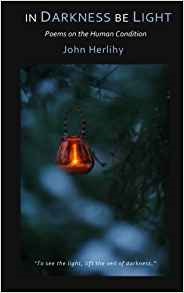
This is an excerpt taken from a chapter of one of my books entitled
WISDOM OF THE SENSES. The chapter is called The Appreciative Power of Taste. I open the chapter with this story of
my brother’s unexpected and unexplained affliction when his throat muscles
and upper torso lost their power of sensation. As such, he lost the ability
to eat as a normal individual and thus also lost his sense of taste. This excerpt attempts to describe what it must have been like for him to live with such a condition.
* * *
THE POWER OF TASTE
John HERLIHY
In tribute to the intimate sense of taste, I open this chapter on the miracle of taste by reflecting on the affliction of my older brother who has been robbed of its sublime experience prematurely in life and instead has had to endure an alternative form of tasting in the absolute denial of the taste experience. It is a story in which all of the accustomed pleasure, the sense of appreciation, the communal experience that food inspires, has been abruptly cut out of the broad tapestry of life’s experience, leaving the afflicted soul with a loneliness and solitude that cannot be breached from outside or shared from inside. After five years in this condition, my black-belted brother, my mentor, my friend has withered on the vine of life, at least with respect to the physical shell of his body. As for his attitude toward the hand that has been dealt to him and as for the spirit within him, I can only speculate from the signs that he has given me. His spirit shines forth through a body that has given up on him, since he gives very little away concerning his efforts to see his way through this ordeal. The reserves of courage and determination he has had to draw upon cannot be passed on to another as a gift; they can only be witnessed and marveled at from the distance.
His affliction began as a faint tingling in his right cheek over twenty five years ago, a sensation hardly to be noticed, but there all the same, as an uninvited guest into the routine of life’s normality. It took twenty years to nurture and grow, but eventually the waiflike numbness and mild tingling became a reality that could no longer be ignored. In the manner of a nightmare that should never come true , the numbness moved with glacial determination down through his jaw, lower face and eventually infiltrated his neck, effectively compromising his ability to control his throat muscles. Suddenly, the dreaded moment had arrived when my brother realized he could no longer eat solid food or even drink liquids. At first, the experience crept up on him on all fours, like the true animal that it was, and he found himself suddenly chocking on a small piece of meat and had to be revived with the quick thinking and response to the crisis from one of his sons.
The day finally arrived when the earth stood still and time came to an abrupt halt for him, the moment when the doctors told him, his wife, and sons that he could no longer ingest food or drink. When I first heard the news, I thought of my brother, the broad stride of his gait, his square shoulders and noble head astride a muscular torso, walking into the oblivion of the taste experience, bereft of all the simple, sweet pleasures that we take for granted and would never willingly give up. The blind see inner lights; the deaf hear silence as a profound compensation to the cacophony of the world, the smell of fresh flowers and the subtleties of incense are pleasurable and evocative, but we can live without their unique smells in establishing the cadence and rhythm of our lives, but to lose the experience of taste is to be denied the fundamental pleasures of the world. The time had finally come when he had to give up all food and drink, forever as they say. For the average person, the word forever has no true meaning; only those who have to face an ultimate denial such as this, the loss of the ability to eat or drink, the loss of a limb, or indeed the loss of a loved one, can understand the true meaning of the word forever in its absolute, final quality.
I had my own taste—for want of a better word—of what the experience of nourishing yourself without actually eating—must have been like for him one winter morning, sitting in the kitchen alone with my brother. When Joseph came into the room and sat himself down for his early morning breakfast ordeal, there was the hint of a smile on his otherwise ravaged face. I felt embarrassed as he stripped off his t-shirt and exposed a frail, pale-white, and shrunken upper torso, as though the very life had been drained out of his body, leaving behind the husk of skin and bone I was now witnessing as testament to his final suffering. The face was actually a visage frozen in endurance and pain, skin and bone covering skull and cranium, giving the appearance that he was a wizened old man far beyond his time. He had difficulty talking; but was a man of few words in any event. I expressed a matter of fact interest in what he was about to do, not knowing precisely what to say; the writer and wordsmith within me feeling much at a loss for words. It was as though time had stood still in this absolute environment. Nothing happened as it should, and yet life flowed on around us, indeed in spite of us. A brilliant winter sun shone through the window. It had been snowing all night in one of those New England winter storms that pass through the area every several years and surprise no one. It continued to drift silently down to the ground in heavy flakes covering the earth in a quilt of white snowy down.
With an abrupt shove, he pushed a sizable tube into the reddened opening in his pale white, wrinkled flesh and proceeded to pour down the liquid nourishment that would keep him going for another few hours. Later, he was to wash it all down with a generous portion of clear water, this being the only way he would ingest the pure, life-giving liquid that we take for granted as the vital fluid of the human body. While he nourished himself in this manner and while I sat there with him eating my bran muffin and a plate full of scrambled eggs, unwanted images came to my mind as an equally unwanted silence stood between us, like a thief robbing us of our intimacy. Why did broken eggs shells come to mind, except perhaps for their ragged, dry and fragile quality, for my poor brother looked rather ragged, dried up and fragile as he sat there struggling with the tube while pouring the liquid down into himself. An intense concentration seemed focused on his weathered, aged face. The early morning light streamed in through the Venetian blinds that cast bars of shadow across the kitchen table; but the banners of light drawn across the white table cloth could not outshine or outdistance the determination and dignity pouring forth from the face of my ailing brother.
I didn’t know what my brother Joe thought of his ordeal, its reality, its absolute quality, its never-ending aspect, bringing down an endless eternity into the present moment in ways he never expected. He never revealed to me his thoughts. He never spoke about the nature of his suffering, or what he did to overcome his miseries. What we go through life taking for granted, as summarized by the blessed experience of taste, he would never experience again, at least in this life and in this world; yet how did he come to terms with this absolute reality? How did he cope with this perennial misery that he had to face every day of his life?
I secretly suspected that the answer to the question lay somewhere within his brave silence. He never mentioned a word to me about his misery or what it meant to him. During the final stages of his illness, we occasionally corresponded through e-mail. Although the unnamed and undiagnosed disease had continued to spread through his body to the extent that he was put on a portable respirator, he was still able to write lucid letters to me about various items of mutual interest, without ever mentioning his horror, fear, or desperation about the nature of his plight. Out of respect to this silence, I also never mention it. But I am taking the liberty of writing about it now because I think I may have an insight into the true nobility of his character in having passed through this experience in the dignified manner that he has. There is a lesson to be learned here and I am trying to uncover what it might be.
In the same manner that the blind see the shimmering of stars across the field of their dark, inner universe, the deaf hear the music of the spheres and those deprived of the sense of smell take vicarious pleasure in the perfumes of the paradise and the textures available to touch, so also my brother Joseph now lived in a world of higher experience that transcended the lower orders of swallowing caviar on toast and savoring the bubbles of sparkling champagne. If someone had told him in his youth that he would be deprived of his taste buds and would not be able to eat or drink in his later years, he would have dismissed the thought with a wave of the hand as unthinkable. Now he lived in a world that transcended the limitations of the flesh and reached for higher orders of experience on some inner plane of existence, given the complete failure of his outer world and the body that carried him through it. He could have fallen into the dark hole of unthinkable misery, forever longing for that which he could never have again, or worse, succumb to the temptation of falling into a self-pity that would drain the life of the soul in the same way that the vital fluids had been drained from his body.
I believe some invisible door had been made manifest to him that he was allowed to pass through freely, without paying further dues beyond the stark recompense that was already being exacted upon him. Those close to him often marveled in their comments to me that he never mentioned his condition in a negative manner, never complained; indeed never gave voice to the emotive horror that he faced or spoke about it to his loved ones as a means of reaching out for comfort and support. Somehow, he had arrived at a point of
detachment and acceptance where no one could follow him, much less understand. He had arrived at some central core whose detachment permitted no sin or pain, amounting to a point of pure experience and a spark of pure truth that allowed him to leave certain
aspects of the world behind, a place that belongs solely to God that is not ordinarily at our disposal.
If his body had given up on him, becoming old and decrepit before its time and in defiance to the logic of the normal aging process, so also he seems to have abandoned the myth of the body. In giving up the body’s ability to serve his needs, he had transcended
its limitations. He was no longer a slave to its needs and demands. Had he then escaped becoming a slave to the reality of his own suffering or did he accept the wings offered to him to fly in defiance beyond the world of the senses? His eloquent silence on the matter seems to answer this rhetorical question.
In coming to terms with his affliction, he had passed through his ordeal to some other side, accepted its reality, and move on into a realm of experience whose inner tasting came from unknown depths, a tasting that only those who have suffered untold loss and survive another day could ever speak of. As I sat in the kitchen opposite my ailing brother that snow-swept morning, a morning whose clear winter light defied the misery of the moment, I began to understand the special gift that he was passing across to me, in his own way and on his own terms. Some wisdom is unspoken, but communicated through example with the power of truth. He had given me a treasure that would enrich me for the rest of my own life, teaching me the meaning of acceptance and endurance, to meet every moment of our lives with the truth that every moment calls forth from us. It is not what we endure, but how we endure it, that captures the essence of who we are.
The Sufi mystic and poet Rumi sings of the human soul as a symbolic bird in flight: “I am a bird of the heavenly garden. I belong not to the earthly sphere. They have made, for two or three days, a cage of my body.” I choose to believe that while the final years of his life were like living in the cage of a body gone wrong, his spirit transcended his misery and was able to fly like a bird. His suffering remained hidden as a form of protection or perhaps protest, withdrawn into the cage of his body with his dignity and spirit intact, like a desert cactus protected by thorns, from the curiosity and pity of the world. Now he has the wings that he has earned on his own terms and has already begun to soar like the eagle flying over rivers and mountain peaks. Whenever I see birds fly across the heavens or a butterfly hovering over a rosebud in search of the taste of life, I will think of my brother Joseph and ask God to grant him the peace and contentment that he so richly deserves.
Epilogue: Not long ago and after this article was written, my brother Joseph passed away, finally giving up the shell of a body that had served him so poorly in his final years. His inner strength and spirit continues to live with those who knew him. I suspect that he would be pleased to know that I have attempted to capture in words the essence of an experience that only he could have understood for sure; but he knew of my love of words and would have appreciated this attempt to describe his experience. In transcending the limitations of the body, he claimed ownership to the wisdom of the senses.
Once again, you have written so eloquently about a subject that touches everyone but in different ways as we age and our body gives up its youthful vigor presenting challenges that we must either endure or give in to in the end.
Remarkably, as I read, I was struck by your description of your brother's malady. While I've had reflux for nearly 30 years and have been taking medication for it, in the past year or so, I've had trouble swallowing some food. And then, for the past couple of months, I have been experiencing a kind of tingling on my left cheek that moves past my ear to the top of my head. I thought it was a kind of neuralgia caused by a pinched or aggravated nerve, but when I looked it up, most of what I saw were things like tic de larue, causing intense pain. This is not painful, but it is annoying.
Last week I told my rehab doctors about it, but it got lost in all the other discussion about to take care of my daily health needs related to paralysis. I plan to make an appointment right away to a neurologist and my gastroenterologist to see if I can head off any growing problem.
Having never smoked and avoided damaging my taste buds with burning peppers and other strong spices, I've always marveled at my sense of taste, enjoying the aroma and flavor of even the simplest of foods with relish. Lately, with a cornucopia of good food available, I've had to cut back because I've started to gain weight, making it difficult for my helpers to transfer me and uncomfortable along with other problems associated with excessive weight. For some time now, I've been forced to drink water, coffee and juice through a straw because I can no longer hold a glass or a cup to my lips. Without my nose first smelling the aroma of even, water, the taste is different, stunted in a way. Fortunately, with help from my helpers, I still sip my evening wine from a glass. When the glass is about one third full, I still pick it up with two hands and sip myself. It's a glorious experience for me every evening. As are my greatly reduced nutritious snacks.
This segment is a beautiful tribute to your brother. That you could find meaning from his stoicism through an affliction robbing him of life's simple but grandiose pleasures is also something for the readers to take away. The notion of transcending above the mire, endurance, and acceptance.
The familiar lament of dual-career parents raising children is, "I just can't do it all." The Libra Solution provides an alternative - a more satisfying and sustainable work and life approach - to the overwrought modern day norm.
It's almost Christmas. Lynn Basil is writing her last book about a secret entrance into the magical doll land of Sha Bebe that she loves so much. Bagannos have taken over the world! Lynn finally meets her dolls in real life. Can she write in a Secret