Mango in Your Mustache
Author © Scott D. Zachary
By July 2012, I had spent ten months excelling through medical classes and studying Spanish voraciously in preparation for becoming a Christian medical missionary. After all that, I knew precisely one thing about Christian medical missions: BMDMI.
Earlier that year, Bobbie organized a Southern Gospel concert featuring a male quartet named “Still Water.” Bobbie had been their friend since the late nineties, and we had attended several of their performances over the years. While the group was setting up their equipment, Dale Taylor, the tenor, asked Bobbie what I was doing these days. She told him about my endeavor to prepare for and go on Christian medical missions. During intermission, Dale encouraged me to go to Nicaragua in February with his BMDMI (Baptist Medical and Dental Mission International) team.
I was extremely tempted to join Dale’s mission team; however, I had already missed one evening of EMT school, and the lead instructor had made it clear that there would be no quibbling—miss more than three classes and you’re out! I had put in way too many hours working way too hard to take that chance. I did remember one thing—BMDMI, the treasure map to a mystical Golconda filled with sparkles beyond my wildest aspiration.
Having graduated from EMT school in May and Nurse Aide school in July, I was now prepared to go on my first Christian medical mission. I searched the BMDMI website for a one-week mission to Nicaragua in August. I glanced down through the team captains’ names, and Eric Paulsen’s name had a pleasing ring to it. I filled out the online inquiry form for his team’s mission scheduled for the second week of August.
Eric called me shortly after that. We introduced ourselves, and Eric asked me, “Does blood bother you?”
I chuckled, “Only if it’s mine.”
“We have a difficult time enticing people to be dental assistants. Would you like to be one?”
“I’d love to be a dental assistant, Eric.”
“You’re an answer to prayer, Scott.”
* * * * * * * * * * * * * * * * * * * * * *
Saturday morning, one week before the mission, I jumped out of an airplane at 10,000 feet for the first time. What a thrill! Bobbie walked, and I waltzed to the car afterward.
“Your phone rang while you were playing in the sky, Mr. Silly Dilly Peter Pan.”
I listened to the message and punched the number of the missed call. “Hello, this is Scott Zachary. I received a call from this number a while ago.”
“Hello, Scott, this is Holland Kendall of Kendall Optometry Ministry here in Louisville. I’m hoping and praying that you will be able to salvage the optical portion of your upcoming medical mission.”
“You don’t understand, Holland. I’m going to be a dental assistant, if you can imagine that.”
“No-no. Here’s the deal, Scott—the BMDMI auto-refractor in Nicaragua broke. I have another one coming in Friday morning from a mission in Africa. I’ll check it out, clean it up, and have it ready for you by Friday night so you can pick it up and take it with you to Nicaragua Saturday morning. You’re our only hope of getting a replacement auto-refractor to Nicaragua for your mission. Otherwise, your optical team will have no mission.”
“Absolutely, positively—yes!”
“You’re an answer to prayer, Scott!”
* * * * * * * * * * * * * * * * * * * * * *
During the week leading up to my first Christian medical mission, I checked out Holland Kendall’s website. I read about how Holland supplies auto-refractors, laptop computers, and computer-cataloged inventories of quality used eyeglasses to mission teams around the world. He also provides all the training necessary to prescribe glasses in one intensive eight-hour session. I looked skyward. “What do you think, Lord? Would it be alright if I do optometry instead of nursing?”
The Lord spoke into my mind’s ear. “Duh, I dropped it in your lap.”
Bobbie and I scurried around that week to several Christian bookstores, the big mall, and the mini-mall scouting for other gifts to give away in Nicaragua. I spiraled into a shopping frenzy buying gifts: cross necklaces, Christian bracelets, beautifully colored bandanas, stuffed animals, Matchbox cars, children’s Bible story books in Spanish, thousands of children’s stickers, Christian wallet cards, beautiful 3-D bookmarkers, Frisbees, blow-up balls with “God Loves You” printed on them, and lots more. I figured this was something everybody did.
I was never an official Boy Scout, but I did have a Boy Scout manual that I memorized. It taught me to be prepared. I packed something for every contingency, including lanterns, water purification tablets, suture kits, bug spray, electrical ties, a headlamp, a hand-held GPS, and of course, lots of superglue and SpongeBob duct tape. I was ready! Oh yeah, I outfitted myself for the mission too.
I picked up the auto-refractor at Holland’s home that Friday evening. While there, I told Holland that I had read every word on his website and expressed my desire to learn optometry for Christian missions. Holland asked me to call him when I return from Nicaragua in two weeks.
I later found out from Holland that the auto-refractor wasn’t broken after all. The missionaries in Nicaragua were using it incorrectly. Yogi Berra’s famous quote comes to mind: “That’s too coincidental to be a coincidence.”
Early the next morning, Bobbie dropped me off at the airport in Louisville. In addition to the auto-refractor, I carried two 50-pound duffel bags and a 23-pound backpack. I kissed Bobbie good-bye and away I flew on my first Christian medical mission—Louisville to Houston to Managua to Las Rancherias.
A large contingent of our missionary team gathered near the flight departure gate at Houston’s George Bush Intercontinental Airport. We were easy to spot because we all wore bright blue BMDMI T-shirts with a map of Honduras and Nicaragua on the back. A few introductions and we boarded our flight to Managua. Everyone made me feel as though I was part of a big family. I fell asleep as the plane’s engines revved for takeoff. Three hours later, the plane’s tires screeched as they hit the runway, awakening me in my 32nd country.
Our BMDMI shirts seemed to merit preferential treatment through customs. We swooshed through the airport, jumped on the bus, and proceeded to Pizza Hut. That’s right; for my first meal in Nicaragua, they treated us to Pizza Hut! That’s the best pizza I’ve ever eaten. My taste buds fell in love. No joke. After filling my belly with too many slices from several different combinations of pizza, we continued our journey through downtown Managua to the BMDMI mission home on the outskirts of the city.
This collage of life streaming past the window of our bus is what I always wanted to experience ever since I was a little boy—surrounded by exotic sounds and smells, and a feast of peculiar sights for my rapacious eyes to banquet into my gorging brain. We could drive around most cities in the United States or Europe for hours without ever seeing anything out of the ordinary worth noting. I certainly couldn’t say that about Bangkok or Mbabane or Istanbul or Managua. I love it! I love the striking mix of first- and third-world cultures in those distinctively unique cities. Whenever I become enwrapped in that kind of oddity, I never want to leave.
As our bus proceeded along the bustling streets, I reinforced my hundreds of hours of studying Spanish by gleaning familiar Spanish words from all the street signs and billboards. Then we left the main road and arced around onto the narrow dirt alley leading to the BMDMI mission home. We drove a short distance, and a wrought iron gate opened through which the bus entered with inches to spare. We pulled alongside a long stucco building. Much commotion filled the air as several Nicaraguan workers began unloading our luggage off the top of the bus.
I stepped down from the bus, walked through a tiled breezeway onto the rear veranda of the building, and reveled in one of the most spectacular views I’ve ever been blessed to see. The mission home is nestled high into a mountainside overlooking the sparkling blue water of Lake Managua with magnificent volcanoes dressing the far shore and splendid palm trees adorned here and there to round out an idyllic postcard scene. I sat in one of several wicker rocking chairs. A slight breeze softly wisping my hair, I marveled upon God’s glorious creation while inspiring His boundless wonder into my soul. I contemplated the vast span of my journey from yearning for my death three years prior ... to here and now, deluged in bliss.
I cried.
“Something wrong, Scott?” a caring voice behind me asked.
“No. Nothing at all—it’s perfect.”
* * * * * * * * * * * * * * * * * * * * * *
Everyone slept on bunk beds in open bays in the mission house, the women upstairs and the men downstairs. The chorus of snoring in the men’s quarters lulled me to sleep like a chainsaw lullaby. I woke up early, shaved and showered, and went up to the dining room in time for the breakfast prayer. Several of the missionaries and I light-heartedly chatted as we shuffled along in line for breakfast. Approaching the serving table, I grinned at the sight of a large bowl of my favorite food—fresh, cold watermelon! I would soon discover that every meal would include pineapple and watermelon—I liked Nicaragua!
Eric assigned each of us prayer partners after breakfast. He paired me with Steve Wagner, a cheerful man about my age. Steve, usually keen to spot the humor in most situations, totally missed the mark in a hilarious spoof, which I’ll tell you about later.
Most of the men—Nicaraguans and Americans—pitched in to load the trucks with all of our medical, dental, and optical equipment as well as boxes, crates, and bags of medications, eyeglasses, Bibles, shoes, clothing, beans, rice, tarps, large canvas tents, chairs, floor mattresses, and much, much more. Last aboard—our luggage. And what didn’t go in the trucks went on top of the buses.
The 43 Americans on our team and the 35 Nicaraguan helpers and interpreters boarded two buses: a lime green bus and an old yellow school bus. We drove toward our mission assignment, the village of Las Rancherias in the mountainous province of Matagalpa. Our seven-hour journey featured many majestic volcanoes, some vexing vaporous hints of their inherent destruction.
* * * * * * * * * * * * * * * * * * * * * *
Our buses and trucks stopped alongside the chain link fence in front of Las Rancherias Elementary School. They closed the school for the week so that we could set up our clinics in the classrooms. Las Rancherias had never had a Christian medical and dental mission team visit them before. The frolicsome, anticipatory mood among the villagers suggested that this event rated the most momentous ever in their community.
Ants. That one word perfectly describes the way our entire team worked to unload the trucks and set up all the clinics. We arranged the Medical, Dental, Chiropractic, and Optical clinics in separate classrooms next to each other. Other missionaries organized the Pharmacy, Kitchen, and Family Packs distribution center in classrooms across the courtyard.
I located the dental clinic classroom and introduced myself to the two Nicaraguan dentists, Arela and Luz. The three of us and Darling, a sweet young Nicaraguan interpreter, organized the dental clinic. I don’t remember how it came about that Darling became Luz’s dental assistant and I became Arela’s. Question—what’s more inconceivable than a 56-year-old male dental assistant? How about a sensationally beautiful female dentist assisted by such an oddity? Yep, that’s right—as Honey Bunny often tells me, “Only you, Scott.”
By sunset, we were ready for business on Monday morning. We pushed the dental chairs to the side, and five of us guys made our beds on six-inch-thick plastic-covered mattresses scattered about the concrete dental clinic floor. A couple of fellows pitched their mosquito-net tents over their beds. I figured I’d pull my Hello Kitty sheet over my head if need be. I went right to sleep, and fortunately, no mosquitoes showed up to guzzle my blood.
I woke up at 4:00 a.m. to a Dukes of Hazzard horn trumpeting its melody as it sped around and around the neighborhoods beyond the school. The horn faded, and I fell back to sleep. The musical toot returned a while later after signaling the population of Las Rancherias and the surrounding region to wake up and come visit the clinics.
* * * * * * * * * * * * * * * * * * * * * *
Delighted to discover that BMDMI provides portable showers for the missionary teams, I retrieved my towel and ditty bag. Our maintenance guys, W.S. Binion and his Nicaraguan helper Porfirio, had erected the showers during the night. Each of the four shower stalls consisted of four steel walls open to the sky. Closing the metal door behind me, I looked up to see a garden hose slung over the top. I didn’t waste any time showering under the freezing-cold water. I didn’t mind, though; I often take cold showers. It makes my heart thump briskly first thing in the morning.
Our schedule began with a morning devotional. Gina Baney started off by singing a beautiful hymn a cappella. Our team captain, Eric Paulsen, provided a few enthusiastic words of encouragement, and Pastor Joel delivered a brief sermon about humility.
The kitchen team prepared a virtual banquet for every meal. The Team Lead for the kitchen, Shirley Norton, and her crew did a fabulous job of putting five pounds on me during our three days in the field. I had anticipated losing a few pounds during this mission. Wrong. We ate fresh pineapple and watermelon for breakfast, along with scrambled eggs, bacon, toast, ice-cold juice or Gatorade, and hot coffee. And I thought we’d be roughing it!
By the time we’d eaten breakfast, people from all around the region had already started forming a long line outside the school compound that wound down the main dirt road, through the center of town, and beyond my view. Some of them had walked for days to get here—many wore flip-flops or sandals; others were barefoot. Hundreds required teeth pulled, many sought their first pair of glasses, and thousands needed medical attention. For some, it would be the only doctor or dentist they would see in their lifetime.
The local people were required to attend a Christian service before they could be seen in the clinics. A group of 250 people gathered under the big tent for the first evangelical service. I loved listening to the Nicaraguan evangelist, Adolfo, sing; his baritone voice beautifully and powerfully expressed his adoration for God. He whistled entire hymns in perfect pitch. Several people responded to the altar call accepting Jesus Christ as their Savior—praise the Lord!
Once the patients began lining up in front of the dental clinic, Arela and Luz worked nonstop pulling teeth. You see, most people in Nicaragua can’t afford preventive dentistry. If they have any money, it goes for food. If a tooth becomes decayed, they get it pulled; that is if they have access to a dentist. Most don’t—ever. One might ask, “Why don’t they pull their own teeth?” Some had tried and broke them off, leaving jagged remnants. Imagine your tongue perpetually drawn to a splintered tooth in your mouth and no possibility of getting it fixed. I quivered at the sight of some of the black nubs that Arela pulled. The roots had been exposed for years. What a life! We Americans certainly take a lot for granted. Why have I never heard the expression “American privilege”?
One of my jobs entailed holding a flashlight for Arela so she could see into the patient’s mouth. Terror radiated from the eyes of many men who sat in her chair. Arela’s enchanting voice sedated their nerves as effectively as a powerful narcotic. And yes, the dentists did use novocaine.
I seemed to have a somewhat similar effect on the elderly ladies as I held their hand and voiced gentle reassurance in Spanish. I had learned to comfort patients in the back of an ambulance during my EMT training; however, I never dreamed I’d use that skill as a dental assistant. Sometimes, a compassionate look into a patient’s eyes was enough to calm them. Other times, I zealously mustered my limited Spanish vocabulary to roughly convey my meaning instead of relying on Darling to interpret for me. Besides, Darling was busy assisting Luz most of the time.
I had about three or four minutes between patients to dash around sterilizing dental tools and organizing supplies for the next several patients. I snatched a few seconds here and there to give the children Christian stickers, “Jesus Is My Superhero” and “I’m God’s Girl” wallet cards, cross necklaces, bracelets, stuffed animals, and Matchbox cars. I handed out Bible tracts, Christian pamphlets, and “El Aposento Alto” daily devotionals to the adults. I took pride in my Boy Scout manual having taught me to be prepared, which prompted me to go on that shopping spree for all these gifts. The patients expressed abundant appreciation for the least little thing we gave them or did for them. The children were thrilled to receive even one sticker. Someone told me that many of the children in the remote villages never own a new toy or a new piece of clothing during their entire childhood.
Monday afternoon during one of our infrequent breaks, I talked with Luz in Spanish. I admired her beautiful smile and her air of contentment as we spoke. I asked Luz if she had a Bible, and she shook her head. I gave her my personal bi-lingual Bible, and she hugged it as though I’d given her a treasure chest filled with gems. Indeed, I had.
Throughout the day, W.S. stopped by the dental clinic periodically to refill our water cooler with ice water. That was one of his additional duties besides being in charge of maintenance for our mission. Have you ever known anyone with whom you immediately clicked? That was W.S. and me. We sparked each other’s wit to no end. I initially called him “Agua Hombre.” He did such a good job of keeping us supplied with ice water that I gave him a field promotion to “Super Agua Hombre.” He was so funny that I soon relegated him to “Super Loco Agua Hombre.”
We appreciated W.S.’s constant supply of ice water because there was no air conditioning in the school. In fact, there was no air conditioning anywhere in the town of Las Rancherias. We installed fans in the windows of the clinic, but it was still hot. I’d guess the temperature was at least 100°F in the middle of the day.
It rained hard Monday afternoon. Several of us missionaries and many local village children played Frisbee in the school courtyard. We didn’t care that it was raining. The kids didn’t care that it was raining. We had a blast!
Guided by our flashlights that evening, we walked through the school compound entrance and down the dirt street to our mission team’s big revival tent. I felt as safe as I ever have. I loved the evening services under that huge white canopy, worshipping God with sweet-eyed Nicaraguans. Our music team consists of Nicaraguan musicians who play drums and electric guitars. Their music in concert with everyone singing was heavenly. The sermon was faith inspiring. I counted twelve villagers who went forward to accept our Creator into their hearts. Hallelujah!
Lying down to sleep that night, I watched a behemoth moth roost in the metal rafters of the dental clinic roof. I switched off my lantern.
The darkness brought to light an awareness of my self-actualization that pervades my mind; its ensuing peace engulfs my being. I’d reached this pinnacle of self-fulfillment numerous times while shooting for various stars, but this achievement differs profoundly. Looking down the pyramid upon my past accomplishments, this perspective reveals to me that we should divide the top level of Maslow’s hierarchy of needs into two distinct echelons of self-realization: that attainment pertinent to oneself which is superseded by that of reaching the top rung while elevating others to a higher station in life.
Click here to read Part 2 of “Mango in Your Mustache”

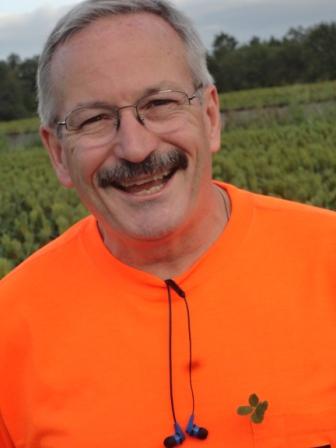


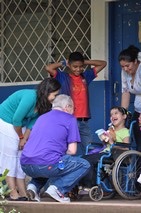 My heart was at peace, overflowing with joy.
My bad, but I'm just figuring out that you have posted multiple parts to your life story segments. And, it appears that I missed quite a few as a result. I will try to catch up, but forgive me if I don't. Your story is just too interesting to miss.
As usual, your writing is very smooth and flawless. However, I did spot one of my pet peeves. When you wrote 90's, you are using the apostrophe, meaning possessive, as a plural. The proper designation would be 1990s or 90s. Misuse of the apostrophe is so common that usage has made this mistake acceptable and even the MS Word spellchecker will often mistakenly correct it. ;-)
Ron