Prologue
It is often stated that we live on a very thin layer of civilization that is only a few thousand years old. Beneath this veneer is a savage desire to maintain territory for basic survival that goes back a million years and more. All that it takes for that thin layer of civilization to disappear is for the structure that holds it together to fail. Historically, many great civilizations have failed. We are only now determining why.
Modern society, particularly in the United States and other Western countries, is very dependent upon a very complex interaction between government, corporations and flexible small businesses that create the complex weblike economy and allow it to prosper. While natural disasters and war can cause severe disruption, societies that suffer these calamities often rebound better than ever. But when the entire world is caught up in a domino effect of many calamities, mostly the loss of the basic underpinnings of survival, there is no easy coming back.
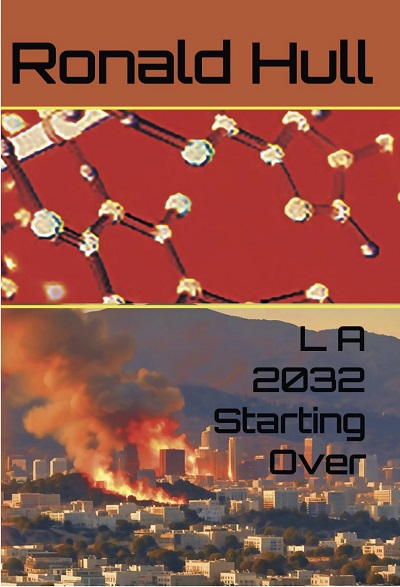
This novel is based on a short story I wrote, Last Man Standing. The same words have been used to describe a comedy competition TV show, and similar words have been used for a comedic look at one person surviving an epidemic and then finding others, creating a sort of sitcom of luxurious survival. And there are other apocalyptic scenarios in television and movies.
This one is different. The damage done is so great that the percentage of people that survive are very small. This is not a story of preppers and survivalists. The man whose story is told thinks he is alone. And he is. Robinson Crusoe in a familiar, but lonely, world. Except there is no guy Friday found to accompany him in his loneliness.
Chapter1
How We Got Here
What if, like in the movie, I Am Legend, you were the last man…
Last man left? Well, I guess I may well be. Haven't seen anyone else for a long time. And time is something I'm losing track of with all the years running together, piling up, perhaps twenty, twenty-five, since this all began to happen; since the world came apart.
Everyone could see it coming, but no one could stop it because we all were on a course that we couldn't control or change—inertia, I guess. It all started when we passed seven billion people. Now that's a number I never could comprehend. Somehow, we conquered death, disease, and even, war, and still ran off the track because we multiplied like rabbits with no control—nobody watched the pen.
And then, we were full of ourselves, thinking that we could all live better if we just did more and got rich. I guess I would define getting rich as having more than you needed for basic living. Well, once we got it, we didn't stop until we had more. And more. And more. And we didn't just do this for ourselves but for everybody else. Pretty soon, everybody on earth was wanting more, doing more and having more than they absolutely needed.
Problem was, our Earth only had so much of a good thing to give us. Oh, with technology, we could manipulate the environment to give us more of something we wanted like gold, oil, or exotic food from halfway around the world at our fingertips. But, everything has its price and its limits. All the while we were stuffing our faces and adding to our inventories of junk, our mother Earth was being ripped apart and reorganized to meet our ever-growing desires. Progress.
But it was all a house of cards we had been stacking since the very beginning of farming, settlements and the population increase that resulted. As the stack of cards got higher and more unstable, we just kept bolstering it up and adding more until it reached a breaking point—one of many weak points along the way—that burst. After the house of cards started to collapse, it fell against other houses, creating a domino effect that just kept getting worse.
There were people all over the planet trying to save animals, birds, and even insects that were rapidly disappearing after evolving over millions of years. At the same time, we were cutting down the forests, mining the arid areas and mountains, and stripping the seas of fish. We were polluting the air, land, and water—the very air we needed to breathe, the land we needed for food and water to quench our thirst.
And there had always been people on the edge that we ignored by the billions, living in poverty to the point where their lives were very short and with little purpose except to reproduce or spread disease. When it started, while billions around the earth were gradually working their way out of poverty to a lifestyle of riches, this group on this margin, this ignored group that was always there, but too primitive to have any say in things, began to grow.
Gradually, the weather changed. Increasingly, there were long periods of drought, followed by flooding, and stronger storms, including tornadoes, hurricanes and the like. Constant foraging for wood denuded large areas of land where all the trees had been cut down from once virgin forest. Drought, disease and forest fires made these areas into deserts where the wind blew all the topsoil away. The resulting erosion and open pit mining replaced the good topsoil with toxic elements that followed the rivers and streams to the sea. Wind spread toxic dust everywhere.
Human waste and debris also followed every river to the sea. Eventually, the sea became clogged with poisonous chemicals, toxic elements, and debris that threatened the sea's very ability to produce life or food. In the meantime, fishing and whaling removed large quantities of desirable, and undesirable, fish and other animals from the sea. The sea couldn't replenish itself. The land couldn't replenish itself. The handwriting was on the wall.
I am writing this with paper and pencil that I found lying here, in my oasis for many years. There were days when I wrote avidly with electronic words that spanned the globe. But those days are gone because there is no electricity to power the grid or to charge the batteries of the most sophisticated devices that man could create—useless and corroded now without that power of electricity. All that writing is lost and part of the distant past of my life. For it is too long ago for me to even remember what I wrote about except for those crucial days racing to find Julie that I remember so well. Otherwise, It must've been unimportant or I would have remembered it. Or would I? What is important now is survival. If I don't survive, then nothing will be left except the words I write on this paper. And I'm not sure that this will last either, although I will try to put it in a safe place until something or someone comes along to read it.