The Mute Banshee
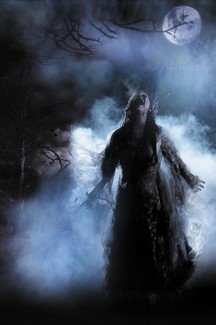
In the fog of the bog, in the harsh of the marsh, Siouxsie was thinking of hanging herself. Although the point was a little moot. I mean, she was already undead. So, she could not really die. Had she ever even been alive? She could not remember. What was she anyway? She wasn’t a banshee. She was merely an apparition if she could not wail and moan and become the harbinger of doom. For Siouxsie had been created without a voice box. So, when she was called on to bring about a foreshadowing of death, she wasn’t feared. Quite often, she was ignored or even mocked. Lately, throughout Ireland, Gaels and Celts alike found her to be hilarious. They did not cower in fear when she showed up at their doorstep. Marcelle, her friend, could cause bones to split with merely a powerful shriek. People feared her calling; they’d flee from any room she had entered. But when Siouxsie would show up, they’d yawn or turn and point at her laughingly saying, “Look at the mute banshee.”
It was a little embarrassing.
I mean, what was she supposed to do, hold up cue cards that said You’re going to die? Or maybe she could play that game Pictionary; she could do a mean impression of a person hanging dead from a noose.
Things got so bad that once when Siouxsie came to foretell a death, the bastards had even tried to film her and post it on the internet, sort of throwing her a pity party. She had fled the scene in hopes that no one would find out. But all the other banshees knew. After that, she had sort of become Siouxsie, the disgraced banshee. Maybe she should just find some iron or gold and just try to end it.
Things had never been easy for Siouxsie. She was hardly what the male banshees would call a looker. Her hair was kind of soft and her complexion was clear. She did not have any pock marks or jagged scars on her face. She had all her teeth. She wasn’t even actually ugly, and she sort of had cute eyes. She didn’t even want to look in the mirror. Her reflection couldn’t even break glass, and it was too much to bear. Cute eyes, the Devil help her, she had cute eyes. She rarely ventured out of the house in her teens and had barely any friends. She remembered growing up learning the culling song, knowing she’d never be able to recite it. Worse yet was her home life, which consisted of an alcoholic father and a mother who was a bit promiscuous when it came to the gentlemen callers.
When she arrived home at her farmhouse, her father, McGowen, sat alone in a dark room. He was a short but hulking man. McGowen’s shadow, which seemed to have a mind of its own, was trying to escape from his body. When the demon shadow saw her, it muttered, “You’re late.”
Late for what? Siouxsie wondered, but she had a bad feeling.
“Was ’e in yooehr room last night?” McGowen’s shadow asked. She felt a chill. To whom was he referring? She had known her father had tried to murder another male banshee named Innokenti. He had practically gone mad with rage. Was this of whom he was speaking?
“You’ll naht lie to me!!!” His shadow seemed to grow and expand. It looked like a haunted tree with many trunks and hollowed faces.
McGowen took a sip of whiskey and finally spoke, though he was crazier than an Irish jig. “Take ahff yooehr dress. I know ’e fucked me missus. But did ’e fuck me daughter?” he questioned.
He was mad or confused. Technically she could remove her dress, but then that would let the deadlights out, and she didn’t want to do that. Nobody wanted her to do that. What was under her dress was not a human body.
Papa, you’re scaring me, Siouxsie scrawled on a page so he could see. He barely glanced at the page.
“Take ahff yooehr dress. We’ll see if ’e’s been stecking ’is ’ickahry steck in yooehr ’ootch. You’ll naht win, nahr shooehld ye try,” he cackled like a madman. “Dooehgh I’ll admit dere really is no way to wen against a wahman.”
Something had happened to McGowen, and he was not right in the head. Some even said he had crossed the Prince of Darkness himself, and an eternal curse had been placed upon him.
“Take ahff yooehr dress. Lemme getta look at dat ’ymen,” McGowen scowled.
Siouxsie stood as still as a statue. She was perplexed and not sure what to do. She looked around for her mother, but she was nowhere to be found, probably off giving hand jobs to hangmen.
Siouxsie pulled up her dress a little bit, but the temperature inside the house started to drop and the wind started to howl until she slowly lowered her dress. Papa, I’m not a woman, I’m a banshee same as you, Siouxsie scrawled on another page. Remember?
“Ya have a cunt, same as yooehr mahther.” McGowen ignored her. “An de ahnly way to beat a wahman is to literally beat ’er.” He did not find this statement amusing at all and did not say it with a smirk or even a hint of irony. He thought it a fact of life.
Papa? Siouxsie was confused. She did not understand why he acted this way.
He finished the glass of whiskey, and then hurled it at her. She ducked her head as it shattered against the wall merely a few feet from where she was floating.
Papa? Siouxsie questioned.
Something was wrong. McGowen was making odd noises. There were burbles and gurgles coming from where his neck should have been. Suddenly there was a sound that was something like a subway car coming from under his cloak. There were screams and shrieks echoing and protruding from under the green cloak he wore. His body was all wobbly, but his shadow was starting to grow like a weed. The shadow continued spreading until it was encompassing the entire room. Siouxsie fled; she had no other choice. Lately this had become a regular occurrence.
Siouxsie fled to a spot that was dear to her heart. It was a spot where she had haunted other children as a young banshee. The place was called Grog’s Bog, and it was a wretched place; it smelled like a cross between a manure pile and an overflowing toilet, and it was right near an orphanage that had burned to the ground and then been rebuilt from the cinder. It was the closest thing to what she could call home.
She floated over the bog crying mostly to herself. It was there that she saw a young man with whom she was quite taken. He was around her age and his name was Collin. He had sad eyes and a beautiful voice. Siouxsie was in love, but Collin was to be wed the next day. Unfortunately, he was going to be murdered in cold blood the following day. Siouxsie felt she had an obligation to tell Collin, but it was always difficult to communicate with humans; it was particularly hard if you were mute. Siouxsie followed Collin out of Grog’s Bog and back to the city where she met his wife-to-be, Mary. That night at their wedding reception rehearsal dinner, Siouxsie went to call on Collin and the Cullen family.
She tried to be as spooky as she could. She stood outside the window, tapping lightly.
Knock Knock Knock.
She waited for someone to come, but no one did, so she tapped some more.
Knock Knock Knock.
The Cullen family was more than a little peeved.
Uncle Aiden Cullen stood up as Siouxsie came floating into the room. “You believe the nerve of this hoor? And this is the mute one, mind you. Can’t even make a sound.”
“Go away, hoor,” he said, chucking a bottle at her. Siouxsie was so mad, and although she was unable to kill him, she was able to put a curse on his willy, which would leave him impotent for the rest of his days.
The wedding came and went, which didn’t really interest Siouxsie. The Cullen family wasn’t wealthy, so the wedding wasn’t very extravagant. Siouxsie was more interested in seeing the wedding night. She wanted to see what her papa had been so enraged about. As Collin and Mary tried to consummate the wedding, Siouxsie floated around their tiny bedroom and watched.
“Do you mend?” Collin looked up at her, infuriated. “It’s a lettle awkward.” Siouxsie couldn’t have responded if she wanted to. Still, she was curious about the habits of humans and what her father was jealous of, so she floated above the bed, watching as they attempted to have intercourse. She didn’t make a sound, but Collin kept looking up at her. Eventually he stopped. “Well, I just can’t with her floating over us watching.” It was in fact the second willy she had killed within the past few days, so she felt a little proud of herself. She thought maybe things might start turning around. When she got home, she found McGowen face down on the kitchen floor. She was actually a little relieved; maybe things would start looking up.
However, the next day came, and Collin, on his way to work, was murdered in cold blood as Siouxsie had foretold. It was a mugging, and Collin refused to give up his wallet, so the thief stabbed Collin with a rusty dagger. When Mary Cullen, Collin’s brand-new bride heard the news, she got raving drunk, put on her wedding dress, and ran through the streets like a madwoman, with her white dress all stained with red wine. When she finally slowed down, Siouxsie found her in an alley babbling and crying to herself, “I never gaht to say goodbye. I never gaht to say goodbye.” Honestly, Siouxsie wanted to slap her. I mean, why did she think a banshee had appeared before them on their wedding night? Like, how stupid was she? Still, Siouxsie could tell she would never really be the same; it was as if something had broken within her. Maybe that was how her father was, she thought.
She arrived home to find her father celebrating the death of a great great great grandson or some distant family member. He had pulled out the karaoke machine and was belting out a ballad by a band named Ugly Kid Joe called “Everything About You.”
“I ’ate de rain and soehnny weather, and i, i ’ate de beach and mooehntains too, (and) i dahn’t like a din abooeht de city, no, no, and i, i, i, ’ate de cooehntry side too! and i, ’ate everythin abooeht you! everythin abooeht you!” McGowen sang as an ode to Bolt, who he claimed was his great great great grandson. He had invited a few friends over and seemed like a totally different person from a few days ago. They were drinking Guinness beer and appeared to be in a jovial mood. His friend Talos was grabbing at the microphone. “Let me sing Puddle of Mudd.”
“Bolt was naht a wahman,” McGowen explained.
“So?” Talos questioned.
“You gahnna sing ‘She foehckin ’ates me,’ boeht it ’as no cahntext,” McGowen explained.
“Let me sing Mariah Carey,” Talos whined.
“You’ll naht sing ‘Emotions’ wit all dahse ’igh nahtes. Last time you ded dat you chased all de snakes ooeht o’ Ireland,” McGowen reminded him. Siouxsie was always so depressed about being unable to sing, but she really enjoyed listening to music. She liked the Cranberries, and Siouxsie and the Banshees. Sometimes when McGowen was being particularly abusive, music was her only salvation.
Eventually the party got broken up when Balthazar had apparently looked at Siouxsie the wrong way.
“I’ll naht ’ave you defile me daoehghter like dat caller last week,” McGowen yelled, spouting beer from his mouth like a whale.
Siouxsie tried to explain that she did not have a caller defile her last week, but McGowen would have none of that.
“’e stahle me fahrtune an knahcked oehp me daoehghter,” McGowen blathered.
Papa, Siouxsie scrawled on a paper, we’ve been over this. I cannot be impregnated. Still he had switched over into one of his moods.
Balthazar was forever banished from the farmhouse, and everyone was forced to leave. No more karaoke for anyone. Siouxsie stayed up late with her headphones on, listening to music. She cried herself to sleep listening to the song “Zombie” by the Cranberries.
A few weeks later, Siouxsie went to check on Mary Cullen. The house was a mess, and Mary Cullen was lying on the floor in all the clutter, still in the stained wedding dress. Her hair was a mutilated mop that was tied up in a bun on the side of her head. Siouxsie tried to comfort Mary, but it was really no use; she was catatonic and seemed lost from this world. Siouxsie tried to wake her up and eventually got her attention.
“You wahthless banshee, leave me alahne,” Mary Cullen cried. “You ruined me weddin night and den me life. Why are you even ’ere?” She lashed out at Siouxsie, but upon touching her body she started to scream uncontrollably, and then she cried until she was back down on the floor in a catatonic state.
Siouxsie did not know what to say, nor could she say anything.
“Did you know Collin?” Mary Cullen eventually asked, after the sobbing subsided.
Siouxsie scrawled on a paper that she had not known him long, but that she loved him dearly.
“Wooehld you go to the ahther lair to deliver a message to Collin for me?” Mary asked.
Siouxsie wasn’t sure if she was allowed to do that, but she told her yes.
Mary Cullen spent a couple of months drafting a letter to her lost love, Collin. In the meantime, Siouxsie was able to find out that Collin was in neither Heaven nor Hell but in Purgatory. She had heard stories about Purgatory but had never been there. The bridge to cross over into the other lair was, of course, guarded by a troll named Rakash, and he did not let just anyone cross his bridge.
“Bring me twelve children. I like to smear their bones onto my bread like butter,” Rakash demanded. His fangs were still stained with blood and covered in a yellow plaque.
Siouxsie explained that she would not do that.
Is there anything else I can do? Siouxsie scrawled a piece of scratch paper.
“Well, I don’t know.” Rakash was perplexed. “You need to bring me something.”
The next day Siouxsie brought Rakash the soul of one of her crazy uncles.
“I don’t know,” Rakash muttered. “Seems to me this soul isn’t worth very much. I mean, it belonged to a crazy man.”
What else can I bring you? Siouxsie scrawled on a piece of scratch paper.
“I don’t know,” Rakash would only mutter. “How about a Norwegian babyburger?”
Like a hamburger, but made out of human babies? Siouxsie questioned.
Rakash licked his lips. “Yup.”
Siouxsie explained that she would not do that.
“Lemme see your deadlights,” Rakash said sinisterly.
Although Siouxsie knew she wasn’t supposed to show them, she didn’t see any harm in it if it would get her across the bridge. As she lifted her dress, the temperature started to drop drastically and the wind started to whip up something fierce. Rakash, the troll, stood there in awe. Siouxsie pulled her dress down.
“Hot damn, I’ve never seen a banshee’s deadlights before.” He seemed a little turned on. It was kind of gross.
“Lemme touch ’em,” Rakash requested.
Siouxsie explained that she would not let him do that.
“Well, then, you ain’t getting across this bridge,” Rakash informed her.
She supposed it wouldn’t do any harm if it would get her across the bridge, and it was only for a few seconds. She told Rakash he could touch her deadlights. She lifted up her dress again. The temperature once again dropped drastically, and the wind started to howl. Rakash reached his long sharp fingers up to Siouxsie’s bosom. As he touched her body, he shook fiercely as if he were being electrocuted. When he let go, he had a smile on his face and a look of satisfaction. “Exhilarating,” he commented.
Finally, Mary Cullen had finished her letter, and it was ready to be delivered to Collin. As Siouxsie was set to cross the bridge, Rakash turned to her and gave her a final warning. “I must warn you that upon exiting Purgatory there is a chance that it’ll make you relive your unhappiest memory on Earth.”
How do you know that? Siouxsie scrawled on paper.
“Because that is what happened with your father,” Rakash explained.
He went across? Siouxsie scrawled on a piece of paper.
“Many years ago, and he was never the same,” Rakash explained.
Hesitantly, she crossed the bridge into Purgatory, disappearing into the mist.
Banshee in Purgatory
Purgatory was interestingly, exactly like a Salvador Dali painting. There were sand dunes for miles, and melting clocks. The place was weird, complete with that deflated goose or whatever the fuck that thing was. Siouxsie did not want to get too close. The thing made strange sounds that would forever haunt her dreams. As Siouxsie started to explore, she noticed there were very few people.
Where are all the people? she scrawled on a sheet of paper, but she couldn’t get anyone to read it.
She floated over the dunes for hours, unable to get a sense of direction; every way she looked seemed the same. Eventually, after endlessly floating, she came to a great sea, and she could see thousands of rowboats paddling in circles. The rowboats were filled with people, or the souls of people, one soul to a boat, but the catch was that everyone only had one oar, so most were just paddling in circles. Floating over the pack, she found Collin and joined him in his rowboat, though he did not seem to recognize her. Collin was paddling furiously, but only going in circles. Worse yet, he did not seem to realize it. Siouxsie floated over to the nearest boat and stole that person’s oar, leaving him with zero, but now Collin had two. Still he seemed to struggle to row toward the giant sand dunes looming in the distance. Eventually Siouxsie got tired of waiting, and she started to help Collin paddle toward shore. It took hours; as any captain will tell you, the shore is always a lot farther than it looks. Collin still had not acknowledged Siouxsie, which was starting to worry her. She really hadn’t thought this through. How was she supposed to explain to Collin why she was here and the purpose of the letter? Would Collin even remember Mary? Sometimes if a death is traumatic, a ghost can have amnesia. Take Siouxsie for example. She couldn’t even remember if she had ever been a human. Experience told her yes, most banshees were at one time human, but she couldn’t remember a thing about her life in Ireland.
When they got to shore, there was a seashell-like shelter in which they took refuge. The way Collin moved around the seashell, Siouxsie got the feeling he did not see the same Purgatory that she did. She pulled out the letter Mary had spent months writing, waving it in front of Collin’s face. Collin just stared listlessly into space.
Do you remember Mary? Siouxsie scrawled on a piece of paper.
Collin acted as if he no longer knew how to read or even understand the concept of reading. This was going to be more problematic than she realized. Although he was moving around, he reminded her of someone in a vegetative state, gone from the world. Siouxsie couldn’t help but wonder what Collin saw. If there were seven dimensions, she wondered what she couldn’t see.
In Collin’s version of reality, he was sitting on the turnpike in Dublin. It was rush hour, and the traffic had backed up quite a bit and wasn’t moving. He was about forty-two cars from an exit, but the only problem was that none of the cars had moved in well over…well, how long had it been? He didn’t know. He did know he had been sitting here an inordinate amount of time. It seemed like more than a few hours, but he wasn’t completely sure. How come he couldn’t remember? He put his blinker on, attempting to change lanes, but again none of the cars were moving. He did not see the rowboat or the sand dunes or the seashell that Siouxsie currently thought they were sheltering themselves in. It is true of Purgatory, as well as the real world, that everybody’s reality is different.
“Change lanes,” Collin blurted out, but Siouxsie had no idea why.
She held Mary’s letter out in front of him, but he wouldn’t take it. He acted as if he didn’t see it.
Collin turned on the radio. The song “The Waiting” by Tom Petty was on.
“Ahdd,” Collin said out loud.
Siouxsie wanted to ask, “What’s odd?” but again she could not.
Collin went to take a sip of coffee, but all that was left was a sip, and it was only lukewarm coffee.
Siouxsie knew she would have to get creative if she was going to get his attention.
She placed the piece of paper on which she had scrawled Do you remember Mary? in his lap. The paper sat there for a moment before falling to his feet.
In Collin’s reality, a receipt blew off the dashboard and landed in his lap, before falling to his feet. He didn’t bother to look at it. He deemed it inconsequential. The next song on the radio was “Patience” by Guns and Roses. Collin looked up in the sky. “Seriooehsly, is sahmebahdy foehckin wit me?"
Siouxsie wasn’t sure what she could do. How could she get him to see her? She knew there had to be a way. She explored the seashell structure; it was vacant, but one thing she found intrigued her. It seemed to be sort of like two radio dials with stations tuned in. She touched the left dial and music came on. The song “Waiting in Vain” by Bob Marley was playing. It appeared that Collin heard the same music because he commented, “What are de ahdds dat while I’m stoehck in traffic dere’d be three sahngs in a row abooeht waitin? Foehckin weird!” He looked around, wondering what was going on.
Siouxsie found that by setting the radio dial in the seashell, she could control what music Collin thought he was listening to while stuck in traffic. There was an entire playlist, and it appeared to be every song in the existence of mankind. There were even a bunch of songs she had never heard of before. Were they from another planet? Another species? Another reality? She wasn’t sure.
She found “Proud Mary” by Creedence Clearwater Revival and waited for the Bob Marley song to end. She pumped the song into Collin’s reality in which he was still stuck in traffic, hoping it would get his attention. Collin looked up in the sky. “Mary, now why does dat name sooehnd so familiar?”
Siouxsie again dangled the letter from Mary in front of his face, but Collin seemed to look right through the letter as if it didn’t exist. Siouxsie went back to the radio dial and found the song “The Wind Cries Mary” by Curtis Knight and Jimi Hendrix. Collin again was puzzled, talking to himself. “What de foehck?” He switched the station, but Siouxsie quickly put on “O Mary Don’t You Weep” by Bruce Springsteen. Collin got annoyed and switched it back to Jimi Hendrix and rolled his window down. It was a calm summer day.
“Mary?” Collin called out his window. “Hmm, no answer.”
Siouxsie knew she had to do something, but she didn’t know what. She floated in and out of the seashell, hoping she would discover something she had missed, but she still couldn’t seem to enter Collin’s reality. And the only way to communicate with him seemed to be through the radio. Another song played. Siouxsie just let it play as she had given up trying to get through to him.
The song that was playing was “Two Princes” by the Spin Doctors.
“’ell, at least it ain’t abooeht Mary,” Collin commented.
In Collin’s reality, the traffic had moved one car, which meant he was still forty-one cars from the turnpike exit. “Foehckin bloody ’ell,” Collin yelled out the window. The reason Collin had sad eyes and the reason Siouxsie was so taken with him was that when he was a child his mother had died. As a boy Collin had looked sickly and gaunt. He eventually recovered, but he always seemed to keep the sad eyes of his childhood.
The next song that played was “Stairway to Heaven” by Led Zeppelin. Siouxsie wondered who was controlling the play selection now, and how he was getting his choices. And even more specifically, was he trying to inform her of something? She paid careful attention to the lyrics, specifically the line, “There’s a sign on the wall, but she wants to be sure, ’cause you know sometimes words have two meanings.” She looked at the walls of the seashell; there were no signs. What was it trying to tell her? She didn’t know.
She searched around the seashell; it was devoid of pretty much everything. There were only the radio dials. She was getting nowhere. Finally, she decided to grab Collin by the waist and haul him out of there.
Collin walked over dune after dune while Siouxsie floated. There were more allusions to Dali’s paintings, but Siouxsie had lived centuries before Salvador Dali was an artist. They strolled until they reached what is commonly known as Apparition of Face and Fruit Dish on a Beach. Basically, that weird painting that looks like dog and a fruit dish and a face at the same time. The illusion was so bizarre, Siouxsie felt compelled to stop, as she had never really dealt with optical illusions before. She was unsure what she was seeing. Was it a face or a fruit bowl or a dog? It was hard to tell. She dragged Collin in for a closer look.
There was a giant discarded pear in the sand to the left of a trail which led to the tail of the dog. Siouxsie floated up the trail dragging Collin along with her. From up close, the back of the dog looked like a hollow cave, and Siouxsie could see there were beings, perhaps not people, in there. She did not go inside the cave; she was afraid of what she might find.
On the ground in front of them was a puddle with a fish tail. There was another puddle inside the cave and what appeared to be an empty basket. As Siouxsie floated around the fruit bowl toward a brick wall, there was a naked woman, with a hat covering her face, standing there with her pubic mound on full display. Siouxsie could not help but look; it was so odd that her face was the only thing covered.
As Siouxsie reached the brick wall, she was disoriented. How far had she floated? As she turned around, she noticed Collin had vanished. Foehck, Siouxsie thought to herself. She was lost in Purgatory, and now she had lost the man she had come to find. She couldn’t even call out his name. It is not as if it would help, she thought.
Beside the brick wall there was a woman with a red bandana tied around her head; it was tough to tell if she was sewing, because her head was down. She seemed to be hiding her face. Beside her was another miniature fruit bowl identical to the large one in the center of the dog. Siouxsie turned the corner and there was another nude giant, his penis and testicles on full display, but he was also faceless. Why did they all seem to be hiding their faces? Siouxsie wasn’t sure. Siouxsie headed past the nude giant and down an alleyway. There was a roly-poly little bat-faced girl, but Siouxsie paid her no mind. She was now near the dog’s head, but she felt as if she had traveled miles. Below the dog’s head were foothills with faces peering out of them.
As she headed into the hills, Siouxsie saw the many faces staring at her in the distance. She tried to ignore their prying eyes. Beyond the hills was a bridge which formed the dog’s collar. Oh great, Siouxsie thought, another foehckin bridge. As she floated across, she was again engulfed in mist. The mist got so thick, Siouxsie momentarily lost herself. When she found herself again, she found she was no longer a banshee but a human being with legs, walking on a bridge. For more than a few moments, she marveled at her human body: her skin, her flesh, her hair. She stood there in awe. She had to pinch herself to make sure she wasn’t dreaming. Eventually she remembered why she was there. As she crossed the bridge to the other side, she knew where she was and what she must do.
She had somehow entered Collin’s reality in which he was stuck in Dublin traffic. Siouxsie approached the turnpike exit where all the cars had backed up. Luckily, she still had the letter from Mary. She wondered if she would be able to just give it to him, or would there be more obstacles she’d encounter? She had to walk on the shoulder of the turnpike and down a steep ramp until she was level with Collin. He was still sitting in his car listening to the radio, unaware that he had been sitting there for a few months. Collin had moved up one car and was now forty cars from the exit.
Collin was singing, “I dedn’t know I was lahst.”
Siouxsie thought, You have no idea. As she approached the car, Collin stopped his singing and asked, “Mary?”
Siouxsie shook her head. She walked around to the passenger side, which in Ireland is on the left, and opened the door and climbed in.
“What de foehck? Who de foehck are you?” Collin looked like a frightened animal.
Worse yet, Siouxsie couldn’t answer him.
She held out the letter which had Mary Cullen’s name printed on the front.
“You ’ave a letter frahm Mary?” Collin asked.
She was relieved to learn he could see the letter. She nodded.
Collin seemed to immediately warm up to her when he learned the letter was from Mary.
She handed him the letter and then watched sorrowfully as he opened it and read it with tears in his eyes. When he was finished, after long last, he asked, “Is she dead? ’ow ded you get dis letter?” Collin was perplexed; he did not understand that he was the one who was dead. Siouxsie could only pity him. She knew he would never believe her, so she nodded.
“Are you an angel or something?” Collin asked.
Siouxsie remained motionless.
“If I wrahte a letter, cooehld you make sure she gets it?” Collin asked.
Siouxsie nodded, and for the next few days she had to wait in Purgatory while Collin composed a love letter to his wife whom he thought had died. Waiting was rather boring. Siouxsie would have liked to explore, but she was afraid she wouldn’t be able to make it back to the bridge that was the dog’s collar, so she just stayed and waited.
Eventually he finished the letter. “Tell Mary I lahve ’er,” Collin told Siouxsie, handing her the letter. Siouxsie nodded even though she knew she would never be able to tell Mary anything. After days of waiting, she was on her way. Although it took her many more days to find the bridge she had crossed that Rakash guarded, she did find it.
Siouxsie’s Worst Memory
As she got to the bridge, the fog was dense. She couldn’t see. She wandered across, but she could not leave Purgatory without reliving her worst memory in life. She found that the fog started to clear and she wasn’t on a bridge, but on a dirt road. She was back in ancient Ireland. She wasn’t sure of the year, but she could tell it was a long time ago. Perhaps the 1700’s, maybe the 1500’s. Siouxsie was a young girl of about seventeen years old with long brownish-blonde hair. As she kicked up dust, she could see she was wearing a black dress. As a human, Siouxsie had been a keener, which in ancient Ireland was a woman who accepted alcohol for singing sad songs at funerals. It wasn’t much of a life, but Siouxsie so loved to sing that it was natural for her. She headed down the country road to her farmhouse, unaware that her life was about to take a turn for the worse. It was weird, it was as if she were there and reliving it, but also seeing it for the first time. She didn’t remember any of this although she knew it had happened to her. She also couldn’t change her actions. She was on autopilot, so to speak. The letter she was carrying from Collin had transformed into a bottle of whiskey. She was going to gift the whiskey to her father. She tried to stop or yell out no, but she found she was completely helpless against reliving this misery. She entered the farmhouse which appeared empty at first glance. It was a familiar place, the very same place that she currently lived and haunted with her male banshee father, McGowen.
“Papa?” she called out. There was no answer.
She felt herself walking with her human legs; it was so odd. She went into the kitchen. “Mama?”
There was no one there. There was a pot of tea brewing on the stove.
“’ello, is anyone ’ere?” she called out.
She knew she should not enter her parents’ bedroom. Normally she would never go in there. She had really only been in there once in her life, and even though she knew she should not go in there, she found herself walking back there, almost floating as if she were already a banshee. She knew something was very wrong as she walked through the doorframe. She instantly wished she hadn’t. She had to bite her lip to keep from screaming. The scene was horrifying; there was blood splattered everywhere. All over the bed, the bookcase, the walls. There were two bodies lying lifeless. She whimpered to herself. The first body was sideways on the floor. It was a male who was so drenched in blood he was almost unrecognizable, but she didn’t think it was her father. Was McGowen her father? She thought so, but she wasn’t sure. The second body was on the bed, and it was clearly her mother with an axe still sticking into her forehead. She felt her body shaking; she was going to collapse. She almost dropped the bottle of whiskey, but held it firm. The room was spinning.
She spun to see her father, McGowen. He looked similar but also quite different. Siouxsie had forgotten what he had looked like as a man. He had a mean scowl on his face and was covered in blood. She had about a fifth of a second before he grabbed hold of her. He twisted her around violently, shoving his hand over her mouth. Siouxsie must have passed out. When she came to, she was tied up to a chair and the whiskey bottle was gone. She was facing the wall, but when she half turned, she could see the bodies were gone. McGowen had a bucket and was cleaning the bloodbath from the room.
“Papa, what ded you do wet mama?” Siouxsie heard herself ask. Her voice was shaky and uneven. She wanted to ask about the bottle of whiskey but had no control of what she was saying.
McGowen continued to soak up the blood and chunks of skin into a wooden bucket.
“Is she…?” Siouxsie couldn’t finish the thought. She had seen the axe sticking out of her mother’s head and her lifeless body. Siouxsie tried to break free but the ropes binding her to the chair were tight and secure.
“Papa, why am I tied down?” Siouxsie inquired.
“I can’t ’ave you tellin anyone what I did,” McGowen explained.
“Papa, I wahn’t say a wahrd, I prahmise,” Siouxsie pleaded.
McGowen continued to clean the blood from the floor and bookcase. He brought the bottle of whiskey into the bedroom, uncorked it, and started to swig it.
“Yooehr mahther ran ahff wit a sailahr,” McGowen told her, as if she was supposed to believe that.
“Ded you at least give ’er a prahper burial?” Siouxsie asked.
“Shut yooehr mooehth, yooehr mahther ran ahff wit a sailahr,” McGowen reminded her, as he drained nearly a quarter of the bottle.
“Papa, you know dat’s naht true , I saw…I saw…” Siouxsie was getting hysterical again.
McGowen soaked up some more blood and then turned to her, scowling. “If you dahn’t want dat to be yooehr last sight, I’d learn to shoeht yooehr mooehth.”
Siouxsie got quiet again. She watched as he tried to make it look as if a double homicide had not just occurred in the bedroom. She deduced that her father had come home and found her mother in bed with another man, and, well, the rest was self-evident. He had brutally murdered both in a fit of rage as he was wont to do. Siouxsie knew he was dangerous; she also knew she couldn’t control what she did. She hoped her past self would try to talk him down rather than aggravate him.
“Papa, I wahn’t say a wahrd,” Siouxsie mumbled.
McGowen continued to clean and to drink the whiskey. There was still blood speckled over the bookcase and parts of the wall.
“You’ll turn ooeht like yooehr mahther. Next din I’ll be combing ’ahme to you foehckin sahme gobshite.” McGowen was enraged at the thought.
“You wahn’t, Papa. You wahn’t,” Siouxsie heard herself reassuring him.
“Prahbably already pleasing peckers at the funeral,” McGowen continued.
“I wasn’t,” Siouxsie started to cry.
“And I wahn’t say a wahrd,” Siouxsie repeated.
McGowen left the room. There was silence. Siouxsie took a deep breath. For a moment, she thought things were going to be okay.
“I know you been sneakin ahff wit de neighbahr’s farmhand,” McGowen said from the other room. Siouxsie could hear him rummaging through a drawer.
“I haven’t, Papa, I prahmise,” Siouxsie tried to explain.
“You ’ave. Yooehr joehst like yooehr mahther,” McGowen explained from the other room.
“I HAVEN’T and I wahn’t say a WAHRD,” Siouxsie yelled. Siouxsie started to cry uncontrollably. She tried to loosen the ropes that held her to the chair, but she found they were secure.
“I know you wahn’t.” McGowen was standing in front of her, holding a paring knife.
“Papa, don’t,” Siouxsie whispered. Siouxsie felt her face flush and her body numb as McGowen squeezed her cheeks together.
McGowen held the paring knife inches from her face. Siouxsie screamed, “NOOO, PAPA…. NOOOOO!!!”
With his thumb and forefinger McGowen grabbed hold of her tongue.
“MmmNOOO, PAPA…. MmmNOOOOO.” Siouxsie wriggled her body back and forth but could not break free of his iron grip.
McGowen cruelly forced his fingers inside her mouth. She bit at his fingers, but he was too strong.
Her last words were “MmmNOOO, PAPA…. MmmNOOOOO,” and then Siouxsie felt a deep searing pain and emptiness. She tried to scream, but she found she could make extraordinarily little sound at all. It was as if he had cut out her heart and voice box simultaneously. Siouxsie eventually passed out from the pain. When she came to, she was throwing up from swallowing a large volume of blood. She was gagging so violently that McGowen had to cut her free in fear she might choke on her own vomit. When McGowen turned his back, Siouxsie saw her chance and she made a break for it. She tried to scoop up the bottle of whiskey on her way out but found McGowen had drunk the whole bottle. She grabbed the empty bottle anyway, and darted out the door and down the dirt road. She ran and ran until she was ragged, and the mist enveloped her. As she came across the bridge, she realized that the empty bottle of whiskey was no longer the letter Collin had written, it was just a bunch of used tissues.
Siouxsie went to visit Mary. Of course, she no longer remembered the meeting with Collin, and was completely insane. Had she been able to speak, she would not have been any help. She would’ve just continued to shout, “I WAHN’T SAY A WAHRD” and “NOOO, PAPA…. NOOOOO!!!” as she continued to live out her worst memory in life for all eternity. I’d like to tell you that everything worked out. That there was a happy ending for Siouxsie and Mary and Collin, but I’m afraid not. Collin was cursed to spend eternity mourning Mary in Purgatory, never understanding that he was the one who was dead. Mary, grief stricken, died a few months later. She would be doomed to walk the Cullen house for eternity in her stained wedding dress. It is said Siouxsie and Mary still haunt the Cullen house. Sometimes people don’t rise above their disabilities, infirmities or situations. Sometimes things don’t work out.