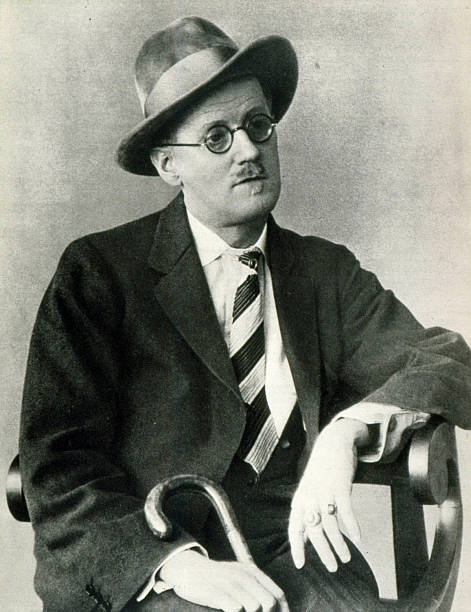
Irony in James Joyce
James Joyce was being interviewed by a Literary critic that had asked him if he had used a secret irony in some passages of the Ulysses.
-Well, you are interviewing me and you are a Literary critic. It will be interesting for you to know that the Ulysses is written with irony, and irony only, from the start to the end. The true sense of this irony may sometimes reach a few people only, but it is not secret, not in the least- responded Joyce to the question.
It is worldwide admitted it is not easy to catch up all the ironical meanings, above all coming from Stephen Dedalus, for he’s very cultured, difficult to understand and to follow the meaning of his words, that seem to be floating for other people he’s thinking about.
James Joyce uses irony to open others eyes or to catch you up in a fabulous spell, that most times, no doubt, makes you smile and keeps you smiling for a good while. When the irony is clearly more a joke than mere irony, makes readers laugh, of course faith to the perennial philosophy that gives the gift of sympathy to sages.
To read the Ulysses was a great pleasure and for me it is not surprise James Joyce’s work is considered the masterpiece of XX Century novel. Many of you will know the action takes place in Dublin during a day of June 1904. Among the ones who have read it many will remember these three anecdotes in the book:
Two drunkards Leopold Bloom knew went to the cemetery to see how it was in their mood. As they walked along passing by the tombs one of them told another: I think O’Leary’s tomb is one of these, at least is not far from this site. It must be this one. The other drunkard, seeing the Jesus Christ’s statue erected at the head of the tomb, said: Well, he doesn’t look much like O’Leary, whoever did it did it.
Another one Leopold Bloom knew too, called Brian O’Neill, received a letter from someone he didn’t know addressed to H. E. Brian O’Neill and got stupified. He thought it was insulting and it deserved at least a trial and a fine. He told his wife. They decided to go to the Courts to make a complaint and they went. At the Courts there were several Courts clerks with Mister O’Neill and his wife. The clerks could not understand. Do you know the meaning of the initials?, asked the clerk responsible. Well, yes, I do, responded Mister O’Neill. His Excellence, he said later, snorting. And what’s the problem?, asked the clerk responsible again. It is, it is, it is a joke of bad taste!, sentenced Mister O’Neill. What does it matter to you?, asked at once a second clerk. I would forget about it!, exclaimed the second clerk again and all the clerks laughed openly in contagion.
Leopold Bloom dreams of big homages in his honour, so much everybody is acclaiming him as the king: Long Live King Leopold! Live Leopold I! He doesn’t know how it happened, but he finds himself in a datings house and there are several witches accusing him of sodomy and of masochism. Coming to reality, he knows he is an advertising agent that must pay visits to his clients to do his job and get paid for ads.